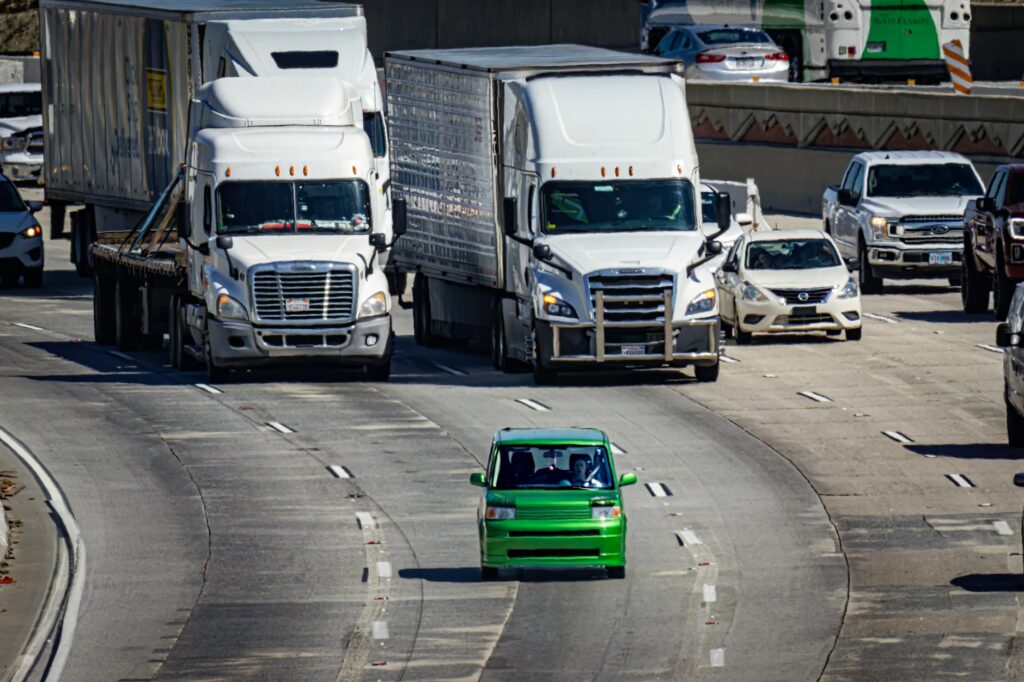
Minneapolis sits closer to the Canadian border than to any major Texas city, and the run south crosses the entire agricultural centre of the country before it reaches anything resembling a metropolis. It is a long, flat, unglamorous journey on roads that carry a great deal of freight and comparatively few cars.
If you are considering shipping a vehicle from Minnesota to Texas—whether for a relocation, an online purchase, or seasonal migration—this guide explains exactly how the process works from the inside. Not marketing fluff. Industry mechanics.
- How the Auto Transport Industry Actually Works
- The Minnesota to Texas Corridor
- Pricing: What Drives the Math
- Driving vs. Shipping: The Real Comparison
- Seasonal Demand Patterns
- Open vs. Enclosed: A Technical Comparison
- How Carrier Assignment Works
- Federal Regulations That Protect You
- Preparing Your Vehicle: The Engineering Perspective
- Common Misconceptions About Auto Transport
- Frequently Asked Questions
How the Auto Transport Industry Actually Works
The company whose website you are reading almost certainly does not own a truck. That is not a disclosure people usually lead with, but it explains nearly everything about how this works, and it changes which questions are worth asking.
Broker, Carrier, You
A broker prices the job, finds a carrier, vets them, and handles coordination and any claim. A carrier owns the trailer and employs the driver — usually a small business running one to five trucks rather than a national fleet. You are the third party, and the only one whose interests are not already represented by somebody else’s commercial arrangement.
The industry splits this way for a practical reason: a carrier driving Minneapolis to San Antonio has no efficient means of finding the eight other cars that make the trip economic. A load board and a broker do that in an afternoon.
Where the Money Goes
Diesel and driver wages account for between half and three-fifths of what you pay. A loaded carrier manages roughly six miles to the gallon, so 1,200 miles burns about 200 gallons before anyone is paid, and the driver is on federally regulated hours for four or five days.
Insurance takes another ten to fifteen per cent, covering cargo liability and general liability. The trailer takes a similar share, being a specialised asset that depreciates and needs tyres, servicing and inspections. The broker’s fee is ten to fifteen per cent for sourcing the carrier and handling anything that goes wrong.
The carrier’s own margin is somewhere between five and ten per cent of the whole. Hold that number up against a quote three hundred dollars below everyone else’s and ask yourself which line above it was supposed to come out of.
The Questions Worth Asking
Not “are you a broker?”, since the answer is nearly always yes. Ask whether they will name the carrier once one is assigned, hand over that carrier’s DOT number and insurance certificate, and give you a straight answer about what happens if the delivery window moves.
The Minnesota to Texas Corridor
Roughly 1,200 miles, four to five days, Minneapolis and St. Paul at one end and the Texas triangle at the other. What makes this lane worth understanding is how little there is to understand about the route itself.
One Road, Start to Finish
Your car goes down I-35 and that is essentially the whole story. It begins in Minneapolis, runs through Iowa, Missouri, Kansas and Oklahoma, crosses into Texas, and ends up in Dallas, Austin or San Antonio — all of which sit on the same interstate.
That sounds unremarkable until you compare it with the alternatives. A car going from Minneapolis to the West Coast has two credible routes and the carrier picks one based on the season. A car crossing the Rockies has a pass that can close. Here there is no route decision, no seasonal alternative and no significant elevation — just a single north-south trunk road that stays open.
Why That Matters to You
Three things follow, and all three are in your favour.
The transit estimate is unusually reliable. Four to five days means four to five days, because there is no weather event or routing choice that materially changes it. On several of our other corridors that range is genuinely uncertain; here it is close to arithmetic.
Carrier availability is high. I-35 is a major freight artery carrying a great deal more than cars, so trucks are constantly running it in both directions. Assignment tends toward the quick end.
Every destination is on the road. Dallas, Austin and San Antonio all sit on I-35 itself, which is rare — on most routes at least one major destination requires a detour off the corridor, and that shows up in both price and time.
The One Variable
Weather at the Minnesota end, in January and February, and only at collection. A snow event can postpone a pickup by a day. Once the truck is a few hours south, it is out of it — there is nothing on this route comparable to a mountain crossing or a wind-exposed plain.
Pricing: What Drives the Math
Minnesota to Texas: $800 – $1,050
Open Transport | ~1,200 Miles | 4-5 Days Transit
That works out at $0.67-$0.88 a mile, which is above the $0.50-$0.70 industry band. Given everything in the previous section about how easy this route is, that deserves an explanation rather than a shrug.
It Is the Distance, Not the Difficulty
Twelve hundred miles is a middle distance, and middle distances get the worst of the per-mile arithmetic.
Every shipment carries costs that ignore distance entirely: a driver attending an address at an agreed hour, an inspection, the loading, the paperwork — then all of it again at the other end. Those are identical whether the truck then drives 350 miles or 2,800. Spread across a transcontinental run they disappear into the rate; spread across 1,200 miles they are still a visible share of the bill.
So the per-mile figure looks worse than a coast-to-coast quote while the total is a fraction of it. Judge this route on the total, and compare it only against routes of similar length.
Pricing by Vehicle
Deck space is what a trailer sells, so the physical dimensions of the car matter more than what it is worth:
| Vehicle Type | Open Transport | Enclosed Transport | Why the Difference |
|---|---|---|---|
| Sedan/Compact | $800-$875 | $1250-$1350 | Lowest weight class, easiest to load |
| Mid-size SUV/Crossover | $850-$925 | $1325-$1425 | Moderate weight, standard clearance |
| Full-size SUV/Truck | $900-$1050 | $1375-$1500 | Higher weight, takes more vertical space |
| Luxury/Exotic ($75K+) | $925-$1100 | $1400-$1550 | Higher insurance exposure, careful handling |
| Oversized (dually, lifted) | $1050-$1200 | $1550-$1750 | May require top-deck only, special loading |
What You Can Actually Move
- Lead time: $100-$150 for booking inside five days — on an $800 job, close to a fifth of the price
- Month: $100-$200 across the year
- Vehicle size: roughly $250 from a compact to an oversized truck
- Open or enclosed: $450-$500
- Which Minnesota city: about $75, plus a transit day from Duluth
- Accepting a range of dates rather than one: $50-$100
Lead time sitting at the top of that list is characteristic of shorter routes: a flat penalty bites harder when the base is small. A car that will not start adds $150-$250 — see inoperable vehicle shipping.
Driving vs. Shipping: The Real Comparison
Twelve hundred miles is about eighteen hours behind the wheel — two comfortable days, or one that you would regret. Close enough to the crossover point that the comparison is worth doing honestly rather than assuming.
Driving it. Fuel at 25 MPG and $4.00 a gallon comes to roughly $192. Two nights on the road at around $120 is $240, meals another $90. Then the line nobody counts: 1,200 miles of depreciation and servicing at the conventional $0.21 a mile, or about $252. That is a little over $770, before you have valued two days of your own time at anything.
Shipping it. $800-$1,050, plus getting yourself to Texas.
The two land close enough together that money is not really deciding it. What decides it, almost always, is one of four things: a second vehicle with only one driver, a car that does not run, nobody travelling with it at all, or the simple fact that two days of I-35 is not how you want to spend the week.
The Winter Version
One consideration that does not appear in the arithmetic. Driving south out of Minnesota in January means doing the first few hours yourself, in whatever the weather is doing, in your own car. A carrier does that leg for a living and will simply wait if conditions are bad.
In July this route is a straightforward drive and a genuine choice. In February the calculation quietly shifts.
Route-specific planning
Planning to Ship a Vehicle?
Get a vehicle shipping quote based on your route, vehicle, and workable dates.
Get My Quote
Seasonal Demand Patterns
The calendar moves this route by $100-$200 across the year. That is real money on an $800 booking, though notably less than it moves a long-haul lane — and here it is genuinely about price rather than reliability, because the road does not change with the weather.
| Month | Price Range | Availability | What Drives Demand |
|---|---|---|---|
| January | $800-$1050 | Good | Post-holiday normalization |
| February | $800-$1050 | Good | Steady winter demand |
| March | $736-$997 | Excellent | Best month to ship. Low demand, high carrier availability |
| April | $736-$997 | Excellent | Second-best month. Spring lull before summer rush |
| May | $800-$1050 | Good | Transitional. Memorial Day spike. College students shipping |
| June | $896-$1207 | Tight | Summer relocation season begins |
| July | $919-$1260 | Very tight | Peak demand. Military PCS, families moving, corporate transfers |
| August | $896-$1239 | Tight | Still peak. College move-in adds volume |
| September | $800-$1050 | Good | Post-summer normalization begins |
| October | $800-$1102 | Good | Steady |
| November | $880-$1207 | Tightening | Holiday shipping begins |
| December | $919-$1312 | Limited | Holiday rush + dealer inventory moves. Worst month to ship |
Reading It
March and April are the cheapest and the easiest to book. June through August runs ten to twenty per cent above standard as household moves cluster around the school year. September and October return to normal with good availability, and the second half of December thins out as drivers stop for the holidays.
There is also a southbound seasonal element specific to this corridor: a steady flow of people leaving Minnesota winters for Texas, concentrated from October onward. It shows up as tighter availability rather than higher prices, which makes it easy to overlook until you are waiting.
The Ranking Is Unusual Here
On a long route the calendar dominates and everything else is noise. On this one, booking two weeks ahead rather than four days is worth $100-$150, while picking March over July is worth $100-$200. Those are comparable — and only one of them requires you to move your dates.
So if your timing is fixed by a job or a closing, you have not lost the main lever. Lead time is fully available and worth roughly as much.
Open vs. Enclosed: A Technical Comparison
Roughly nine in ten cars on this lane travel open, and on a straight run down a maintained interstate the road gives you very little to weigh against that.
The Two Kinds of Trailer
The open kind is what you see on the motorway: a double-decked frame carrying eight or nine cars that drive up a ramp under their own power. Nothing shields them from weather or from whatever the road throws up, which on I-35 amounts to dust. These make up the overwhelming bulk of the national fleet, which is why you rarely wait more than a few days for one.
The enclosed kind is a box on wheels. Fewer cars inside, walls all round, frequently a hydraulic lift instead of a ramp, sometimes air suspension underneath and temperature control within. Cargo limits tend to run higher. The catch is scarcity — roughly one trailer in ten — and scarcity is measured in days of waiting.
The Salt Question
Minnesota salts heavily and it comes up constantly. The answer is that the trailer arrives too late to be relevant: whatever winter has put on your car is on it before the driver knocks, and four walls carry it south in still air rather than removing it.
The intervention that works costs about fifteen dollars and happens before the truck does — a wash with an undercarriage jet.
The Premium
$450-$500 extra on this route, which is over half again in proportion because the base is modest. And the wait roughly doubles. On a corridor where assignment is normally quick, that is a meaningful trade for protection the road is not asking you to buy.
Where the Line Sits
- Open for a daily driver under about $50,000, in any month
- Open for most things above that too, given what this road actually does
- Enclosed once the value gets high enough that you would read the cover limit first, or for anything collectable or soft-topped — Minnesota keeps a lot of such cars under wraps from October onward
- Enclosed if the paint is a colour a body shop would be approximating rather than matching
- Enclosed if the nose is low enough that a ramp is a genuine gamble
Details of both: open transport, enclosed transport, and the comparison.
How Carrier Assignment Works
The gap between booking and a truck appearing is the part nobody explains, and on a mid-distance route it is usually the slowest thing that happens.
What Happens After You Book
Your vehicle is posted to a load board with both locations, the vehicle type and an offered rate. Carriers already planning a southbound run scan for loads that fit their route, their remaining capacity and their price. One accepts. Dispatch then confirms that carrier’s DOT number, insurance and driver contact with you, and a pickup window — usually four hours — is set within one to five days.
Why It Is Quicker on This Lane
I-35 is a major freight artery carrying far more than cars, and it runs in both directions all year. That means a genuinely large pool of trucks passing through Minnesota heading south on any given week, which is why assignment here tends toward one or two days rather than the full five.
It also means you have a choice of carrier rather than taking whoever will accept the load — and a choice is only useful if you exercise it, which is what the regulations section below is about.
When It Stalls
Three things slow it down, and none is about how much anyone wants your business. A rate posted below what carriers are accepting that week simply sits there — that is exactly how an underpriced quote fails, with silence rather than a refusal. A pickup two hours off the corridor waits for a carrier whose route happens to pass nearby. And in June to August every load competes with every other load.
Book two to three weeks out and none of that reaches you, because there is room for it inside your plan.
Federal Regulations That Protect You
More of this industry is regulated and publicly checkable than most people realise, and almost none of it requires you to take anyone’s word for anything.
What Is Required
Every carrier must hold a valid DOT number and MC number, and carry a minimum of $750,000 in liability insurance. Every broker must hold a $75,000 surety bond — which exists specifically so there is something to claim against if the broker fails. Carriers are subject to safety audits, and their records are public.
Drivers are governed by hours-of-service limits: a maximum of eleven hours driving inside a fourteen-hour window, followed by ten hours off. That is why four to five days is the honest figure on a 1,200-mile run rather than the two days a car could theoretically do it in.
The Two-Minute Check
Once a carrier is assigned, take their DOT number to safer.fmcsa.dot.gov. Three things come back: whether the operating authority is currently active, whether an insurance filing sits on the record, and how recently anyone inspected them.
On this corridor you generally have a choice of carrier rather than taking whoever will accept the load, which makes that check more worth doing here than on a thin lane where the answer might not change anything.
The Number the Certificate Names
Cargo cover states a limit per vehicle. That figure marks where a regulator decided to stop rather than an assessment of your car, and it varies considerably between operators above the floor. Ask for it and do the comparison yourself. How a claim proceeds covers the rest.
What Regulation Does Not Give You
A guaranteed delivery date. Hours-of-service rules and weather are both legitimate reasons for a truck to be late, and cargo insurance pays for damage rather than delay. If a firm arrival date genuinely matters, that is an argument for building slack into the booking, not for finding a policy that covers it.
Preparing Your Vehicle: The Engineering Perspective
Every item on a preparation list exists for a physical reason. The reasons are more persuasive than the list, so here they are.
Fuel to a Quarter Tank
Petrol weighs about 6.3 lbs per gallon, so a full tank adds 60-100 lbs. Multiply that across nine cars and it is most of a tenth vehicle in dead weight the trailer must carry within a legal limit. A trailer runs out of weight allowance before it runs out of space, which is also why an EV quotes at the top of its size class.
Empty the Car
Two reasons, one legal and one mechanical. A vehicle carrier is not licensed to move household goods, so cabin contents ride entirely uninsured. And unsecured objects travel for four or five days — they end up wedged against trim, under pedals, or through a rear window.
Wash It First
Not cosmetic. A film of dirt hides exactly the light scratch that later becomes a disagreement, and you cannot demonstrate that damage was pre-existing if it was invisible at inspection. In a Minnesota winter this matters more, because road treatment covers everything.
Photograph It, With Dates
Every panel, the roof, the sills, all four wheels and the interior, in daylight, with the date on the file. Your record and the driver’s Bill of Lading should agree; if they do not, that is a conversation for your driveway rather than a Texas kerb five days later.
In December, Minnesota offers around nine hours of daylight — if your window falls late in the day, ask for an earlier one. A walk-around by torchlight produces a document that will not help either party.
Disable the Alarm
A sensitive alarm on a moving trailer triggers repeatedly and flattens the battery. A car that will not start at delivery is not damaged, but it is a problem at the kerb. Turn it off or write the procedure down for the driver.
Retract Everything, and Check the Tyres
Mirrors, aerial, roof boxes, ski racks — anything protruding is the commonest source of minor transport damage. Under-inflated tyres make the car harder to get up a ramp and allow it to move around once strapped down.
One for This Route
If the car has been parked through a Minnesota winter, run it a week before collection rather than discovering the problem on the day. A vehicle that will not start becomes a non-running booking at $150-$250 more, plus a wait for winch-equipped equipment.
Fuller checklist: preparing a vehicle for transport.
Common Misconceptions About Auto Transport
“The cheapest quote is the best deal”
A quote is an offer made to carriers, not a promise made to you. Priced below what carriers will accept, it sits on the load board unclaimed until somebody rings to explain the rate has to rise — usually when your dates are too close to start again. On this corridor anything much below $600 should stop you, given the cost structure set out earlier.
“My car will be damaged”
Under one per cent of shipped vehicles sustain any damage. Open carriers are the same trucks manufacturers use to deliver new cars to dealerships — they ship vehicles they have not yet been paid for this way, at scale, daily. Where damage does occur it is usually at loading or unloading, which is why the inspection matters more than the 1,200 miles between them.
“A broker is a middleman I could cut out”
In principle. In practice you would be ringing small operators individually to ask whether any is running Minneapolis to Dallas next week with a spare slot. The broker fee is ten to fifteen per cent, and most of what you pay reaches the carrier either way.
“Four to five days means my car arrives in four to five days”
That is transit. Assignment takes one to five days before it starts, so booking to delivery is realistically five to ten. This is the single most common source of disappointment on mid-distance routes and it is entirely avoidable by planning against the right number.
“Enclosed transport is the safe choice”
It is the right choice for some vehicles and an expensive habit for most. On a straight run down a maintained interstate you are paying $450-$500 and roughly doubling the wait for protection from dust.
“Terminal-to-terminal will save me money”
Typically $50-$100, at the cost of two extra journeys and a car sitting in a yard. On a route where door-to-door collection is straightforward, that trade rarely survives contact with the inconvenience.
Frequently Asked Questions
What should I expect to pay on this route?
$800-$1,050 on open transport and $1,250-$1,425 enclosed, across roughly 1,200 miles. That is $0.67-$0.88 a mile.
Why is the per-mile rate above the industry average?
Distance, not difficulty. Twelve hundred miles is a middle distance, and the fixed costs of a shipment — two appointments, two inspections, the loading and the paperwork — are the same on any journey. On a shorter run they make up a bigger share of the bill. Compare totals rather than rates.
What route does the truck take?
I-35, essentially the whole way — south through Iowa, Missouri, Kansas and Oklahoma into Texas. Dallas, Austin and San Antonio all sit on that same interstate, which is unusual and works in your favour: there is no route choice, no seasonal alternative and no detour off the corridor.
How reliable is the transit estimate?
More than on most of our routes. Four to five days genuinely means four to five days, because nothing about the road changes with the season. The one variable is a possible snow-delayed collection in Minnesota in January or February.
How long from booking to delivery?
Five to ten days. Transit is four to five; a carrier has to accept the load first, which is another one to five — and on this lane that tends toward the quick end because I-35 carries constant southbound freight.
Which Minnesota city is cheapest?
Minneapolis or St. Paul, by about $75 against Duluth, which also picks up a transit day. The Twin Cities sit where I-35 and I-94 cross; Duluth is not on any route a southbound carrier was already taking.
When is the cheapest time to ship?
March and April, with September and October close behind. June to August runs ten to twenty per cent above. But note the swing here is $100-$200, comparable to what booking two weeks ahead saves — and only one of those requires you to move your dates.
Should I just drive it?
Eighteen hours, so two days. Driving costs a little over $770 once you count fuel, two nights, meals and 1,200 miles of wear — close enough to the shipping price that money is not really deciding it. Shipping wins when there are two cars and one driver, when the car does not run, when nobody is travelling with it, or when you would rather not drive out of Minnesota in February.
Is enclosed transport worth it?
Rarely on this road. $450-$500 is over half again on this base, and it roughly doubles the wait, for protection from dust on a straight run down a maintained interstate. Choose it for the vehicle — a classic, something above $75,000, a soft top — not for the journey.
Should I pay extra because of Minnesota road salt?
No. The salt is on the car before the driver arrives, and an enclosed trailer carries it south rather than removing it. A wash with an undercarriage jet beforehand is the actual fix.
My car has been stored all winter. Anything to do?
Run it a week before collection. A car that will not start for the driver becomes a non-running booking at $150-$250 more, plus a wait for a trailer with a winch.
Can I leave belongings in the car?
No. A vehicle carrier is licensed to move vehicles only, so anything in the boot rides uninsured, and the weight counts against what the trailer may legally carry.
Ready to ship your car from Minnesota to Texas?
Get your free instant quote. No phone call required.
Before You Book
- our cost guide for shipping a car
- picking the right trailer for your car
- the mechanics of a car shipment
- how vehicle transport works, start to finish
Related reading
Other departures from Minnesota show what happens when the route stops being simple: Minneapolis to Las Vegas crosses the most closure-prone interstate in the country, and Minnesota to Arizona covers the biggest climate swing we handle. Minnesota to Florida is the eastern equivalent of this run.
Other arrivals into Texas at comparable distance: Georgia to Texas, Tennessee to Texas and Colorado to Texas — useful for seeing how much of a quote is the road rather than the mileage.
On the mechanics: why middle distances read expensive per mile, transit times, why quotes differ and what the carrier’s cover includes.