
Diesel prices have climbed sharply in September 2026, while global crude oil benchmarks have also moved higher. For drivers, the change is obvious at the pump. For the auto transport industry, the effect is less direct but still important: fuel is one of the operating costs carriers have to cover when moving vehicles across the country.
That does not mean every car shipping quote will increase by the same percentage as diesel. Auto transport pricing depends on several variables at once, including route distance, carrier availability, vehicle size, transport type, season, pickup flexibility, and current demand.
Still, when diesel remains elevated, it can create upward pressure on transportation costs—especially on long-distance and cross-country shipments.
Diesel Prices Have Risen Sharply in September 2026
The latest weekly data from the U.S. Energy Information Administration shows a noticeable increase in U.S. on-highway diesel prices.
- U.S. average: $6.285 per gallon on September 14, 2026
- East Coast: $6.158 per gallon
- West Coast: $7.250 per gallon
- California: $8.039 per gallon
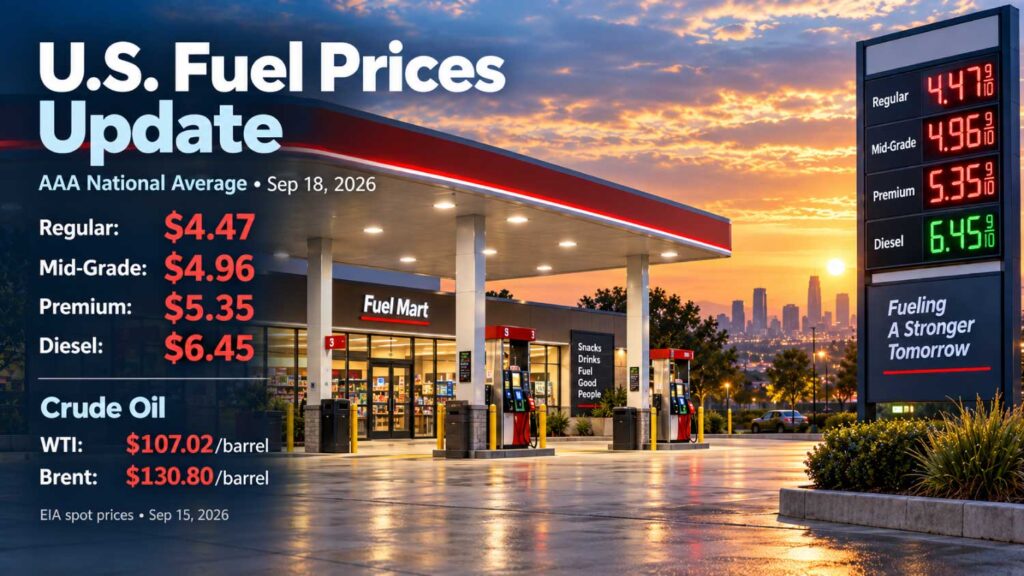
The national average was $5.967 one week earlier and $5.599 on August 31. In other words, the U.S. average increased by more than 68 cents per gallon in two weeks.
Crude oil markets have also moved higher. EIA spot-price data shows Brent crude at $130.80 per barrel on September 15, compared with $106.12 on September 8. Brent is widely used as an international crude oil benchmark, so movements in crude prices can eventually influence refined products such as diesel.
EIA notes that crude oil has historically been the largest component of the retail price of diesel fuel, although refining, distribution, marketing, taxes, regional supply conditions, and other factors also affect what drivers pay at the pump.
Why Diesel Prices Matter to Car Shipping
Most highway auto transport is performed by diesel-powered trucks. A carrier transporting several vehicles from one state to another has to account for fuel across the entire route—not only the loaded miles between the customer’s pickup and delivery locations.
The truck may also travel additional miles to collect vehicles, reposition for the next load, reach an accessible meeting point, or complete other stops along the route.
When diesel becomes more expensive, the carrier’s cost of operating that truck can rise. If higher fuel prices persist, that additional expense can eventually be reflected in the market rates carriers are willing to accept.
EIA explains that many freight and transportation companies use fuel-cost surcharges or fuel-pricing formulas, often referencing published diesel data. There is no single universal formula, however, and EIA itself does not set or regulate those surcharges.
This is why customers should think of diesel as one pricing input, rather than a direct multiplier applied to every car shipping quote.
Does a 10% Increase in Diesel Mean Car Shipping Costs Rise 10%?
No.
A car shipping quote is not simply the price of fuel multiplied by distance. Fuel is only one part of the carrier’s operating cost.
Other expenses can include equipment, insurance, driver compensation, maintenance, permits, tolls, dispatching, deadhead miles, and the time required to load and unload vehicles.
Market conditions matter too. A route with many vehicles waiting to ship but relatively few available carriers may become more expensive even if diesel prices are stable. The opposite can happen on a route with strong carrier availability.
For a broader explanation of these variables, see our guide to why car shipping prices vary.
Which Car Shipments Are More Exposed to Higher Fuel Costs?
Long-distance and cross-country routes
Fuel becomes more significant as mileage increases. A shipment covering 2,000 or 2,500 miles requires substantially more truck movement than a short regional route.
That does not guarantee a specific fuel-related increase, but sustained diesel pressure is more relevant to a long-haul shipment simply because the truck consumes more fuel during the trip.
If you are planning a long move, our cross-country car shipping cost guide explains the other variables that affect long-distance pricing.
Routes with limited carrier availability
A popular transport corridor may have many trucks competing for loads. A less common route may require a carrier to travel farther to collect or deliver a vehicle.
When repositioning or empty miles are required, fuel costs can matter more to whether a carrier accepts a particular shipment at a particular rate.
Remote pickup and delivery locations
Door-to-door service does not always mean the truck can safely reach the exact driveway. Large auto transport trucks need sufficient road width, turning space, clearance, and legal access.
A remote or difficult location can also add mileage away from the carrier’s primary corridor. Meeting the truck near a major highway or accessible commercial area, when practical, may make a shipment easier to dispatch.
Tight pickup windows
Flexibility can matter when transportation costs are changing. Requiring pickup on a very narrow date may reduce the number of carriers that can efficiently combine your vehicle with the rest of their route.
A broader pickup window can give dispatchers more opportunities to match the vehicle with an appropriately routed carrier.
Route-specific planning
Planning to Ship a Vehicle?
Get a vehicle shipping quote based on your route, vehicle, and workable dates.
Get My Quote
Why Shorter Routes Can Behave Differently
Fuel matters on short-distance shipments too, but mileage is not the only cost involved.
A carrier still has to coordinate pickup, inspect and load the vehicle, secure it correctly, communicate during transport, unload it, and complete delivery. Those operational steps exist whether the loaded portion of the trip is 300 miles or 2,000 miles.
That is one reason shorter shipments do not always have the lowest cost per mile. Our car shipping cost-per-mile guide explains why per-mile pricing generally changes with trip distance.
Regional Diesel Prices Can Matter Too
The national diesel average is useful, but carriers do not buy every gallon at the national average.
EIA data for September 14 shows meaningful regional differences, with West Coast diesel above the national average and California higher still.
EIA explains that diesel prices vary by region because of factors such as taxes, refinery and supply conditions, transportation costs, and local market structure.
For auto transport, that means two routes of similar mileage do not necessarily have identical operating economics. The markets a truck passes through, where it fuels, and how easily it can find its next load can all contribute to the rate a carrier is willing to accept.
Fuel Is Only One Part of Your Car Shipping Quote
Even during a period of high diesel prices, other factors may have a larger effect on an individual shipment.
These include:
- Distance: Longer routes generally require more fuel, driving time, and equipment use.
- Vehicle size and weight: Large trucks, SUVs, vans, and modified vehicles use more trailer capacity than small passenger cars.
- Vehicle condition: Inoperable vehicles may require additional equipment and handling.
- Open vs. enclosed transport: Enclosed transport typically carries fewer vehicles and provides additional protection, so it normally costs more than open transport.
- Route demand: The balance between available vehicles and available carriers changes from market to market.
- Season: Snowbird traffic, relocations, weather, holidays, auctions, and other seasonal patterns can change demand.
- Pickup timing: Flexible scheduling can make carrier matching easier than a highly restrictive pickup window.
For a broader pricing overview, see how much it costs to ship a car.
Could Car Shipping Prices Fall Again if Diesel Prices Drop?
They can, but the relationship is not immediate or perfectly proportional.
If diesel declines and other market conditions remain favorable, lower fuel expenses can reduce one source of cost pressure on carriers. But route demand, truck availability, seasonality, equipment capacity, and other expenses can still move rates in the opposite direction.
This is why one fuel-price headline should not be used by itself to predict a future auto transport quote.
The most useful comparison is the current market for the specific vehicle, origin, destination, and shipping window.
Should You Wait for Fuel Prices to Fall Before Shipping a Car?
Trying to perfectly time diesel or crude oil prices is difficult.
If your vehicle needs to move for a relocation, purchase, sale, college move, military assignment, seasonal relocation, or another fixed event, delaying the shipment solely in hopes of lower fuel prices can create a different problem: your preferred dates may become less flexible or carrier availability may change.
If your schedule is flexible, it can make sense to compare current quotes and understand the market before deciding.
Our guide on getting an accurate car shipping quote explains the information that should be included when requesting pricing.
How to Limit the Impact of a More Expensive Transport Market
You cannot control diesel or global crude oil prices, but you can control several parts of the shipment.
Use open transport when it fits the vehicle
Open transport is the standard option for most everyday vehicles and generally costs less than enclosed transport. Enclosed service remains appropriate when additional protection is important for a particular vehicle.
Provide accurate vehicle information
Give the correct year, make, model, operating condition, and any relevant modifications. Incorrect dimensions or vehicle condition can lead to repricing when the carrier arrives.
Allow reasonable pickup flexibility
A flexible window gives more carriers an opportunity to fit the vehicle efficiently into an existing route.
Use accessible locations when necessary
If the exact address is difficult for a large truck to access, an agreed nearby location can reduce unnecessary detours and simplify pickup or delivery.
Compare the complete quote
The lowest advertised number is not always the most useful comparison. Look at what is included, the transport method, pickup expectations, insurance information, payment terms, and whether the quote reflects the actual vehicle and route.
What Higher Diesel Prices Mean for Car Shipping in 2026
The September increase in diesel prices is a real operating-cost development for transportation companies, and it is reasonable to expect fuel conditions to influence auto transport pricing when those conditions persist.
But there is no universal formula that turns a diesel-price increase into an identical percentage increase in a customer’s car shipping quote.
The effect depends on the shipment itself: distance, route, truck availability, timing, vehicle type, transport method, and current market demand all continue to matter.
For customers, the practical takeaway is simple: use current pricing rather than an old quote, provide accurate shipment information, and keep some scheduling flexibility when possible.
Frequently Asked Questions
Do higher diesel prices increase car shipping costs?
Higher diesel prices can put upward pressure on carrier operating costs and may contribute to higher car shipping rates. The effect varies by route and market and is not necessarily proportional to the percentage increase in diesel.
How much of a car shipping quote is fuel?
There is no universal percentage for consumer auto transport quotes. Fuel is one operating expense among several, and carriers and transportation companies may account for fuel differently.
Are cross-country shipments more affected by diesel prices?
Fuel generally becomes more relevant as trip mileage increases because the carrier must operate the truck for more miles. Carrier availability, route demand, and other costs still influence the final price.
Does a fuel surcharge apply to every car shipment?
Not necessarily. EIA notes that many transportation companies use fuel surcharges or fuel-pricing formulas, but each company may use its own method. A car shipping quote may reflect fuel conditions within the total rate rather than as a separate line item.
Are California car shipments more expensive because diesel costs more there?
Higher regional fuel prices can contribute to operating costs, but they are only one factor. Distance, route balance, carrier availability, vehicle size, timing, and pickup and delivery locations also affect California auto transport pricing.
Can I lock in a car shipping price before diesel rises further?
A current quote reflects the shipment details and market conditions available when it is prepared. Pricing policies vary, so customers should confirm how long a quote is valid and whether any shipment details could cause it to change.
Data note: Fuel and crude oil figures in this article are based on U.S. Energy Information Administration data available in September 2026. Petroleum markets can change quickly. See the EIA Gasoline and Diesel Fuel Update, crude oil spot prices, and diesel fuel surcharge guidance for current source data.