If you are researching car shipping insurance, the most important thing to understand is that coverage can vary between motor carriers, policies, vehicles, and shipment circumstances.
Instead of assuming that every auto transport shipment includes the same protection, verify the actual coverage information that applies to the carrier assigned to your vehicle.
Car Shipping Insurance at a Glance
| Question | What to Verify |
|---|---|
| Who is transporting the vehicle? | The assigned motor carrier |
| What coverage applies? | Applicable cargo coverage and policy terms |
| What are the limits? | Policy and shipment-specific limits |
| Is there a deductible? | Confirm the applicable deductible, if any |
| What may be excluded? | Review exclusions and limitations |
| How is vehicle condition documented? | Pickup and delivery inspections, BOL, and photos |
| What if damage is discovered? | Follow the documented notification and claim procedure |
How Auto Transport Insurance Works
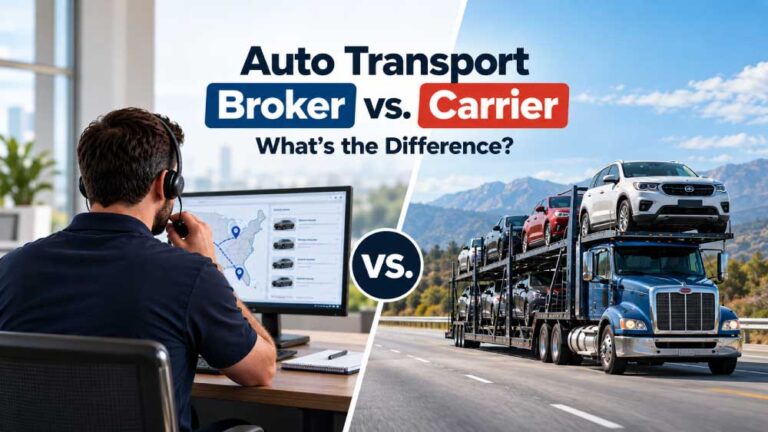
Auto transport can involve different parties. A transport company or broker may coordinate the shipment, while a motor carrier physically loads and transports the vehicle.
Because the actual insurance arrangement can depend on the assigned carrier and shipment, do not rely on a generic website statement alone. Once a carrier is assigned, confirm what coverage information applies to that specific transport.
For the broader shipment process, see how car shipping works.
Broker vs. Motor Carrier: Why the Difference Matters
A broker or transport coordinator may arrange the shipment without physically operating the truck.
The motor carrier is the trucking company that actually transports the vehicle.
If you are unsure which role a company performs, our broker vs. carrier comparison explains the distinction and what to verify before booking.
For insurance questions, this distinction matters because you need to know which party is physically handling the vehicle and what coverage documentation applies to that carrier and shipment.
What Should You Ask About Before Pickup?
Before the vehicle is loaded, ask for enough information to understand the applicable protection.
Useful questions include:
- Who is the assigned motor carrier?
- What cargo coverage applies to the shipment?
- What are the applicable limits?
- Is there a deductible?
- What exclusions or limitations apply?
- Are there special requirements for high-value or modified vehicles?
- What documentation is required if damage is discovered?
- Who should be contacted if a claim needs to be reported?
If something is unclear, ask for clarification before pickup rather than relying on assumptions.
Is Every Type of Damage Covered?
No universal answer applies to every shipment.
Coverage depends on the actual policy terms, exclusions, limits, cause of loss, vehicle condition, and circumstances of the event.
For that reason, avoid assuming that a particular type of damage is automatically covered simply because the vehicle is being professionally transported.
What Can Affect Whether a Claim Is Covered?
Several factors can matter when a damage issue is reviewed, including:
- The applicable insurance policy
- The cause of the damage
- Policy exclusions
- Coverage limits
- Deductibles
- The vehicle’s documented condition before transport
- The condition documented at delivery
- Whether the issue was reported according to the applicable procedure
Exact coverage determinations belong to the insurer and policy terms, not a general car shipping article.
The Bill of Lading and Vehicle Condition
The Bill of Lading, or BOL, is an important shipment document and can include condition information recorded when the vehicle is picked up and delivered.
Condition documentation matters because it helps establish what was visible before transport and what was observed at delivery.
At Pickup
Before loading:
- Walk around the vehicle.
- Review visible scratches, dents, chips, and other existing condition details.
- Make sure the condition information is documented accurately.
- Take your own clear photos from multiple angles.
At Delivery
Before completing the final handoff:
- Inspect the vehicle again.
- Compare it with the pickup condition documentation.
- Compare it with your pickup photos.
- Document any new condition issue you observe.
- Follow the shipment’s instructions for reporting a potential damage issue.
For a full preparation checklist, see how to prepare your car for shipping.
Route-specific planning
Planning to Ship a Vehicle?
Get a vehicle shipping quote based on your route, vehicle, and workable dates.
Get My Quote
What If You Notice Damage at Delivery?
If you believe the vehicle has new damage, document what you observe before completing the delivery process whenever possible.
Useful steps can include:
- Photograph the area clearly.
- Compare it with your pickup photos.
- Review the pickup condition documentation.
- Document the issue on the delivery paperwork when applicable.
- Keep copies of shipment records and photos.
- Follow the contact and claim instructions provided for the shipment.
Do not assume that noticing damage automatically determines coverage or liability. The applicable policy and claim review process determine that outcome.
Can You Ship a Car Without Insurance?
Whether you can ship a car without insurance depends on what you mean by insurance. Your personal auto insurance policy and the motor carrier's insurance are separate matters. A vehicle without an active personal auto policy may still be eligible for transport in some circumstances, but you should confirm the assigned carrier's requirements and any applicable legal or contractual obligations before booking.
The motor carrier's coverage does not automatically replace your own insurance or guarantee that every type of loss will be covered. Ask what protection applies while the vehicle is in the carrier's custody, including relevant limits, deductibles, exclusions, and claim procedures.
If your vehicle is uninsured, tell the transport coordinator before pickup. Also check with a qualified insurance professional about any coverage or legal requirements that may apply before and after transport, particularly if the vehicle will be driven on public roads.
Does Personal Auto Insurance Cover a Car During Shipping?
Your personal auto policy may or may not provide coverage while the vehicle is being transported.
The answer depends on your own policy, insurer, location, and circumstances.
If you want to know whether your personal policy provides any protection during transport, contact your insurer or insurance agent and ask specifically about your vehicle while it is being carried by a third-party motor carrier.
Do not assume that comprehensive coverage, collision coverage, or another personal policy automatically fills every gap in motor-carrier coverage.
Do You Need Additional Insurance to Ship a Car?
There is no universal answer.
Whether additional coverage is appropriate depends on the value of the vehicle, the applicable carrier coverage, policy limits, exclusions, your own insurance, and your risk tolerance.
If the vehicle is unusually valuable or you are concerned about a potential coverage gap, review the available documentation and discuss your options with a qualified insurance professional before transport.
Car Shipping Insurance for High-Value Vehicles
Luxury, exotic, classic, collector, restored, and other high-value vehicles deserve additional attention before pickup.
Before transport:
- Provide an accurate description of the vehicle.
- Disclose modifications that may affect its value or handling.
- Review the assigned carrier’s applicable coverage information.
- Compare the vehicle’s value with the applicable policy limits.
- Ask about relevant exclusions or deductibles.
- Document the vehicle carefully before loading.
If the available information does not give you enough confidence for the vehicle’s value, address that before pickup.
Open vs. Enclosed Transport and Insurance
Open and enclosed transport describe the equipment used to carry the vehicle. They do not, by themselves, tell you the exact insurance terms of a shipment.
Open Auto Transport
Open transport carries vehicles on an open trailer. The applicable coverage still depends on the assigned carrier and policy.
Enclosed Auto Transport
Enclosed transport carries the vehicle inside a covered trailer and provides additional protection from direct weather and road exposure.
Do not assume that enclosed transport automatically includes a particular insurance limit or broader coverage. Verify the assigned carrier’s actual documentation.
For equipment differences, see open vs. enclosed auto transport.
Are Personal Belongings Covered?
Do not assume that coverage applicable to the vehicle also applies to personal property left inside it.
Carrier policies for personal belongings can also vary. Before leaving anything inside the vehicle, confirm what the assigned carrier permits and what, if any, coverage applies.
For more detail, see can you ship personal items in your car.
What About Pre-Existing Damage?
Pre-existing scratches, dents, chips, mechanical problems, and other condition issues should be documented before loading.
This is one reason the pickup inspection and your own photos are so important: they create a record of the vehicle’s condition before transport begins.
What About Mechanical Problems?
Do not assume that a mechanical failure during or after shipment is automatically considered transport damage.
The cause of the issue and the applicable policy terms matter.
If the vehicle already has a mechanical problem or does not start, steer, brake, or roll normally, disclose that before transport.
See inoperable vehicle shipping for related transport considerations.
How to Verify Coverage Before Shipping
Use this checklist before pickup:
- Confirm the assigned motor carrier.
- Request or review the applicable insurance documentation.
- Check the relevant cargo coverage information.
- Review limits and deductibles.
- Review exclusions and special conditions.
- Ask how vehicle value affects the applicable coverage.
- Confirm the procedure for reporting potential damage.
- Document the vehicle before loading.
Auto Transport Insurance Requirements
Insurance and regulatory requirements can depend on the carrier, type of operation, jurisdiction, and other factors.
This article does not attempt to define a universal legal minimum for every motor carrier or shipment.
For your shipment, focus on confirming the assigned carrier’s current credentials and applicable coverage information instead of relying on a generic minimum quoted online.
Frequently Asked Questions
Does car shipping include insurance?
Do not assume every shipment includes identical coverage. Confirm the assigned motor carrier and review the applicable cargo coverage information, limits, deductibles, exclusions, and claim procedure before pickup.
What insurance does an auto transport carrier have?
The exact insurance arrangement varies by carrier. Review the documentation that applies to the motor carrier assigned to the shipment rather than relying on a generic coverage description.
Can I ship my car if I don't have personal auto insurance?
It may be possible, depending on the assigned carrier's requirements and the circumstances of the shipment. Personal auto insurance and motor carrier coverage serve different purposes. Confirm the carrier's acceptance requirements, review the applicable transport coverage, and check any insurance obligations that apply to your vehicle before arranging pickup.
Do I need my own insurance to ship a car?
Your own policy may or may not provide protection while the vehicle is being transported. Contact your insurer or agent to confirm what your policy does and does not cover.
What should I do if my car is damaged during transport?
Document the issue, compare the vehicle with the pickup condition report and photos, preserve shipment records, and follow the notification and claim procedure provided for the shipment.
Are personal items inside the car insured?
Do not assume vehicle cargo coverage applies to personal belongings. Confirm the carrier’s personal-item policy and any applicable coverage before leaving items inside the vehicle.
Does enclosed shipping include better insurance?
Not automatically. Enclosed shipping changes the transport equipment, but exact coverage terms and limits still depend on the assigned carrier and policy.
Should I buy extra insurance for a classic or luxury car?
That depends on the vehicle’s value, applicable carrier coverage, exclusions, limits, your own policy, and your risk tolerance. Review the documentation and discuss unresolved coverage concerns with a qualified insurance professional before transport.