Quick answer: A car shipping bill of lading (BOL) is a record used when a carrier accepts and delivers your vehicle. Depending on the form, it may identify the shipment, document the car’s visible condition, and set out or refer to transport terms. Before you sign at pickup, verify the vehicle and route details and make sure existing damage is accurately recorded. At delivery, inspect the car again, note any new damage on the delivery paperwork before signing, take photos, and keep a copy.
The driver has arrived. Your vehicle is ready to go. Then a tablet or paper form appears with a signature box. It is easy to treat that moment as a formality, but the details recorded there may matter if you later disagree about the condition of your vehicle.
This guide explains what to look for on an auto transport bill of lading, how to complete a careful pickup and delivery inspection, and what to do if something does not match. It focuses on practical vehicle-shipping handoffs, not the different rules that apply to moving household goods.
What Is a Bill of Lading in Car Shipping?
A bill of lading is a transportation document used by the motor carrier. For car shipping, the carrier may use a BOL, a separate vehicle inspection report, or a combined electronic form to record key shipment details and the vehicle’s condition at pickup and delivery.
Depending on its wording, the document can serve several functions:
- Shipment receipt: Evidence of the carrier’s acceptance or delivery of a particular vehicle.
- Condition record: A diagram, photographs, and notes describing visible scratches, dents, chips, or other observations at each handoff.
- Transportation paperwork: A record of shipment parties, locations, and potentially terms that apply to the transport.
There is no one-page design used by every carrier. Federal rules address information in bills of lading or receipts for covered carriers, while the specific inspection layout and signature workflow can differ. See 49 CFR §373.101 for the underlying receipt requirements applicable to covered motor carriers.
What Information Should You Check on the BOL?
Before signing, compare the document with your booking confirmation and the actual vehicle in front of you. Check these areas:
- Vehicle identification: Year, make, model, and vehicle identification number (VIN), if shown. The VIN should identify the correct car.
- Pickup and delivery details: Origin, destination, contact names, and the person authorized to release or receive the car.
- Carrier details: The company or driver performing the physical transport, along with available shipment or dispatch reference numbers.
- Condition report: Vehicle diagram, image attachments, damage symbols, and free-text notes. Ask what any abbreviation means.
- Vehicle-specific observations: Odometer reading where recorded, visible accessories, modifications, and operating limitations relevant to loading.
- Handoff details: Pickup or delivery date, signature fields, and whether the form refers to additional terms.
Important distinction: Your BOL is not a vehicle title, proof of ownership, or an insurance policy. It may contain or refer to contractual terms, but it should not be assumed to replace your booking confirmation or the carrier’s insurance documents.
Pickup Inspection: Eight Things to Do Before Signing
The pickup inspection is your baseline. The more accurate it is, the easier it becomes to identify any change at delivery.
- Make the exterior visible. Remove enough dirt or road film to see scratches and paint chips. A complete detail is not necessary; a readable condition matters.
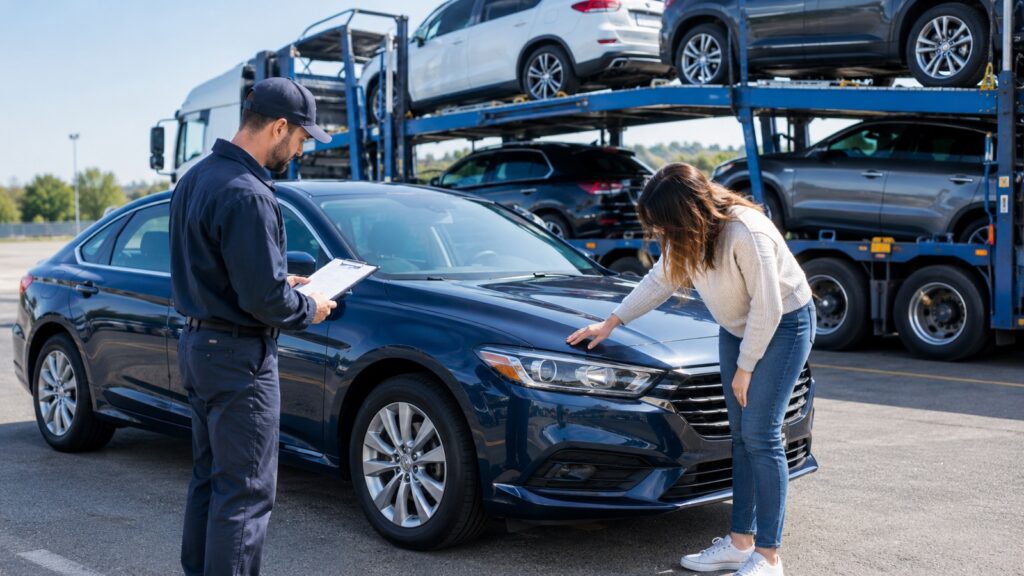
- Walk around the vehicle with the driver. Look at the hood, roof, trunk, doors, bumpers, fenders, mirrors, glass, wheels, and lower bodywork. Use good light when possible.
- Point out existing damage. Identify dents, chips, cracked glass, worn trim, or a previously scuffed wheel. Do not rely on a generic “used condition” description if a more precise note is possible.
- Match every mark to the diagram. If the form shows a scratch on the left front door, verify that it is really there. Request a correction for inaccurate or missing entries.
- Take your own photos. Capture all four sides, each corner, the roof, the wheels, and clear close-ups of existing damage. Preserve original files and their timestamps.
- Record operating concerns. Tell the carrier if the car does not start, roll, steer, or brake normally; also disclose clearance-sensitive modifications. These details affect the loading plan.
- Read before you sign. Check the document for blank condition fields, unexpected wording, or unexplained notes. Ask for clarification rather than signing an incomplete form.
- Keep the signed pickup record. Request the finalized PDF, email, photo, or paper copy before the vehicle leaves. Confirm that any digital photos or annotations are included.
If you need a broader preparation list, use our car shipping preparation checklist. It covers keys, loose items, vehicle condition, fuel instructions, and pickup access.
Route-specific planning
Planning to Ship a Vehicle?
Get a vehicle shipping quote based on your route, vehicle, and workable dates.
Get My Quote
Delivery Inspection: What to Check Before Signing
At delivery, compare the vehicle against the pickup BOL and your own photographs. Do the walk-around before the driver leaves whenever it is safe and practical to do so.
- Open the pickup record. Have the original condition report and photos ready before checking the vehicle.
- Inspect in a consistent order. Start at one corner and move around the entire car, including roof, glass, lights, mirrors, bumpers, wheels, and lower panels.
- Compare both condition records. An old dent marked at pickup is different from a new dent with no earlier notation.
- Check accessible functional details. If safe, verify the vehicle starts, keys are returned, and any obvious warning lights or unusual conditions are recorded. Avoid unsafe checks at a busy loading location.
- Photograph discrepancies immediately. Take a close-up and a wider photo showing the location on the vehicle. Include the entire car and delivery setting where practical.
- Write new damage as a delivery exception. Describe the location and type of damage clearly on the BOL or attached delivery report before signing.
- Request the driver’s acknowledgment. Ask the driver to review the notation and provide the completed copy. If you disagree, document that disagreement rather than deleting accurate observations.
- Save the final paperwork. Keep the delivery BOL, photos, carrier messages, and any separate inspection attachments together.
For example, a useful description is “New approximately 2-inch scuff on passenger-side rear bumper, not noted at pickup.” It is more informative than simply writing “damage.” Use measurements only when you can reasonably estimate them.
Do not sign a clean condition acknowledgment if you have identified new damage. Record the discrepancy first. A signature without exceptions can make a later dispute more difficult, although the legal effect depends on the facts and applicable agreements.
What if the Car Arrives After Dark or in Bad Weather?
Rain and poor lighting can hide paint damage. Ask whether the inspection can take place somewhere safe and better lit. Use a flashlight and photograph what you can inspect. If a full inspection genuinely is not possible, explain the limitation in the delivery notes before signing, request a copy, and inspect again as soon as conditions allow.
A note such as “Delivery inspection limited by darkness and heavy rain; visible areas checked” records the circumstances, but it does not guarantee that a later claim will be approved. Notify the carrier promptly if you subsequently discover an issue.
What if the Driver Disagrees About a Damage Note?
Stay factual. Show the pickup photos and report, describe what you are seeing, and ask that the delivery paperwork reflect the disagreement. Keep your own dated photos and any messages about the handoff. If the driver will not add a note, do not change or falsify the document; record the issue separately in writing and contact the carrier and your shipping coordinator promptly.
Safety comes first. Do not physically obstruct the truck or escalate a dispute at the roadside. The objective is a clear, accurate record and prompt follow-up.
Does Signing the Bill of Lading Mean You Cannot File a Claim?
Not necessarily. A signed delivery report is important evidence, and an unqualified signature may make a damage claim harder to establish. But it is misleading to say that every signature automatically removes every possible legal right. The outcome depends on the applicable contract, law, evidence, and circumstances.
What matters immediately is that you do not confuse noting damage on the BOL with filing a formal cargo-damage claim. Under 49 CFR §370.3, for covered claims, a damage notation on a delivery receipt by itself does not satisfy the minimum claim-filing requirements. A written claim generally needs to identify the shipment, assert liability, and request a specified or determinable amount, subject to the applicable requirements and deadlines.
If You Discover Damage, What Should You Do Next?
Use the following sequence to preserve the relevant information and start the right process:
- Document the condition. Take clear photographs of the damage and keep the original pickup and delivery pictures.
- Save both BOL copies. Keep the pickup condition report, delivery exception notes, and all attachments.
- Notify the transporting carrier promptly. Ask for its written cargo claim instructions and the correct claims contact.
- Tell SpeedyWay promptly if it arranged the shipment. SpeedyWay’s published Terms and Conditions ask customers to report a carrier damage claim to SpeedyWay within 48 hours of delivery. That notice to the broker is separate from a formal claim submitted to the carrier.
- Submit the carrier’s required claim in writing. Include shipment details, a description of the loss, photos, applicable paperwork, and a repair estimate or requested amount when available. Follow the carrier’s procedures and applicable deadlines.
- Keep a communication record. Save emails, claim numbers, insurer correspondence, and repair estimates. Do not rely only on a phone conversation.
SpeedyWay is a transportation broker, while the assigned motor carrier physically transports the vehicle. The carrier is the primary point of contact for a carrier cargo-damage claim; your broker can help identify the correct carrier information and paperwork. Coverage and liability are not determined by the BOL alone. Review our car shipping insurance guide for what to verify about a carrier’s policy.
If you believe an auto transport company engaged in deceptive practices or violated applicable motor-carrier rules, the FMCSA Complaint Center describes eligible complaints. An FMCSA complaint is not a substitute for filing a damage claim with the responsible carrier.
Who Can Sign if You Cannot Be There?
A designated adult representative may be able to release or accept the vehicle on your behalf, subject to the booking and carrier’s requirements. SpeedyWay’s published terms require the customer or a designated agent at pickup and delivery.
If a family member, friend, dealership employee, or other authorized contact will handle the car, give that person the pickup photos, order details, and clear instructions to inspect the vehicle and record any new damage before signing. A rushed signature by a representative can create the same documentation problems as a rushed signature by the owner.
Is an Electronic Bill of Lading Different?
Many carriers use phones or tablets instead of paper. The basic review process stays the same: read the entries, confirm any attached photos, inspect the vehicle, add accurate notes, and obtain the finalized file. Check whether your signature applies to the pickup inspection, delivery acknowledgment, or additional terms on a separate screen.
If an app does not show all the entries, ask to review the complete record before signing. Save the PDF or email in a place you can find later, rather than relying on a temporary app link.
Special Situations: Auctions, Non-Running Cars, and Hawaii Shipments
Some shipments have more than one handoff or require condition details beyond a normal passenger car.
- Auction purchases: The seller or auction yard may release the vehicle, and its own inspection or condition description may not match the carrier’s pickup record. Keep both. See our auction auto transport service.
- Non-running vehicles: Record existing body damage and disclose whether the vehicle rolls, steers, or brakes. Loading limitations should be known before dispatch. Learn about inoperable vehicle shipping.
- High-value or classic cars: Take closer photos of paint, trim, wheels, and low-clearance areas, and review the carrier’s actual cargo coverage before pickup. See enclosed auto transport.
- Hawaii or other ocean-linked moves: Mainland pickup, port acceptance, ocean transport, and final release may involve separate paperwork and legal or insurance terms. Confirm which document governs each leg. Our Hawaii auto transport service explains the stages.
Car Shipping BOL Checklist: Save This Before Pickup
Use this quick checklist when you meet the driver. It complements—not replaces—the carrier’s official document.
At Pickup
- Confirm the correct vehicle, contact details, route, and carrier.
- Inspect the exterior together and explain any existing damage.
- Check diagram marks, written notes, and digital photos.
- Take your own dated photographs.
- Read the form before signing and save the signed pickup copy.
At Delivery
- Have the pickup record and photos open.
- Inspect all accessible vehicle areas in suitable light.
- Record new damage or inspection limits as delivery exceptions.
- Photograph discrepancies before the driver leaves.
- Save the final BOL and notify the correct contacts promptly if needed.
Frequently Asked Questions
What does BOL mean in auto transport?
BOL means bill of lading. It is a carrier’s shipment document. In vehicle shipping, it may also include or be paired with the condition report completed at pickup and delivery.
Do I sign a bill of lading at pickup and delivery?
Commonly, yes: the carrier records the pickup handoff and later the delivery acknowledgment. The exact signature process depends on the form. Read what each signature confirms before signing.
Is a bill of lading the same as car shipping insurance?
No. The BOL documents the shipment and may record condition, while a carrier’s insurance policy has its own terms, limits, exclusions, and claim procedures. Request the applicable insurance details separately.
Can I add damage notes after signing?
Contact the carrier immediately if you discover something after signing and provide dated photos and written details. Whether later information can change the delivery record or support a claim depends on the evidence, agreements, and applicable rules. Do not assume that an after-the-fact edit will be accepted.
What if my car is delivered at night?
Inspect in a safe, well-lit place where possible. If weather or darkness materially limits the inspection, write that limitation on the delivery paperwork before signing, save photos, and complete a follow-up inspection promptly. Such a note does not guarantee coverage.
Can someone else sign the BOL for me?
Often an authorized adult can handle a vehicle handoff. Confirm the arrangement in advance and give the representative instructions to document condition and keep the signed paperwork.
How long should I keep my bill of lading?
Keep pickup and delivery copies with your booking confirmation and photos at least until the shipment and any questions about its condition are fully resolved. If a claim or dispute is pending, preserve the records throughout that process and any applicable retention period.
Plan the Shipment, Then Protect the Paper Trail
The most useful car shipping bill of lading is an accurate one. Take a few minutes to inspect, record, and save the vehicle’s condition at each handoff. If something changes, make the difference visible in the paperwork and follow the correct claim process promptly.
Still planning your move? Review how car shipping works from pickup to delivery, then request an exact car shipping quote based on your vehicle, route, condition, and timing.
Editorial note: This guide is general consumer information, not legal or insurance advice. Your actual booking terms, the carrier’s transport documents and policy, and applicable law control the specific shipment.