If you are trying to determine how much it costs to ship a car, the most useful starting point is the route. A short shipment between nearby cities is priced differently from a cross-country move, and two shipments covering a similar number of miles can still differ because of vehicle size, transport type, access, and carrier demand.
That is why car shipping is better understood as a route-specific logistics service rather than a product with a fixed national price. This guide explains how the major cost factors work, how to compare quotes fairly, and how to build a more realistic planning estimate before booking.
Car Shipping Cost at a Glance
SpeedyWay uses the following ranges as planning estimates in its route estimator. They are not national averages, guaranteed rates, or live carrier prices. Your actual quote can be different based on the specific pickup and delivery locations, vehicle details, timing, and carrier availability.
| Estimated Distance | Open Transport | Enclosed Transport |
|---|---|---|
| Up to 500 miles | $0.90-$1.40 per mile | $1.40-$2.40 per mile |
| 500-1,500 miles | $0.65-$0.90 per mile | $0.90-$1.40 per mile |
| 1,500+ miles | $0.40-$0.65 per mile | $0.65-$1.15 per mile |
Try the route planner
Estimate This State-to-State Move
Compare an approximate route estimate, then request an exact quote using the actual vehicle and locations.
Select on the map
Map clicks currently update From State.
- From
- To
Select states directly on the map, or use the dropdowns for the quickest keyboard experience.
These ranges are most useful for early planning. For a more specific estimate, start with the exact origin, destination, vehicle, and transport method rather than multiplying mileage alone.
For a deeper look at the relationship between mileage and pricing, see our guides to car shipping cost by distance and car shipping cost per mile.
What Determines the Cost to Ship a Car?
Distance matters, but it is only one part of the quote. Auto transport pricing reflects how difficult a particular vehicle is to move on a particular route at a particular time.
Distance and Route
Longer shipments usually cost more in total because the carrier must travel farther. However, the cost per mile can decline on longer routes because fixed pickup, loading, dispatch, and delivery work is spread across more miles.
The route itself also matters. A shipment between areas regularly served by auto carriers can be easier to match than one involving a remote pickup or delivery point. Highway access, regional demand, and where a carrier can find its next load can all influence route pricing.
Vehicle Size and Type
A compact car and a full-size pickup do not use the same amount of trailer space. Vehicle height, length, width, and weight can affect how a carrier plans the load and how many other vehicles can fit safely on the trailer.
When requesting a quote, provide the exact year, make, model, and any modifications that significantly change the vehicle’s dimensions.
Running vs. Inoperable Vehicles
A vehicle that cannot start, steer, brake, or roll normally may require additional loading equipment or a carrier that is prepared to handle an inoperable vehicle. That can affect both carrier availability and price.
If the vehicle does not run normally, disclose that before booking. See our inoperable vehicle shipping service for more detail.
Open vs. Enclosed Transport
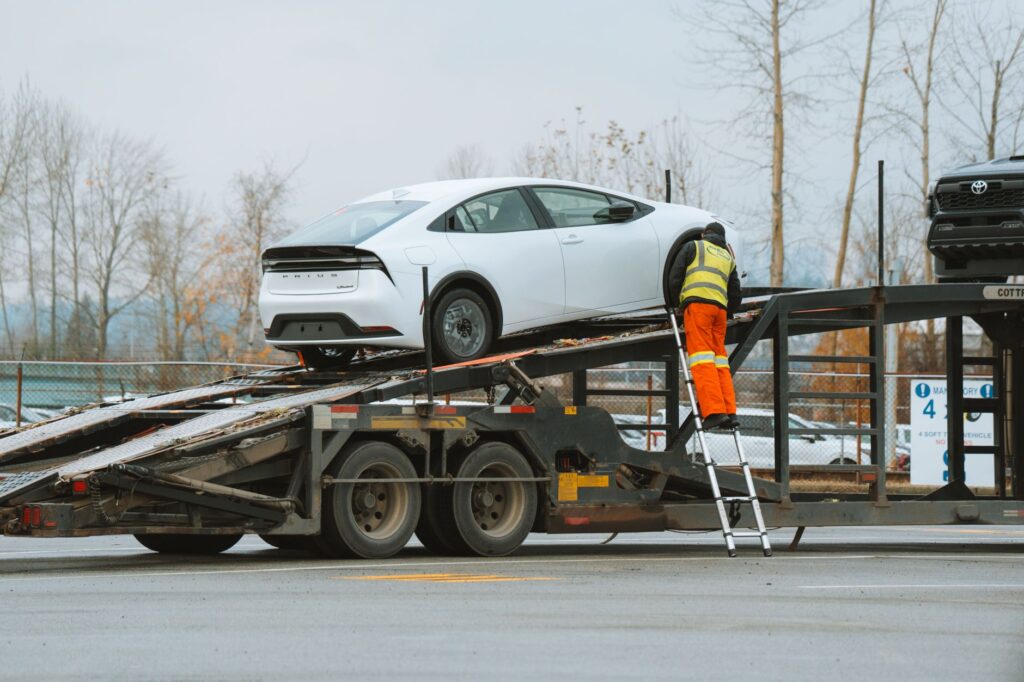
Open auto transport is the standard option for many everyday vehicles and generally offers broader carrier availability. Vehicles travel on an open multi-car trailer and remain exposed to normal road and weather conditions during transit.
Enclosed auto transport places the vehicle inside a covered trailer. It is often considered for classic, exotic, luxury, low-clearance, restored, or otherwise high-value vehicles where additional protection from road exposure is a priority.
Because enclosed trailers carry fewer vehicles and involve more specialized equipment, their planning ranges are higher than comparable open-transport ranges.
Pickup and Delivery Access
Large auto transport trucks need enough room to enter, maneuver, load, and depart safely. Dense city streets, low branches, narrow residential roads, weight restrictions, or difficult rural access can make an exact address unsuitable for the carrier.
In those situations, the driver and customer may arrange a nearby accessible meeting point such as a large parking area or another safe location along the route. Access can therefore affect both logistics and pricing.
Timing and Carrier Availability
Auto transport capacity changes by route and season. Moving periods, snowbird traffic, holidays, weather, dealer and auction activity, and regional imbalances can all change how quickly a suitable carrier is available.
Rather than assuming one season is always cheaper than another, compare the conditions on your specific route and keep some scheduling flexibility where possible.
How Distance Changes Car Shipping Cost
Distance affects both the total shipment price and the rate per mile. A 2,000-mile shipment normally costs more in total than a 300-mile shipment, but it does not necessarily cost six or seven times as much.
That is because some of the work involved in a shipment happens regardless of distance: dispatching the load, coordinating pickup, inspecting and loading the vehicle, and completing delivery. On a longer trip, those fixed tasks are spread over more miles.
This is why per-mile planning ranges generally decrease as distance increases. For more detail, use our distance-based cost guide together with the car shipping cost calculator.
Open vs. Enclosed Auto Transport Cost
Transport type is one of the clearest choices you can make when planning a shipment.
| Factor | Open Transport | Enclosed Transport |
|---|---|---|
| Trailer | Open multi-vehicle carrier | Covered or enclosed carrier |
| Typical use | Daily drivers and most standard vehicles | Classic, exotic, luxury, restored, or protection-sensitive vehicles |
| Road exposure | Exposed to normal weather and road conditions | Protected from direct road and weather exposure |
| Carrier availability | Generally broader | More specialized |
| Planning cost | Lower planning range | Higher planning range |
The right choice is not simply the cheapest one. It should match the vehicle, your protection priorities, and your budget. Our open vs. enclosed transport guide explains the tradeoffs in more detail.
How Vehicle Size and Condition Affect Your Quote
Carriers plan each trailer around available space, total load, vehicle dimensions, and loading requirements. That is why vehicle information has to be accurate when the quote is prepared.
A larger SUV, long-bed truck, lifted vehicle, or vehicle with a roof-mounted accessory can occupy more usable trailer space than a standard sedan. Very low ground clearance can also affect loading requirements.
Condition matters for the same reason. If a car cannot move under its own power, tell the transport company exactly what does and does not work. A vehicle that rolls but does not start is different operationally from one with locked wheels or steering damage.
What Can Change a Car Shipping Estimate?
An estimate is based on the information available when it is prepared. If those assumptions change, the pricing can change as well.
Common examples include:
- Vehicle details change: The actual vehicle is larger, modified, or in a different operating condition than originally described.
- The route changes: Pickup or delivery moves to a different city, ZIP code, or less accessible location.
- Transport type changes: The shipment moves from open to enclosed transport or requires specialized equipment.
- Scheduling requirements change: A flexible pickup window becomes a much narrower request.
- Carrier availability changes: Capacity on a particular route can vary as market conditions change.
For more context on these variables, read why car shipping prices vary.
How to Compare Car Shipping Quotes
The lowest headline number is not always the most useful comparison. Before comparing two quotes, make sure they are based on the same shipment assumptions.
Check that each quote uses:
- The same pickup and delivery locations.
- The same year, make, model, and vehicle condition.
- The same open or enclosed transport method.
- The same pickup timing or scheduling assumptions.
- Comparable pickup and delivery access.
- Clear terms explaining what is included and what could cause pricing to change.
Before pickup, also confirm what carrier cargo coverage applies to the shipment and review the applicable terms and limitations. At pickup, the vehicle condition should be documented on the Bill of Lading, and the condition should be reviewed again at delivery.
If a motor carrier has already been assigned, you can also verify its operating information through the FMCSA public SAFER Company Snapshot before pickup.
If two quotes seem unusually far apart, compare the underlying assumptions before deciding that one company is simply cheaper.
How to Reduce Car Shipping Cost Without Cutting Corners
You cannot control every market factor, but you can make a shipment easier to price and match.
- Use open transport when it fits the vehicle. It generally offers a lower planning range than enclosed transport.
- Provide accurate vehicle information. Correct dimensions, modifications, and operating condition reduce surprises later.
- Keep reasonable scheduling flexibility. A carrier has more options when the shipment does not depend on an unnecessarily narrow window.
- Use accessible pickup and delivery points. Practical truck access can simplify the route.
- Compare equivalent quotes. Make sure the companies are pricing the same shipment requirements.
The goal is not simply to find the lowest possible number. It is to understand what is being quoted and whether it reflects the shipment you actually need.
How Much Does Cross-Country Car Shipping Cost?
Cross-country transport involves the same core pricing factors as any other shipment, but distance makes route planning especially important. The exact origin and destination, whether the vehicle travels on a common carrier lane, transport type, vehicle size, and seasonal carrier availability all influence the estimate.
Instead of relying on a single coast-to-coast price, use your actual route. Our dedicated guide to cross-country car shipping cost explains the long-distance pricing factors in more detail.
Get a Route-Specific Car Shipping Estimate
A mileage table can help with budgeting, but the most useful estimate starts with your actual shipment. Enter the origin, destination, vehicle information, and preferred transport method to narrow the planning range for your route.
Request a car shipping quote when you are ready to price the specific vehicle and route.
Frequently Asked Questions
How is car shipping cost calculated?
Car shipping cost is based on several variables rather than mileage alone. Important factors include route and distance, vehicle dimensions and condition, open or enclosed transport, pickup and delivery access, timing, and carrier availability.
Why does the cost per mile usually fall on longer trips?
Some shipment tasks, such as dispatching, loading, inspections, and delivery coordination, occur regardless of the total distance. On longer shipments, those fixed activities are spread across more miles, so the planning rate per mile can be lower even though the total price is higher.
Is open transport less expensive than enclosed transport?
Open transport generally has a lower planning range because it is more widely available and open carriers can move several vehicles at once. Enclosed transport uses more specialized equipment and provides additional protection from direct road and weather exposure.
Do SUVs and trucks cost more to ship?
They can. Larger or heavier vehicles may occupy more trailer space and can change how a carrier plans the load. Exact dimensions and modifications should be provided when requesting a quote.
Does a non-running car affect the shipping quote?
It can. A vehicle that cannot move normally may require specialized loading equipment or a carrier prepared for inoperable vehicles. The exact condition should be disclosed before booking.
Does pickup or delivery location affect the price?
Yes. Truck access, route density, distance from commonly traveled carrier lanes, and the ability to load safely can all affect the logistics of a shipment.
Can a car shipping estimate change before booking?
An estimate can change if the route, vehicle information, transport method, scheduling requirements, or carrier availability differs from the assumptions used to prepare it. Review the quote terms so you understand what information it is based on.
How can I get a more accurate car shipping quote?
Provide the exact pickup and delivery locations, correct year and model, vehicle operating condition, relevant modifications, preferred transport method, and realistic pickup timing. Accurate shipment details produce a more useful route-specific quote.