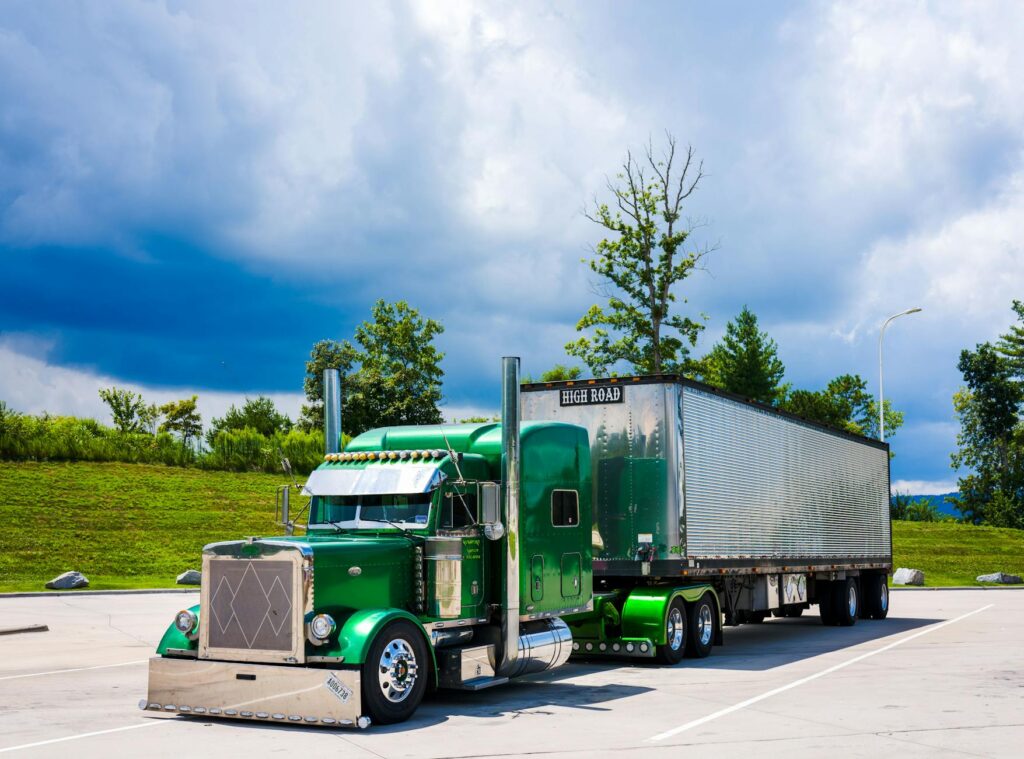
Open Transport | 1,500 Miles | 5-6 Days Transit
That is the working figure for a standard vehicle on open transport in 2026. Enclosed runs $1,425-$1,800. At $0.72 per mile this prices where a 1,500-mile route should — but the transit time does not, and the reason is worth understanding before you plan around a date.
Five to six days for 1,500 miles is slow, and the distance is not what makes it slow. The first thousand miles up I-95 through Florida, Georgia and the Carolinas move well. The last five hundred — from the Washington area north through Baltimore, Philadelphia, New York and into New England — run through the most congested stretch of interstate in the country. A truck can lose most of a day in the Northeast Corridor without anything having gone wrong.
The second thing this route asks of you is a realistic plan for the Boston end. It is a city built before trucks, and a 75-foot car carrier has limited options in it — more limited still between December and March.
Below: what each vehicle type costs, which city pairs are cheapest, which months to avoid, and where the quotes that look too good are hiding their margin.
What Is Covered
- Price Ranges by Vehicle Type
- City-to-City Price Matrix
- What Makes This Route Cost What It Does
- Monthly Price Calendar
- Open vs. Enclosed: The Price Difference
- Shipping vs. Driving: Dollar-for-Dollar
- 9 Ways to Save Money on This Route
- Red Flags: Quotes Too Good to Be True
- Payment Methods and Deposit Info
- Pricing FAQ
Price Ranges by Vehicle Type
Carriers sell deck space, so the shape of the vehicle decides its price more than the weight does. A tall crossover occupies more of a trailer than a heavier saloon, and the quote follows the geometry rather than the scales.
| Vehicle Category | Examples | Open Transport | Enclosed Transport |
|---|---|---|---|
| Compact/Sedan | Fit, Yaris, Versa, Mini | $950-$1000 | $1425-$1500 |
| Mid-size Sedan | Legacy, Camry, Accord, Model 3 | $975-$1025 | $1475-$1550 |
| Compact SUV/Crossover | HR-V, Kona, Seltos, Trax | $1000-$1050 | $1500-$1575 |
| Mid-size SUV | Palisade, Atlas, XC90 | $1025-$1100 | $1525-$1625 |
| Full-size SUV | Sequoia, Armada, Wagoneer | $1050-$1200 | $1550-$1750 |
| Pickup Truck (standard) | Frontier, Gladiator, Maverick | $1050-$1200 | $1550-$1775 |
| Pickup (heavy/dually) | Super Duty, dually pickups | $1200-$1350 | $1800-$2000 |
| Luxury/Exotic | Macan, i7, Continental | $1075-$1275 | $1575-$1800 |
| Classic/Antique | Pre-1980 vehicles, show cars | Not recommended | $1525-$1900 |
| Motorcycle | — | $427-$617 | $712-$997 |
Two Things Worth Adding
Electric vehicles price as their body style. A Model 3 is generally priced as a sedan and a Model Y as a crossover, but the final rate can vary with vehicle dimensions, carrier requirements and market conditions. Keep it at a moderate charge; the car only needs to move a few yards at either end.
Modifications belong in the booking, not the surprise. A lift kit, oversized wheels or a fixed roof rack changes the space calculation and occasionally the loading method. Declared up front it is simply part of the quote. Discovered when the driver arrives in Miami it is a repriced job — and in July, when trailers are full, it can mean losing the slot entirely.
City-to-City Price Matrix
Heading north, the Boston end sets the price. Greater Boston is compact compared with Miami’s spread, but the older towns around it are harder for a large truck to reach than the mileage suggests.
| From / To | Boston | Cambridge | Newton | Worcester |
|---|---|---|---|---|
| Miami | $950-$1050 | $980-$1080 | $1040-$1140 | $1010-$1110 |
| Fort Lauderdale | $970-$1085 | $1000-$1115 | $1060-$1175 | $1030-$1145 |
| Miami Beach | $990-$1120 | $1020-$1150 | $1080-$1210 | $1050-$1180 |
| Boca Raton | $1010-$1155 | $1040-$1185 | $1100-$1245 | $1070-$1215 |
Miami proper is the cheapest departure — carrier traffic through it is heaviest and access is easier than the barrier islands. Miami Beach costs more for exactly that reason rather than because of distance, and the same logic applies at the Boston end.
The spread between the cheapest and dearest combination is around $195. Hollywood, Coral Gables, Aventura and the rest of South Florida are collected from; Quincy, Somerville, Brookline and the wider Boston area are delivered to. All sit inside these bands.
Route-specific planning
Planning to Ship a Vehicle?
Get a vehicle shipping quote based on your route, vehicle, and workable dates.
Get My Quote
What Makes This Route Cost What It Does
The per-mile figure is $0.72 against an industry range of about $0.50-$0.70 — normal for 1,500 miles rather than a premium, since per-mile rates fall as distance rises and the fixed costs at each end do not change.
The Two Halves of This Route
It is worth thinking about this corridor as two different journeys joined together, because carriers do.
Florida to Virginia is a thousand miles of straightforward interstate. Steady, predictable, easy to schedule.
Virginia to Boston is five hundred miles through Baltimore, Philadelphia, New York and Providence — the densest urban stretch of highway in the United States. Tolls, traffic and restricted hours for large vehicles all apply. It is a small fraction of the distance and a disproportionate share of the difficulty.
That is why transit is 5-6 days rather than the three or four the mileage suggests, and why a carrier prices this route above a 1,500-mile run through open country.
The Seven Things That Set Your Quote
Distance. 1,500 miles is the baseline, though the last third counts for more than its share.
Access at both ends. Miami Beach and the barrier islands are harder than inland Miami; central Boston and the older surrounding towns are harder than a suburban lot. Difficulty shows up as a slower assignment before it shows up as a price.
Vehicle dimensions. Deck space rather than weight. A Suburban runs roughly $100 above a Civic.
Trailer type. Enclosed adds $475-$600.
Season. July is the peak at up to $240 above standard; March and April are the floor.
Lead time. Under five days out adds $100-$150.
Winter at the Boston end. Not a price factor but a scheduling one. Snow, parking bans and narrow streets can turn a delivery into a two-attempt job between December and March.
Monthly Price Calendar
Two things move across the year on this corridor and they matter to different people. Price peaks in high summer. Delivery difficulty peaks in deep winter, at the Boston end. Neither is a reason to avoid a season, but knowing which one applies to you changes what you should plan around.
The Cheapest Months: March and April
Around $874-$1,140 with excellent availability and short notice acceptable. The spring snowbird return is under way but the corridor is wide enough to absorb it, and by this point Boston’s winter is finished. Best window on both counts, which is not true of every route.
The Most Expensive Month: July
$1,092-$1,440, up to $240 above standard. Summer relocations, the academic calendar at both ends, and general moving season all land together. June and August sit only slightly below it. If your timing is flexible at all, this is the window to move away from.
The Steady Stretch: September Through February
Standard rates of $950-$1,200 with reliable availability and five to seven days’ notice sufficient. October runs marginally higher as the southbound snowbird season begins, but northbound is unaffected.
The exception is 15 to 31 December, when drivers take the holidays, capacity collapses nationwide and rates spike. Ship before the 15th or wait for January.
The Winter Consideration Is Delivery, Not Price
January through March, the Boston end gets harder rather than dearer. Snow narrows already-narrow streets, parking restrictions tighten, and a 75-foot carrier that could just about manage a delivery in September cannot in February.
This is entirely manageable if you plan for it — agree a large accessible handover point rather than a residential address, and leave the delivery date loose. It is only a problem when it is a surprise.
Open vs. Enclosed: The Price Difference
Enclosed adds $475-$600 here, on top of a $950-$1,200 base. At 1,500 miles that premium does not disappear into the total the way it can on a coast-to-coast booking, so it is a decision worth making on its merits.
Enclosed runs $1,425-$1,800 against $950-$1,200 open, so $475-$600 extra — $0.95-$1.20 a mile rather than $0.63-$0.80. Because enclosed capacity is more limited than open capacity, assignment can take longer, especially during busy periods.
What Five Days on I-95 Actually Does
Road film, insect residue and the occasional stone chip — a car that wants washing when it reaches Boston. Open carriers are the same equipment that delivers new vehicles to dealerships, and the route is interstate throughout.
The seasonal wrinkle here is at the northern end rather than the southern one. A car delivered into Boston between December and March arrives having run the last stretch through New England winter and whatever the road crews have put down. For a daily driver that is a wash. For a vehicle that has spent its life in South Florida and never met road salt, it is a real consideration — and one that does not exist at all if you ship in June.
When the Premium Is Worth It
Enclosed transport is most worth considering when the vehicle is especially valuable, collectible, difficult to repair, or needs additional protection from weather and road exposure. Below it, open transport moves the overwhelming majority of this corridor without incident.
Above it — or for a classic, a show car, or paint that is expensive to match — an enclosed trailer buys weather protection and a driver who handles valuable cars routinely. Low ground clearance is the other genuine case, since open loading ramps are steeper than they look.
The Cost You Pay in Time
Enclosed transport can take longer to assign than open transport because fewer enclosed carriers may be available on a given route. On a corridor where transit is only five or six days, that can double your total wait. If you are working to a date, open is usually the faster answer as well as the cheaper one. The full comparison covers the rest.
Shipping vs. Driving: Dollar-for-Dollar
1,500 miles up I-95 is roughly twenty-two hours of driving. On paper that is two long days. In practice it is two long days plus whatever the Northeast Corridor decides to add, which is the part people forget when they compare it to the shipping quote.
Miami to Boston is three days behind the wheel, and the arithmetic reflects it. About $240 of fuel over 1,500 miles, three nights at roughly $120 and three days of meals at $45, plus $315 of wear at the standard $0.21 a mile. The honest total is around $1,050.
Against that, shipping is $950-$1,200 with a one-way flight at about $233. The two options land within a couple of hundred dollars of each other — which means the decision is really about whether you want to spend three days on I-95 rather than about money.
What the Table Cannot Price
On cash alone driving is competitive, as it usually is at this distance. The case for shipping is in the columns that are harder to put a number on: two days of your time, a hotel somewhere around the Carolinas, and 1,500 miles of depreciation that appears when you sell.
There is also the specific character of this drive. The last four hours of it are Baltimore, Philadelphia, New York and Providence in sequence, which is not a relaxing end to a two-day journey and is genuinely unpredictable on timing. People who have done it once tend not to be weighing the fuel cost the second time.
Three situations settle it regardless: two vehicles and one driver, a start date in Boston that cannot absorb two days, or a car valuable enough that the wear line dominates. How costs scale with distance shows where the crossover sits on longer runs.
9 Ways to Save Money on Miami to Boston Shipping
In order of what each is genuinely worth on this corridor. The first three account for most of the saving available.
- Ship open rather than enclosed — saves $475-$600. For a typical daily driver, open transport is usually the more economical choice; enclosed transport makes more sense when the vehicle or conditions justify the additional protection.
- Avoid July — saves up to $240. The sharpest spike of the year. June and August are barely better; March and April are the floor at $874-$1,140.
- Collect from inland Miami rather than the barrier islands — saves $40-$70. Miami Beach is harder for a 75-foot truck than Hialeah or a Broward address, and that difficulty is priced in.
- Deliver to an accessible Boston-area point rather than a residential street. Worth money and, in winter, worth the difference between a delivery and a rescheduled one.
- Take first-available pickup. Naming a specific date costs money and slows assignment.
- Book two weeks ahead. Under five days out adds $100-$150; late bookings pay a premium rather than earning a discount.
- Avoid rural pickup or delivery. Adds $50-$100 at either end.
- Declare modifications at booking. A lift kit or fixed roof rack found at loading is a repriced job, or a lost slot in a busy month.
- Ask about the routing if your date is tight. Not a saving, but the Northeast Corridor is what makes this route’s timing unpredictable, and a driver will tell you honestly how the week looks. How to get an accurate quote covers what the booking document should contain.
Stacking the first three — open transport, an April pickup, an inland Miami collection — puts you at the bottom of every range on this page.
Red Flags: Quotes Too Good to Be True
The Tolls Are Part of Why
Most routes have negligible tolls. This one runs the length of the eastern seaboard through several of the most heavily tolled corridors in the country, and a commercial vehicle with a full trailer pays accordingly. It is a real line in the carrier’s costs and it is one reason the floor here sits higher than the mileage alone would suggest.
How the Cheap Quote Works
Your vehicle goes onto the national load board at a rate no driver will take, and nothing happens. No refusal, just silence, while your date approaches. Then the call: the price has risen, usually to a little above the honest quotes you turned down. Nothing was technically untrue — the number simply was never one a truck would run for.
What Should Stop You
- Anything under $650. Below the cost of running the route with tolls included.
- Unclear or unusually large upfront payments. Deposit policies vary, so confirm when payment is due, what it covers and the applicable refund terms before booking.
- Charges appearing after the quote — fuel surcharges, terminal fees, toll surcharges. Ask for the full quoted amount and any potential additional charges in writing.
- No DOT number, or one that will not verify. It takes a minute and an honest operator expects you to check.
- Urgency outside June to August. Capacity on I-95 is not scarce enough to justify deciding today.
- A guaranteed delivery date without clear written terms. On a corridor whose timing depends on Northeast traffic, anyone guaranteeing a date cheaply is guessing.
Get three or four quotes from established companies. If one sits well below the others, ask them to explain the difference in writing before you book.
Payment Methods and Deposit Info
Two payments, two companies, two moments. It is not how most online bookings work, and the reason it is done this way turns out to be in your favour.
The Deposit
Deposit timing and amount vary by provider and shipment. Many brokers take nothing at all until a carrier has actually been assigned, which is the better arrangement — until a truck exists, nothing has been arranged. Before paying a deposit, confirm the amount, timing, refund terms and what service has been arranged.
The Balance
Any remaining balance and accepted payment methods depend on the assigned carrier, so confirm them before delivery. Find out which when the carrier is assigned rather than when the truck is double-parked on a narrow street with nowhere to wait — on this route that detail is more practical than it sounds.
Why the Split Protects You
The person holding your vehicle has not been paid most of the money and will not be until you have inspected it. That is genuine leverage, and it is the reason to resist paying everything up front even when a discount is offered for it. Full prepay by card is usually available and sometimes carries a small reduction; it is a reasonable trade only once you have satisfied yourself about the company.
Tipping is not expected. Drivers are moving eight to ten vehicles and are paid by the load rather than the gratuity.
Pricing FAQ
How much does it cost to ship a car from Miami to Boston?
$950-$1,200 on open transport for a standard vehicle in 2026, or $1,425-$1,800 enclosed — about $0.72 per mile across 1,500 miles. Access at both ends moves the figure as much as the cities do.
Why does 1,500 miles take five to six days?
Because the last third of the route is the Northeast Corridor. Florida to Virginia is straightforward interstate; Virginia to Boston runs through Baltimore, Philadelphia, New York and Providence, which is the most congested stretch of highway in the country. Federal hours-of-service limits do the rest. The distance is not what makes this route slow.
What is the cheapest way to ship a car from Miami to Boston?
Open transport, booked two weeks ahead, shipping in March or April, collected from inland Miami rather than the barrier islands, delivered to an accessible Boston-area point with a flexible pickup window. Together those put you at the bottom of the range.
Why is July so expensive?
$1,092-$1,440, up to $240 above standard. Summer relocations, university moves at both ends and the general moving season peak together on a corridor connecting two dense metros. June and August are only marginally cheaper.
Can you collect from Miami Beach?
Usually not from the address itself — a 75-foot carrier cannot work the barrier islands or most of the older narrow streets. Collection is arranged at a nearby accessible point, typically a large retail car park. Agree it when booking rather than on the day.
Is delivery into Boston difficult?
It can be. Boston’s street layout predates trucks, many residential streets are narrow with resident permit parking, and between December and March snow and parking restrictions reduce the options further. None of that prevents delivery — it means agreeing an accessible handover point in advance rather than assuming the truck can reach your door.
When is the cheapest time to ship?
March and April at $874-$1,140, which is also after Boston’s winter has finished. September through February sits at standard rates apart from 15-31 December, which is worth avoiding entirely.
Is Miami to Boston cheaper than Boston to Miami?
They price in the same band. This corridor fills reliably in both directions — relocations, seasonal moves and university traffic all run each way — so carriers are not covering an empty return leg either way.
Are there hidden fees?
Ask whether the quoted amount includes tolls and any other route-related charges, and have the total documented in writing. This route includes significant toll exposure, so confirm whether toll-related costs are already reflected in the quoted amount rather than assuming. A toll surcharge appearing later is a warning sign.
Is a deposit required?
Payment timing, deposits and any remaining balance vary by provider and assigned carrier. Some brokers charge nothing until a carrier is assigned, which is the better arrangement. Confirm the amount, payment timing and refund terms before authorizing any deposit.
Do electric vehicles cost extra?
No — they are quoted by body style like anything else — a Model 3 as a saloon, a Model Y as a crossover. Leave the battery at a moderate state of charge so the car can be driven on and off the truck at both ends.
Should I ship it or drive it?
On fuel alone the two-day drive is competitive. Shipping wins when a second vehicle is involved, when two days off work is not realistic, or when 1,500 miles of wear is money you would rather keep. And the final four hours of that drive are Baltimore, Philadelphia, New York and Providence in sequence, which most people are willing to pay to avoid the second time.
Get a Miami to Boston shipping quote
Request a quote based on your vehicle, route and timing.
Before You Book
- how your car gets collected and delivered
- how vehicle transport works, start to finish
- how auto transport is priced
- open versus enclosed carriers
Related reading
The southbound leg is covered on our Boston to Miami page, which prices in the same band. For other long-distance routes involving South Florida, New York to Florida covers the Northeast corridor, Buffalo to Orlando the upstate version, and Miami to Kansas City the inland route toward Missouri.
Leaving Massachusetts in other directions, Boston to Tampa is the Gulf-coast alternative and Massachusetts to Florida covers the corridor at state level.
On the mechanics: how per-mile pricing works explains the $0.72 figure, cost by distance sets a 1,500-mile route against longer hauls, and open versus enclosed covers the trailer decision.