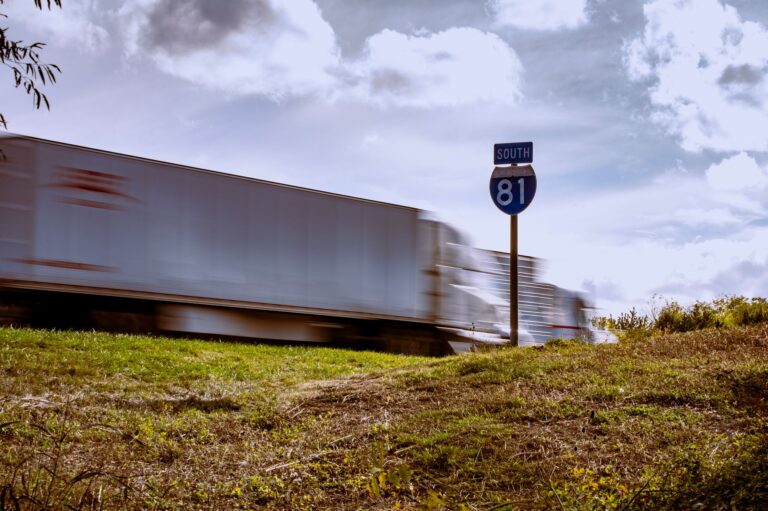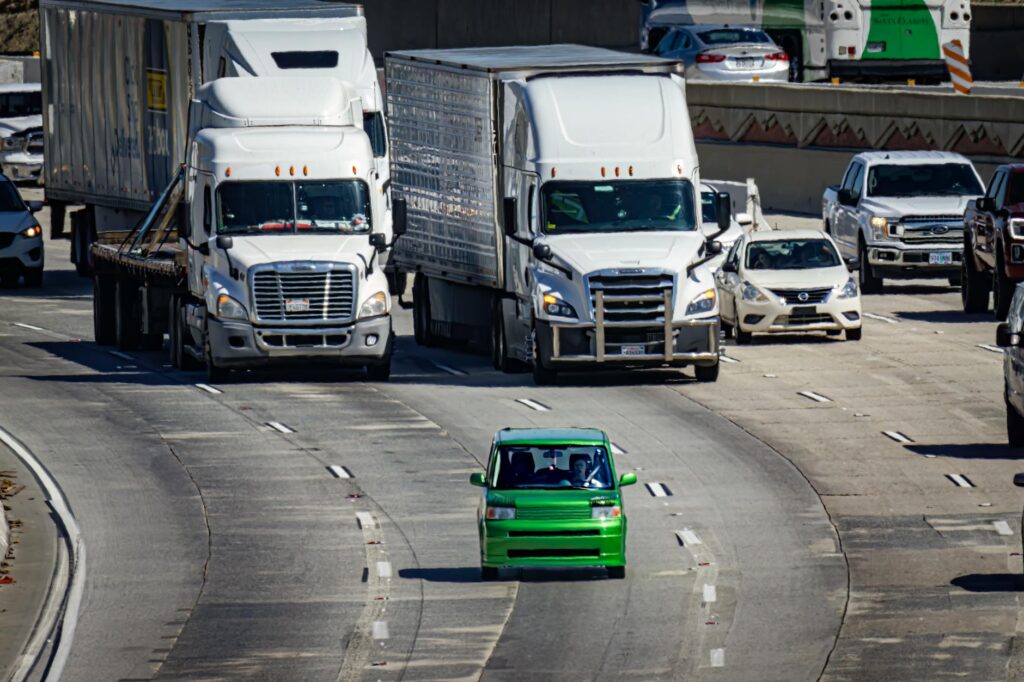
Los Angeles to Seattle is 1,140 miles on a single road. I-5 runs the entire length of the West Coast and there is no practical alternative — every car carrier making this trip takes the same route, through the same two mountain passes, at the same points on the map.
That is what makes this corridor different from every other long haul. Most routes have options: if one interstate is closed, the load goes another way and loses half a day. Here there is no other way. The Grapevine north of Los Angeles and the Siskiyou Summit at the Oregon border are the whole schedule, and in winter they are the only thing worth planning around.
For most of the year none of that matters. The price is $750-$1,000 on open transport with 3-5 days in transit — roughly $0.66-$0.88 per mile — and enclosed runs $1,150-$1,500. The lane is busy in both directions, carrier availability is good, and quotes hold.
What follows is how the industry that will move your car actually works, what the price is built from, what the federal rules entitle you to, and how to book a corridor with no detour available.
In This Guide
- How the Auto Transport Industry Actually Works
- The Los Angeles to Seattle Corridor
- Pricing: What Drives the Math
- Driving vs. Shipping: The Real Comparison
- Seasonal Demand Patterns
- Open vs. Enclosed: A Technical Comparison
- How Carrier Assignment Works
- Federal Regulations That Protect You
- Preparing Your Vehicle: The Engineering Perspective
- Common Misconceptions About Auto Transport
- Frequently Asked Questions
How the Auto Transport Industry Actually Works
One structural fact clears up most of the confusion people have about booking a car shipment: the company taking your booking is almost never the company driving your car.
Brokers Arrange, Carriers Haul
A carrier owns the truck — usually a small operation running one to five of them, carrying seven to ten cars along routes it knows well. On this corridor, that means drivers who run I-5 constantly and know exactly what the passes are doing.
A broker owns no trucks. It takes your booking and posts it to a national load board where carriers already heading your way can claim it. Neither party can do the other’s job: a carrier running I-5 cannot maintain a nationwide sales operation, and you cannot find the specific truck passing your street on Thursday.
Why There Is a Wait
No carrier runs 1,140 miles with a half-empty trailer. Your car is one piece of a load being assembled across Southern California, and that assembly is the whole reason assignment takes 1-5 days. On a corridor this short the wait can genuinely exceed the drive, which surprises people.
It also explains why a flexible pickup window is worth money rather than being a courtesy. You are easier to fit into a puzzle that is being solved across a metro of eighteen million people.
What Follows From It
- You are buying a slot on a truck that already exists. Flexibility is your leverage, not your concession.
- A rate below what drivers accept means the job sits unclaimed while your date approaches.
- Two organisations are involved: the broker until pickup, the driver thereafter. Get the driver’s direct number at assignment — on this route they are also your best source on pass conditions.
- Review the payment schedule before booking and confirm in writing when any deposit or remaining balance becomes due.
The Los Angeles to Seattle Corridor
Distance: 1,140 miles, all of it on I-5. Transit: 3-5 days. Cities served: Los Angeles, San Diego, Irvine and Long Beach north to Seattle, Bellevue, Tacoma and Redmond.
One Road, Two Passes
The defining fact about this corridor is that there is no plan B. I-5 is the West Coast’s only continuous north-south interstate, and a car carrier leaving the Los Angeles basin for Seattle will use all of it.
The Grapevine comes first — the climb out of the Los Angeles basin over the Tehachapis. It is the first hour of the journey and it closes occasionally in winter storms.
The Siskiyou Summit comes at the California-Oregon border, and it is the more serious of the two. It sits at genuine altitude, it gets real snow, and chain controls or closures there are a routine winter occurrence rather than an exceptional one.
Neither is dangerous for your vehicle — drivers wait rather than push through — but both are single points of failure on a route with no detour. Between roughly November and March, that is the reason to leave slack in a delivery date on this lane specifically.
Who Uses It
Technology employment moves people between Seattle and Southern California continuously, and has for years. Entertainment and media work pulls the other way. Add ordinary relocations along a coast where three of the largest metros in the country sit on one road, and the result is a lane that fills reliably in both directions.
That two-way balance is why quotes here are stable. A carrier heading north is not gambling on a load home; it is one of the busiest freight corridors in the western United States.
Pricing: What Drives the Math
Open Transport | 3-5 Days | 1,140 Miles | $0.66–$0.88 per mile
Enclosed runs $1,150-$1,500. The per-mile figure reads high against a coast-to-coast quote, which is what always happens on shorter routes — the fixed costs of loading, paperwork and driver time at each end are identical whether the truck runs 1,140 miles or 3,000, so on a short haul they weigh far more per mile. Per-mile pricing covers the mechanism. Compare totals, not per-mile rates.
Where the Money Goes
Around 1,140 miles at roughly six miles per gallon is about 190 gallons of diesel, and fuel accounts for a quarter to a third of what you pay. The driver’s three to five days on regulated hours takes about the same again, so between them the two largest costs are more than half the bill before anything else is counted.
Insurance is one of the carrier operating costs. Before pickup, ask for the assigned carrier’s current insurance certificate and confirm the coverage limits and exclusions that apply to your vehicle. The trailer is another ten to fifteen, since a car-hauling rig is a specialised asset that wears out. The broker takes ten to fifteen for sourcing and vetting the carrier and handling anything that goes wrong.
Carrier profit is five to ten per cent. It is a thin-margin business, which is precisely why an unusually cheap quote should worry you rather than please you.
Fuel and driver wages together are more than half of it, and on a 1,140-mile run neither compresses. That is why quotes on this lane sit so close to one another, and why a number well below the others is not a leaner operator — it is a rate no driver will take.
What Actually Moves Your Quote
- Where in the Los Angeles basin the car is collected. The biggest practical variable. A 75-foot carrier cannot climb a canyon street, sit in a permit-only block or enter most gated communities, and access difficulty shows up as a slow assignment before it shows up as a price.
- Where in the Puget Sound it lands. Seattle, Bellevue, Tacoma and Redmond are all straightforward; the spread across the metro is modest.
- Season. A couple of hundred dollars across the year — less than on most corridors, because there is no snowbird pattern here.
- Vehicle size. Deck space rather than weight; a three-row SUV or full-size pickup sits meaningfully above a sedan.
- Lead time. Under five days out typically adds $100-$150.
- Delivery-date flexibility. Worth most between November and March, for reasons the corridor section explains.
Driving vs. Shipping: The Real Comparison
1,140 miles up I-5 is about seventeen hours — two days at a sensible pace. It is a drive a great many people make, and on fuel alone it wins. Here is the fuller arithmetic.
| Cost Category | Driving Yourself | Shipping Your Car | Notes |
|---|---|---|---|
| Fuel | $182 | $0 | 1,140 mi at ~25 MPG, $4.00/gal avg |
| Hotels | $240 | $0 | 2 night(s) at $120/night avg |
| Meals | $90 | $0 | 2 day(s) at $45/day road food |
| Vehicle wear | $239 | $0 | IRS rate: $0.21/mi depreciation + maintenance |
| Time off work | $400-$800 | $0 | 2 day(s) of lost productivity |
| Flight (one-way) | N/A | $185 | Average domestic one-way fare |
| Shipping cost | N/A | $750-$1000 | Open transport |
| TOTAL | $751-$1551 | $900-$1350 |
Where the Comparison Turns
The fuel line is the smallest one. What decides it is two days of your time, a night somewhere around Redding or Medford, and 1,140 miles of depreciation that appears when you sell.
Three situations settle it outright: two vehicles and one driver, a start date at the Seattle end that cannot absorb two days, or a car valuable enough that the wear line dominates.
And one specific to this corridor. In December or January, driving it yourself means committing to the Siskiyou Summit on a fixed schedule in a loaded personal vehicle. A professional running I-5 weekly knows when to stop and wait; someone doing it once with a hotel booked at the far end is under pressure to keep going. That is worth something the spreadsheet does not capture. How costs scale with distance covers where the crossover sits generally.
Route-specific planning
Planning to Ship a Vehicle?
Get a vehicle shipping quote based on your route, vehicle, and workable dates.
Get My Quote
Seasonal Demand Patterns
Price and reliability move separately on this route, and it is the second one that deserves your attention. The annual price swing is a couple of hundred dollars. The winter schedule risk is worth more than that.
March and April — Cheapest and Clearest
Rates run $690-$950 with excellent availability and three to five days’ notice usually enough. The summer rush has not started, and by this point the Siskiyou is past the worst of its season. Best window on both counts, which is not something you can say about every corridor.
May Through August — Busy and Reliable
The peak for demand: summer relocations, university moves at both ends, and the general moving season. Expect the upper half of the range and book two weeks ahead rather than five days.
The compensation is that this is the most dependable time of year on the route. Nothing in the mountains is going to close in July, so the estimate you are given is the estimate you get.
September Through November — The Quiet Window
Rates settle back to standard, availability recovers, and the passes are still open. Early autumn is arguably the best time to ship this corridor if you want a straightforward experience rather than the lowest possible number.
December Through February — The Passes Decide
Pricing is ordinary, with the usual 15-31 December collapse in availability when drivers take the holidays. Ship before the 15th or wait for January.
The real winter variable is the Siskiyou Summit. Chain controls and short closures there are a normal part of the season, and because there is no alternate route a truck simply waits. That can add a day, occasionally two, to a journey that is otherwise only three to five days long — proportionally a large delay on a short corridor.
This is not a reason to avoid winter shipping. It is a reason not to book a January delivery against a hard date, and to ask the driver about conditions rather than watching a tracking page.
Open vs. Enclosed: A Technical Comparison
Open transport is the usual choice for standard vehicles on this corridor and is generally the most practical option when additional enclosure is not required. The exposure is road film and the occasional stone chip — a car that wants washing on arrival, not one that has been harmed.
The Two Kinds of Trailer
Open carriers are what you see on the motorway — seven to ten cars on two decks, driven up ramps, exposed to whatever the road throws at them. Open carriers are generally easier to source than enclosed carriers. Before pickup, verify the assigned carrier’s current insurance documentation and the coverage that applies to your vehicle. On this route they run $750-$1,000.
Enclosed carriers hold two to six cars inside solid walls, usually loading on a lift gate and sometimes riding on air suspension, with climate control an option. Enclosed carrier availability is more limited, so assignment can take longer. Ask for the assigned carrier’s current insurance documentation rather than assuming a standard coverage amount. Here that is $1,150-$1,500.
Which to choose depends on the vehicle and the level of protection required. Open transport suits most daily drivers, while enclosed transport is commonly considered for classic, exotic, collectible or especially valuable vehicles.
The Winter Version of the Question
Between roughly November and March the northern half of this route runs through genuine mountain weather, and Oregon and Washington treat their roads accordingly. A vehicle on an open trailer arrives having been through whatever the Siskiyou was doing that week.
For a daily driver that is a wash. For a car that has never seen a salted or de-iced road — which in Southern California is a larger category than elsewhere — it is a real consideration, and one that disappears entirely if you ship the same vehicle in June.
The Practical Differences
Capacity and price. Open carries seven to ten vehicles at $750-$1,000. Enclosed carries two to six at $1,150-$1,500, and the smaller load is most of that difference.
Availability. Open transport is generally easier to source and may assign faster. Enclosed capacity is more limited and may take longer to assign, which can increase the overall booking-to-delivery window.
Loading. Open uses hydraulic ramps and the car is driven on. Enclosed often has a lift gate and sometimes air-ride suspension, which is what makes it the answer for low ground clearance rather than simply the more protective option.
Choose Enclosed When
- The vehicle is classic, exotic, collectible, especially valuable or needs additional protection
- The paint is difficult or expensive to match
- Ground clearance makes open ramps a genuine risk
- You are shipping in deep winter and would rather the car did not meet de-icing chemicals at all
For everything else, open transport is both cheaper and considerably faster to book on this lane. Enclosed is worth it when the car is the reason, not when the journey is. The full comparison covers the rest.
How Carrier Assignment Works
On a corridor this short, assignment is frequently the longest part of the process. Understanding it removes most of the anxiety about the days when nothing appears to be happening.
The Board
Your booking is posted to a national load board that carriers watch continuously. A driver already running I-5 north next week sees it, checks that it fits the trailer and the schedule, and claims it. That match is the assignment, typically within 1-5 days.
I-5 is one of the busiest freight corridors in the western United States, so there is no shortage of trucks. What determines your wait is how easy you are to fit, not whether anyone is going.
What Makes You Easy to Fit
A collectable address. This is the one that matters in Southern California. Hillside streets, permit-only blocks and gated communities are all obstacles for a 75-foot vehicle. A large retail car park within a few minutes of home removes the problem entirely and is worth doing at booking rather than being asked about later.
A date range rather than a date. Two or three days of latitude multiplies the trucks that can take you, and it costs nothing.
A market-rate price. Underpriced jobs sit. It is the single commonest reason a shipment does not move, and no other detail compensates for it.
An accurate vehicle description. A lift kit or roof box discovered at loading can cost the slot outright.
What You Should Get
The carrier’s company name, its DOT number, the driver’s direct number and a confirmed pickup window. Verify the DOT number — it takes a minute and is the only real check available to you.
From then on the driver is your contact rather than the broker, and between November and March they are also the best available source on what the passes are doing. Ask them directly; it is more useful than any tracking page.
Federal Regulations That Protect You
Interstate auto transport is federally regulated, and those rules give you more standing than most customers make use of. Four are worth knowing before booking.
Authority and Insurance Are Mandatory
Any company carrying your vehicle across state lines must hold federal operating authority and cargo insurance. The DOT number is how you verify that, and the certificate of insurance is how you check the per-vehicle limit. Regulation sets a floor and stops there; matching it to what you are actually shipping is your job.
The Bill of Lading Is the Contract
It is the agreement and the condition record combined. What is recorded at pickup in Los Angeles determines what can be claimed on delivery in Seattle, and damage not written down beforehand cannot be established afterwards. Five minutes with a phone before loading outweighs every other precaution.
Hours of Service Set the Timetable
Drivers face federal limits on daily driving and mandatory rest. That is why 1,140 miles takes three to five days rather than seventeen hours, and why a carrier promising overnight delivery is either mistaken or planning to break the rules.
Those same rules are why a driver waits out a closed pass rather than pushing through it. On this corridor that is worth understanding as a feature rather than a delay.
Vehicles Only
Auto carriers are licensed to move vehicles and not household goods. Anything inside travels uninsured, and enough of it across a full trailer puts the truck over regulated weight. Some drivers tolerate a little in the trunk; it remains entirely at your risk.
Our breakdown of carrier insurance goes further — including the point most relevant here, that weather-related damage on an open carrier is generally handled as an act of nature rather than negligence.
Preparing Your Vehicle: The Engineering Perspective
Three to five days is short enough that most long-haul preparation worries do not apply here. Two things do, and the first is not about the vehicle at all.
Decide Where the Truck Can Stop
A loaded car carrier is roughly 75 feet long. Large stretches of the Los Angeles basin are hillside streets, permit-only parking or gated communities, and a driver who cannot physically reach the vehicle has to rearrange — which, on a load being assembled across a metro of eighteen million people, costs days rather than hours.
Nominate a large retail car park or a wide commercial street when you book. It costs nothing, it is standard practice, and at the Los Angeles end it is worth more than anything else on this list.
Photograph It Before It Loads
Give it a wash the day before, then take your photographs in daylight with the date recorded — each side, the roof, the lower edges, and every wheel separately. Shoot every existing chip and scratch close enough to leave no argument, and confirm each appears on the Bill of Lading before the driver pulls away.
This matters more on a winter booking than a summer one. A vehicle arriving in Seattle in February carries road film and de-icing residue from the northern half of the run, and small marks disappear underneath it entirely. A photograph taken at delivery establishes nothing about what was there before.
Strip the Interior
Nothing inside the vehicle is insured, and carriers are not licensed to move household goods. Clear the cabin, the trunk, the door pockets and under the seats. Take out toll transponders, garage remotes and any gate pass, and keep the spare key and the title with you rather than in the car.
Mechanical Checks That Actually Matter
Fuel down to a quarter tank or less — weight is federally regulated across a full trailer and a brimmed tank is one of the few things that will genuinely hold up a load. Confirm the battery is healthy enough to start after several days standing, since the car is driven on and off under its own power. Check underneath for active leaks; a dripping vehicle is refused at loading rather than dealt with later.
If the car does not run at all, that is fine — but book it as an inoperable vehicle so a winch arrives with the truck.
Fold Anything That Sticks Out
Mirrors folded, antenna retracted or removed, roof boxes and bike racks off, alarm disabled or written instructions left for the driver. Loading damage is the most avoidable claim in the industry and it is almost always caused by something that protruded.
Electric Vehicles
Common at both ends of this corridor; pricing still depends on vehicle specifications and carrier requirements. Leave the battery at a moderate state of charge — enough to drive on and off at either end — switch off scheduled charging and anything that wakes the car repeatedly, and check whether your model offers a transport mode.
Common Misconceptions About Auto Transport
“If a pass closes they will just go around”
There is no around. I-5 is the only continuous north-south interstate on the West Coast, and when the Siskiyou Summit closes a truck waits. That is the correct decision and it is what the hours-of-service rules encourage. It is also why a January delivery date on this route should never be treated as firm.
“Three to five days is how long I will be without the car”
Those are driving days only. Before any of them start, a carrier has to accept the load, which takes one to five days — so the honest span from booking to your driveway is four to ten. On a run this short you will very often spend longer waiting for the truck than the truck spends moving.
“They can collect from my building”
Often not, in Los Angeles. Hillside streets, permit zones and gated communities are all beyond a 75-foot carrier. Collection at an agreed nearby point is standard practice everywhere in the industry, not a shortcoming of your booking — but it needs arranging in advance.
“$0.66 to $0.88 a mile is steep”
Per-mile rates always look high on short routes and low on long ones, because the fixed costs at each end do not change with distance. Compare totals when you are weighing corridors of different lengths, not per-mile figures.
“Enclosed is the safer choice, so it is the responsible one”
Most genuine damage happens during loading and unloading, which is identical on both trailer types. On this route the real argument for enclosed is winter de-icing chemicals against a car that has never seen them — a narrower case than “safer”, and one that vanishes in summer.
“I can watch the truck the whole way”
You get the driver’s number and periodic updates. Hours-of-service rules mean the truck is legitimately parked for part of every day, so quiet stretches are normal. Between November and March the driver is genuinely the best information source you have — they are watching the passes far more closely than you are.
Frequently Asked Questions
How much does it cost to ship a car from Los Angeles to Seattle?
$750-$1,000 on open transport for most vehicles in 2026, or $1,150-$1,500 enclosed — $0.66-$0.88 per mile across 1,140 miles. Where the car is collected in the Los Angeles basin affects the wait more than the price.
How long does Los Angeles to Seattle car shipping take?
Three to five days on the road, with a further one to five spent finding a carrier beforehand. Four to ten days end to end is the number to plan against, and the finding usually takes longer than the driving.
What happens if the Siskiyou Summit closes?
The truck waits. I-5 is the only continuous north-south interstate on the West Coast, so there is no detour available. Chain controls and short closures at the California-Oregon border are routine between November and March, and can add a day or occasionally two. Build slack into any winter delivery date rather than treating it as fixed.
Is winter a bad time to ship this route?
Not for price or safety — drivers wait out weather rather than pushing through it. It is a bad time to book against a hard deadline. If your date is fixed, ship earlier than you need to; if it is flexible, winter is perfectly ordinary.
When is the cheapest time to ship?
March and April at $690-$950, which is also when the passes have cleared — the best window on both counts. Summer costs more but is the most reliable. Early autumn is the easy middle option. Avoid 15-31 December.
Can you collect from my address in Los Angeles?
Sometimes. A 75-foot carrier cannot manage hillside streets, permit-only blocks or most gated communities. Where that applies, collection is arranged at a nearby retail car park or wide commercial street — standard industry practice, but worth agreeing when you book rather than on the day.
Which Southern California cities do you collect from?
Los Angeles, San Diego, Irvine, Long Beach, Anaheim, Pasadena and across the region. Access matters more than which city — an accessible address in a further suburb often assigns faster than a difficult one closer in.
Which Washington destinations do you deliver to?
Seattle, Bellevue, Tacoma, Redmond, Everett, Kent and across the Puget Sound region. The spread across the metro is modest compared with the Los Angeles end.
Should I ship it or drive I-5 myself?
Seventeen hours over two days, and on fuel alone driving wins. Shipping wins when you are moving a second vehicle, when two days off work is not realistic, or when 1,140 miles of wear is money you would rather keep. In December there is a fourth argument: a driver who runs I-5 weekly knows when to stop for the pass, and is not doing it once against a hotel booking.
Can I ship an electric vehicle?
Yes. EVs are common on this corridor, but pricing can vary with vehicle specifications and carrier requirements. Leave the battery at a moderate state of charge, turn off scheduled charging, and check whether your model has a transport mode.
Do I have to be there for pickup and delivery?
Both ends need a human being who can inspect the car and put their name to the Bill of Lading. It does not have to be you — name a trusted adult when you book, and make sure they understand the inspection is what protects you rather than a formality.
Is my car insured during transport?
Ask for the assigned carrier’s current insurance certificate before pickup and confirm what coverage, limits and exclusions apply during transport. Ask them for the certificate and check what it says per vehicle — that limit is a regulatory floor, not a figure matched to your car. Personal items are never covered, and pre-existing damage not recorded on the Bill of Lading cannot be claimed.
Ready to ship your car from Los Angeles to Seattle?
Request a quote for your vehicle and route. Submit your shipment details through the quote form.
Before You Book
- our cost guide for shipping a car
- what enclosed transport actually buys you
- the mechanics of a car shipment
- our complete guide to shipping a car
Related reading
The southbound leg is covered on our Seattle to Los Angeles page, which prices in the same band and faces the same two passes. For other routes out of the Pacific Northwest, Washington to California is the statewide version of this corridor, Washington to Florida is the long southern haul and Washington to Texas crosses the Rockies instead.
Leaving California in other directions, California to Virginia and California to New York are the transcontinental runs, and Dallas to Los Angeles covers the inbound southwestern route.
On the mechanics: how per-mile pricing works explains why a 1,140-mile route reads expensive by the mile, cost by distance sets it against longer hauls, transit times covers the timing, and carrier insurance goes further on weather damage.