Washington State to Florida is about as far as you can ship a car without leaving the country — roughly 2,900 miles, corner to corner. It is also one of the most predictable corridors in the business, because the traffic on it follows the seasons rather than the economy. Retirees head south in the autumn, come back north in the spring, and carriers plan their year around it.
For most vehicles that means $1,500-$1,900 on open transport with 8-10 days in transit, or roughly $0.52-$0.66 per mile. The per-mile figure is low precisely because the distance is high — long hauls spread a carrier’s fixed costs across more miles, which is why a 2,900-mile run does not cost three times a 1,000-mile one.
Two things separate this route from an ordinary long haul. The first is timing: get the snowbird calendar wrong and you can pay several hundred dollars more for the same truck. The second is winter, when the mountain passes east of Seattle decide whether your vehicle leaves on schedule.
A note on names: this page covers Washington State — Seattle, Tacoma, Spokane, Bellevue. If you are shipping from Washington, D.C., that is a different corridor at roughly a third of the distance and well under half the price.
- What It Actually Costs
- City-to-City Price Breakdown
- How Long the Journey Takes
- Seasonal Pricing: When to Book
- Open vs. Enclosed Transport
- What a Washington to Florida Move Usually Looks Like
- The Complete Shipping Process
- Vehicle Preparation Checklist
- 7 Mistakes That Cost You Money
- Insurance and Liability Explained
- Frequently Asked Questions
What It Actually Costs
Open Transport | 8-10 Days | 2,900 Miles
That is roughly $0.52-$0.66 per mile on open transport. Enclosed runs $2,250-$2,475. For context on how these ranges are built, see what it costs to ship a car generally — but the number that matters on this corridor is the season, not the average.
Why a 2,900-Mile Run Is Not Three Times a 1,000-Mile One
Long-haul corridors price lower per mile than short ones. A carrier’s fixed costs — loading, paperwork, the driver’s time at each end — are the same whether the truck runs 800 miles or 2,900, so spreading them across a longer distance brings the per-mile figure down. Washington to Florida sits near the bottom of the per-mile range for exactly that reason, even though the total is one of the highest you will see domestically.
The corridor also fills reliably in both directions, which keeps it stable. Snowbird traffic runs south in autumn and north in spring, so carriers are rarely running empty one way and pricing that risk into your quote.
What Moves Your Number
- The season. Far and away the biggest factor on this route. The gap between a March booking and an October one is larger than the gap between Seattle and Spokane as an origin.
- Origin city. Seattle and Tacoma are the cheapest departures; Spokane adds distance and a day. Expect around $75 between the cheapest and most expensive Washington pickup.
- Destination. Miami and Tampa price within about $25-$50 of each other. Orlando and Jacksonville sit in the same band.
- Vehicle size. A compact sedan costs meaningfully less than a full-size truck or three-row SUV — it is deck space, not weight.
- Lead time. Booking under five days out typically adds $100-$150.
- Flexibility. On a 2,900-mile route a first-available pickup window is worth more than on any short haul, because the carrier is building a full load across several states.
City-to-City Price Breakdown
The exact city pair matters more than you think. Here is what specific Washington-to-Florida routes cost in early 2026:
| Origin City | Destination | Open Price | Enclosed | Transit |
|---|---|---|---|---|
| Seattle | Miami | $1500-$1600 | $2250-$2400 | 8-9 days |
| Seattle | Tampa | $1525-$1625 | $2275-$2425 | 8-9 days |
| Tacoma | Miami | $1525-$1625 | $2275-$2425 | 8-9 days |
| Tacoma | Tampa | $1550-$1650 | $2300-$2450 | 8-9 days |
| Spokane | Miami | $1550-$1650 | $2300-$2450 | 9-10 days |
| Spokane | Tampa | $1575-$1675 | $2325-$2475 | 9-10 days |
| Bellevue | Miami | $1575-$1675 | $2325-$2475 | 9-10 days |
| Bellevue | Tampa | $1600-$1700 | $2350-$2500 | 9-10 days |
Key insight: Routes to Miami vs. Fort Lauderdale can differ by $75-$150 based on carrier routing efficiency and distance variations. Always get quotes for your specific city pair.
How Long the Journey Takes
Transit runs 8-10 days on this corridor. That is time on the truck — not time from booking to delivery, and on a route this long the difference between the two is where most of the frustration comes from.
Transit Time by City Pair
- Seattle to Miami — 8-10 days
- Seattle to Tampa — 8-10 days
- Tacoma to Miami — 9-11 days
- Spokane to Tampa — 9-11 days
These are among the longest domestic transit times there are, and they are legitimate. A driver cannot cross 2,900 miles in three days — federal hours-of-service rules cap daily driving, and the truck is making pickups and deliveries along the way rather than running your car direct.
The Route Itself
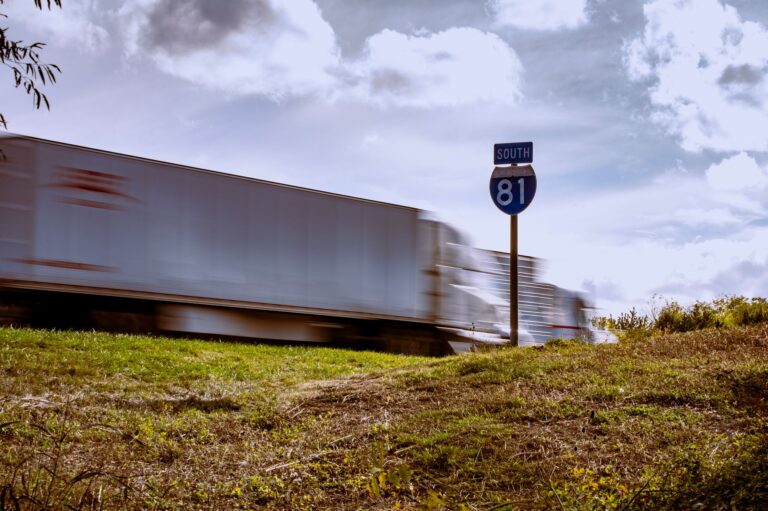
Carriers typically run east on I-90 across the Cascades and the northern plains, then drop south and pick up I-75 for the run down through Georgia into Florida. Some loads take the southern alternative — down I-5 and east on I-10 — particularly in winter when the northern passes are a risk. Either way it is interstate the whole distance, which is why transit is long but predictable.
Booking to Delivery: The Realistic Timeline
Carrier assignment takes 1-5 days. Add 8-10 days of transit and realistic booking-to-delivery is 10-16 days outside peak season — broadly in line with typical transit times by distance, which is the single most useful thing to understand before you plan around a date.
In October and November, assignment is what stretches, not the drive. Southbound trucks are full and yours waits for a slot.
What Actually Causes Delays
- Winter passes. A Cascade closure or chain restriction at the very start of the run, most relevant for Seattle, Tacoma and Bellevue pickups between December and March
- Southbound capacity in autumn. Not a delay in transit but a delay in getting assigned at all, from October through December
- Florida hurricane season. June through November, a system can hold a delivery outside the metro for days without ever touching your vehicle
- A single fixed pickup date that no carrier building a cross-country load can meet
Plan for it: give the pickup a 2-3 day window, and never schedule a flight, a lease return or a closing against the delivery date on a 2,900-mile route.
Seasonal Pricing: When to Book
No corridor in the country is more seasonal than the Pacific Northwest to Florida. This is a snowbird lane, and the snowbird calendar sets the price. Getting the timing right is worth more on this route than every other decision combined.
March and April — The Cheapest Southbound Window
Rates run 5-10% below standard, roughly $1,380-$1,805, with excellent availability and 3-5 days’ notice usually enough. The reason is directional: snowbirds are heading north out of Florida in these months, which means carriers running south have space to fill and will discount to fill it. If your dates are flexible at all, ship here.
May Through September — Standard Rates, Easy Booking
$1,500-$1,900 with good availability and 5-7 days’ notice. Summer relocations keep the corridor busy but nothing dominates it. This is the low-stress window: no seasonal squeeze, no mountain passes, and Florida deliveries are straightforward until hurricane season builds.
October Through December — Peak Southbound
The expensive window, and the one people misjudge. Every retiree in Washington, Oregon and Idaho is booking a southbound truck in the same eight weeks, and southbound capacity on this corridor is finite. Book three weeks ahead, not two, and expect to pay the top of the range.
The second half of December is worse again — carriers take time off, capacity drops and rates spike across every route. Ship before 15 December or wait for January.
January and February — The Quiet Recovery
Standard rates, good availability, 5-7 days’ notice. Snowbird season winds down through February and southbound pressure eases. The one variable is weather rather than demand.
The Winter Variable: Mountain Passes
A car leaving Seattle in January has to get over the Cascades before it gets anywhere near Florida, and the eastbound passes can close or go chain-only with little notice. It does not usually cancel a shipment, but it can add a day or two at the very start of a journey that is already 8-10 days long.
Spokane pickups sit east of that problem. Seattle, Tacoma and Bellevue pickups do not. If you are shipping in deep winter from the west side of the state, build slack into the pickup end rather than the delivery end.
Route-specific planning
Planning to Ship a Vehicle?
Get a vehicle shipping quote based on your route, vehicle, and workable dates.
Get My Quote
Open vs. Enclosed Transport
Around 90% of Washington to Florida shipments go open, and for most vehicles that is correct. The route is interstate the entire distance and carriers run it constantly. What makes this corridor different from a short haul is not the risk per mile — it is that there are 2,900 of them.
Where This Route Differs
Exposure scales with distance. A car on an open carrier from Seattle to Miami spends 8-10 days outside, crosses several climate zones and arrives with road film that a 600-mile run would not produce. None of that is damage, and it washes off. But it does mean the open-versus-enclosed calculation tips a little earlier here than it would on a shorter corridor — a car you would happily ship open across one state is a more genuine question across the continent.
The second factor is winter. A January departure from the west side of Washington may run through snow and road salt before it ever turns south.
Choose Open Transport ($1,500-$1,900) When
- The vehicle is worth under $50,000 and is a daily driver
- You want the best price and the fastest assignment — open carriers dominate this corridor and are far easier to book, which matters most in the October-December squeeze
- You can accept road film after 2,900 miles
- You are shipping outside deep winter, or from Spokane rather than the coast
Choose Enclosed Transport ($2,250-$2,475) When
- The vehicle is worth $75,000 or more, or is a classic or an exotic that people would recognise
- The paint is difficult or expensive to match — 8-10 days of exposure is the argument, not any single hazard
- Ground clearance is low enough that open loading ramps are a concern
- You are shipping in January or February from Seattle, Tacoma or Bellevue and would rather the car did not meet road salt at all
What the Premium Actually Buys
The difference on this corridor is roughly $700-$750 — a larger gap than on short routes, because a covered trailer carries fewer vehicles and that inefficiency compounds over 2,900 miles. It does not buy speed. Enclosed carriers are less numerous and cross-country enclosed loads take longer to assemble, so expect assignment to take longer, not less.
If you are still weighing it, our guide to choosing between open and enclosed carriers goes through the trade-off in full.
What a Washington to Florida Move Usually Looks Like
Bookings on this corridor fall into four recognisable patterns. The figures below are the same open-transport ranges quoted above, applied to the situation each customer is actually in — use them to work out which one you are, not as a quote.
The Snowbird Move
The defining pattern on this route. A second home in Florida, a car that needs to be there for the winter, and a return trip north in spring. Often the same customer books twice a year, in opposite directions.
What it costs: $1,500-$1,900 open, at the top of that range if you book in October or November. What to watch: everyone else is booking the same weeks. Three weeks’ lead time southbound in autumn, and consider shipping in September before the rush starts.
The Permanent Relocation
A full move — job, family, household — from the Puget Sound region to Tampa, Orlando or Miami. The vehicle is one item on a long list and nobody wants to drive it 2,900 miles on top of everything else.
What it costs: $1,500-$1,900 open depending on city pair and season. What to watch: booking-to-delivery is realistically 10-16 days on this corridor. Arrange a way to get around at the Florida end for the first fortnight rather than assuming the car beats you there.
The Spring Return North
The reverse direction, and close to half the traffic on this corridor. Florida to Washington in March through May, when snowbirds head home and northbound capacity is the constraint rather than southbound.
What it costs: similar ranges, but the seasonal pattern inverts — spring is the expensive window going north, and autumn is the bargain. What to watch: do not assume the price you paid coming south applies going back. Book against the direction you are actually travelling.
The Enthusiast or Collector Car
A vehicle that is not a daily driver, moving between two of the more active collector markets in the country. On a 2,900-mile run the calculation is different because the exposure is measured in days, not hours.
What it costs: $2,250-$2,475 enclosed. What to watch: cross-country enclosed loads take longer to assemble than open ones. Start the conversation earlier than you think you need to, particularly in autumn.
The Complete Shipping Process
Step 1: Get a Quote With Real Cities and a Real Month
Enter your Washington pickup, the specific Florida city, the vehicle and your dates. On this corridor the month matters as much as the cities — a March quote and an October quote for the same journey are genuinely different numbers. Quotes are instant and free, and if this is your first shipment, the step-by-step overview covers what is the same on every route.
Step 2: Book, and Give the Pickup a Window
Check the quote is all-in. Then give the pickup a 2-3 day window rather than a single date. A carrier assembling a cross-country load needs that flexibility more than a regional carrier does, and on this route it is the difference between being matched quickly and waiting. Nothing is charged until a carrier is assigned.
Step 3: Carrier Assignment
Within 1-5 days you receive the carrier’s company name and DOT number, the driver’s number and a confirmed pickup window. From October through December this stage is where the time goes — southbound trucks are full and yours waits for a slot. That is capacity, not a problem with your booking.
Step 4: Confirm the Pickup Location Works for a 75-Foot Truck
A car carrier cannot turn around in a cul-de-sac or negotiate a steep residential street, which is worth thinking about on the hillier parts of Seattle and Tacoma. If there is any doubt, agree a nearby commercial lot when the carrier is assigned rather than on the morning of pickup.
Step 5: Pickup and Inspection
The driver inspects the vehicle with you and records existing damage on the Bill of Lading. Take your own dated photographs first. Do not sign until every visible mark is written down, and keep your copy — on a ten-day run it is the only reference point you will have.
Step 6: In Transit — Eight to Ten Days
East on I-90 across the Cascades and the northern plains, then south to pick up I-75 down through Georgia into Florida; in winter, often the southern alternative via I-5 and I-10 instead. The driver is your contact. Expect updates rather than live tracking, and expect the occasional quiet day — federal hours-of-service rules mean a truck is not moving every hour.
Step 7: Delivery
You or a nominated adult inspects the vehicle against the Bill of Lading and your photographs before signing and paying the balance. Wash the road film off before you make a final judgement — ten days of it disguises a lot — but note anything you can see on the delivery paperwork before you sign. That is the moment a claim exists or does not.
Vehicle Preparation Checklist
Preparing a car for a 2,900-mile move is not the same as preparing one for a run across the state. It will stand still for well over a week, cross several climates, and arrive somewhere you are not yet living. Work through this 24-48 hours before pickup.
The Day Before: Wash and Document
This is the step that protects you, and on a run this long it is not optional. Ten days of road film will disguise anything you failed to record.
- ✓ Wash the car so existing marks are visible
- ✓ Shoot all four sides, the roof, the lower panels and each wheel in daylight, with the date on the file
- ✓ Shoot every chip and scratch individually, close enough to be unambiguous
- ✓ Check each one appears on the Bill of Lading before the driver pulls away
Strip the Inside
Nothing inside the vehicle is insured, and a carrier is not licensed to move it.
- ✓ Everything out of the cabin, the trunk, the door pockets and under the seats
- ✓ Toll transponders off the windshield — this route crosses several tolling systems and a live tag in a truck cab bills you for the truck
- ✓ Garage remotes and parking decals removed
- ✓ Spare key and title stay with you, not in the car
Make Sure It Survives Standing Still
The failure mode specific to long hauls is not damage — it is a car that will not start when it reaches Florida.
- ✓ A battery that copes with daily driving can be flat after ten days idle. Test it, or replace it if it is already borderline
- ✓ Fuel at a quarter tank or less; fuel is weight and weight is regulated
- ✓ No active leaks — a car dripping onto the vehicle below it gets refused at loading
- ✓ Alarm disabled, or written instructions left for the driver
- ✓ If it does not run, book it as an inoperable vehicle so a winch is on the truck
Electric Vehicles
Washington has one of the highest rates of EV registration in the country, so this comes up here more than on most corridors. Leave the battery at a moderate state of charge rather than full or empty — enough to drive on and off the truck at both ends after more than a week standing. Switch off scheduled charging and anything that wakes the car repeatedly, and check whether your model offers a transport mode.
Fold Anything That Sticks Out
Mirrors folded, antenna retracted or removed, roof boxes and bike racks off. Loading damage is the most avoidable claim there is and it is nearly always something that protruded.
One Thing for the Florida End
The car is leaving somewhere cool and damp for somewhere hot and humid. Tyre pressures will read differently on arrival — that is temperature, not a fault. If it ships out of western Washington in winter it will carry road salt underneath, so wash the underside once it lands rather than leaving it in Florida humidity.
7 Mistakes That Cost You Money
Mistake #1: Booking Southbound in the Autumn Rush
October through December is when every snowbird in the Pacific Northwest books a southbound truck. Southbound capacity is finite and it fills. This is the single most expensive mistake available on this route, and it is entirely avoidable.
Fix: ship in September before the rush, or in March-April at 5-10% below standard. If autumn is unavoidable, book three weeks out rather than two.
Mistake #2: Assuming the Return Trip Prices the Same
Snowbirds who paid a good rate going south in March are routinely surprised by the quote coming north in April. The seasonal pattern inverts by direction — northbound is expensive exactly when southbound is cheap.
Fix: price each leg on its own. If you ship both ways annually, the cheap combination is south in autumn’s shoulder and north in the autumn, not the spring.
Mistake #3: Treating an 8-10 Day Transit Like a 3-Day One
Booking-to-delivery on this corridor is realistically 10-16 days once carrier assignment is counted. People book a flight, hand over the keys and expect the car within the week, then spend the second week without a vehicle they were counting on.
Fix: plan for a fortnight and arrange transport at the Florida end for the first two weeks. Anything faster is a bonus rather than a plan.
Mistake #4: Ignoring the Cascade Passes in Winter
A car leaving Seattle, Tacoma or Bellevue between December and March has to clear the mountains before it heads anywhere near Florida. Passes can go chain-only or close outright, and that delay lands at the very start of an already long journey.
Fix: build slack into the pickup end, not the delivery end. A Spokane pickup sits east of the problem if that is an option for you.
Mistake #5: Naming a Single Fixed Pickup Date
A carrier running Washington to Florida is assembling a load across several states. A one-day pickup window on a cross-country route is far harder to satisfy than the same window on a regional run, and loads that cannot be matched go back to the board.
Fix: give a 2-3 day window. On this corridor flexibility is worth more money than negotiating is.
Mistake #6: Booking a Florida Delivery Blind in Hurricane Season
June through November, a storm system can hold a delivery outside the metro for days without ever coming near your vehicle. Carriers reroute and wait, and nobody built that into the estimate.
Fix: add 2-3 days of slack to any Florida delivery in that window and do not schedule anything irreversible against the date.
Mistake #7: Skipping the Inspection Photos on the Longest Run You Will Ever Book
2,900 miles produces road film, and road film hides small marks. Without dated photographs from before pickup, a delivery-day disagreement about a chip after ten days on the road is not a conversation you can win.
Fix: wash the car, photograph all four sides, the roof and the lower panels in daylight, and get every existing mark written onto the Bill of Lading before the driver leaves.
Insurance and Liability Explained
Ten days is a long time for a car to be somebody else’s responsibility. Federal law requires every licensed carrier to hold cargo insurance, and on this corridor that policy is what stands between your vehicle and 2,900 miles of interstate. Three things about it are worth understanding before you hand over the keys.
First: The Bill of Lading Is the Policy in Practice
Cargo insurance covers physical damage that happens between loading and unloading — road debris, equipment failure, driver error, theft in the carrier’s possession. What it will not do is compensate you for a mark that was already there, and after eight to ten days the car arrives under a layer of road film that makes small damage genuinely hard to see.
On a corridor this long the inspection document does more work than the policy wording. If a chip is not written on it at pickup, no adjuster can distinguish it from a chip picked up in Nebraska. Photograph the car, get the marks recorded, keep your copy.
Second: The Trunk Is Not Insured, and Neither Is the Battery
Carriers are licensed to move vehicles, not household goods, so anything you leave inside travels entirely at your own risk. Less obviously, mechanical faults that appear during transit are outside the policy too — and the one that actually happens on a ten-day run is a battery that was marginal at pickup and flat on arrival. That is standing time, not carrier negligence.
Road film, bug residue and the occasional stone chip on an open carrier fall under normal wear across this kind of distance rather than damage.
Third: Weather Is Not Negligence
This route crosses more weather than almost any other in the country. A vehicle can leave Washington in snow, cross the northern plains in whatever those are doing that week, and arrive in a Florida thunderstorm. Weather damage on an open carrier is generally handled as an act of nature, and whether anything is payable comes down to the individual carrier’s policy rather than to any federal minimum.
If that matters for your vehicle, ask the question in those words before booking — how do you handle weather damage on open transport — and get the answer in writing. Enclosed at $2,250-$2,475 removes the question rather than answering it.
Check the Number, Not Just the Certificate
That limit exists because a regulator required one, which is a different thing from it being adequate for your vehicle. Request the certificate of insurance and read the per-vehicle figure, particularly if your car is worth more than the average one on that truck. Our full breakdown of carrier coverage explains what those limits mean when a claim is actually filed. Your own comprehensive policy may or may not extend to transit — most do not, and the only reliable way to find out is to ask your insurer directly.
Frequently Asked Questions
How much does Washington to Florida car shipping cost?
Open transport runs $1,500-$1,900 for most vehicles in 2026, or roughly $0.52-$0.66 per mile across the 2,900-mile corridor. Enclosed runs $2,250-$2,475. Season moves this number more than anything else — March-April is 5-10% below standard, October-December is the peak.
What is the cost to ship a car from Washington to Florida in autumn?
Expect the top of the $1,500-$1,900 range from October through December. That is peak snowbird season and southbound capacity out of the Pacific Northwest fills quickly. Booking three weeks ahead is the difference between a normal rate and a rushed one.
How much does it cost to ship a car from Florida to Washington State?
Similar ranges — $1,500-$1,900 open — but the seasonal pattern inverts. Northbound is busiest in March through May when snowbirds return home, so spring is the expensive window going north and autumn is the cheaper one. Price the leg you are actually travelling rather than assuming symmetry.
How long does Florida to Washington car shipping take?
The same 8-10 days in transit, and the same 10-16 days realistically from booking to delivery once carrier assignment is included. Distance does not care about direction.
How long does Washington to Florida auto transport take?
8-10 days on the truck for most city pairs, 9-11 days from Spokane or Tacoma. Add 1-5 days for carrier assignment, which makes booking-to-delivery 10-16 days outside peak season. These are among the longest domestic transit times, and they are legitimate — federal hours-of-service rules cap how far a driver can travel in a day.
Is this page about Washington State or Washington, D.C.?
Washington State — Seattle, Tacoma, Spokane, Bellevue and the surrounding metros. Washington, D.C. to Florida is a completely different corridor at roughly a third of the distance, with correspondingly lower prices and transit times of 2-4 days rather than 8-10.
When is the cheapest time to ship a car from Washington to Florida?
March and April, at 5-10% below standard — roughly $1,380-$1,805. Snowbirds are heading north in those months, so southbound trucks have space to fill. September is the next best, before the autumn rush begins. Avoid October-December and the second half of December in particular.
Which Florida cities do you deliver to?
Miami, Tampa, Orlando, Jacksonville and the surrounding metros, plus smaller destinations across the state. Miami and Tampa are the highest-volume deliveries from Washington and price within about $25-$50 of one another.
Will winter weather delay my shipment?
It can, and the risk is at the Washington end rather than the Florida end. Between December and March the Cascade passes east of Seattle can go chain-only or close, which adds a day or two at the start of the journey. Spokane pickups sit east of that. Build the slack into the pickup date, not the delivery date.
Can I ship an electric vehicle on this route?
Yes, and it is common on this corridor given how many EVs are registered in Washington. Leave the battery at a moderate state of charge — enough to drive on and off the truck at both ends after standing for over a week — turn off scheduled charging, and check whether your model has a transport mode.
Is my car insured during transport?
Yes. Every licensed carrier must carry cargo insurance covering physical damage during loading, transit and unloading. Ask for the certificate of insurance and check the per-vehicle limit before booking. Pre-existing damage not recorded on the Bill of Lading is not covered.
How far ahead should I book?
Five to seven days for most of the year, two to three weeks in peak season, and a full three weeks for a southbound booking in October or November. Flexibility on the pickup window is worth more than lead time alone on a cross-country route.
Ready to ship your car from Washington to Florida?
Get your free instant quote and see exactly what your route costs in 2026.
Background Reading
- how auto transport is priced
- open versus enclosed carriers
- the mechanics of a car shipment
- car shipping explained end to end
Related reading
If you are comparing long-haul corridors into Florida, our California to Florida route guide is the closest equivalent from the West Coast and prices in a similar band, while Wisconsin to Florida auto transport rates is the classic midwestern snowbird lane at roughly half the distance. Indiana to Florida car shipping costs shows how much shorter southbound runs price.
Heading the other way out of Washington State, the Seattle, WA to Dallas, TX run covers the shorter southeastern option and is useful if Texas is also on your list.
Since this is a seasonal route above all, how snowbird season sets auto transport prices is the most useful background reading here. For the underlying mechanics: how per-mile pricing works explains why 2,900 miles costs what it does, what to expect on timing sets expectations for a run this long, and choosing your trailer type covers the trailer decision.