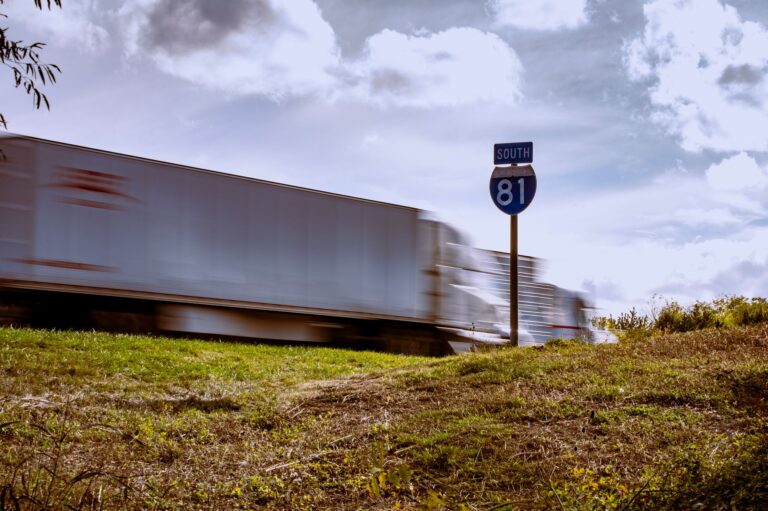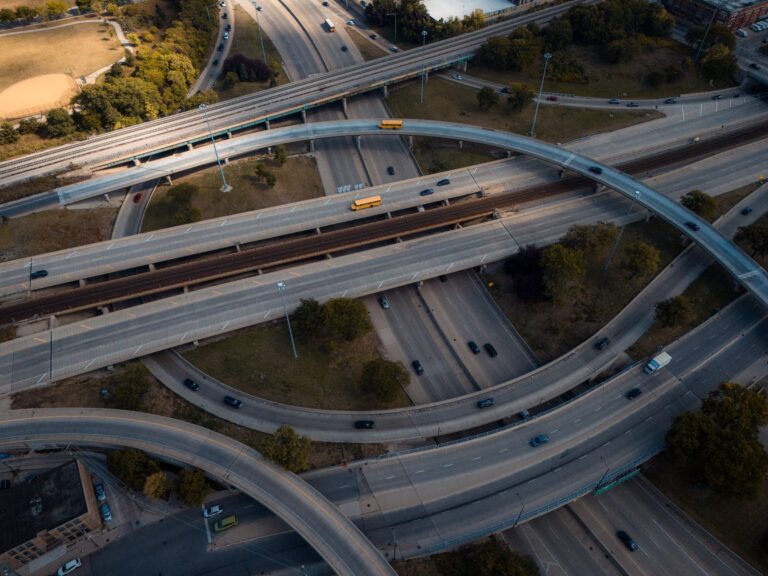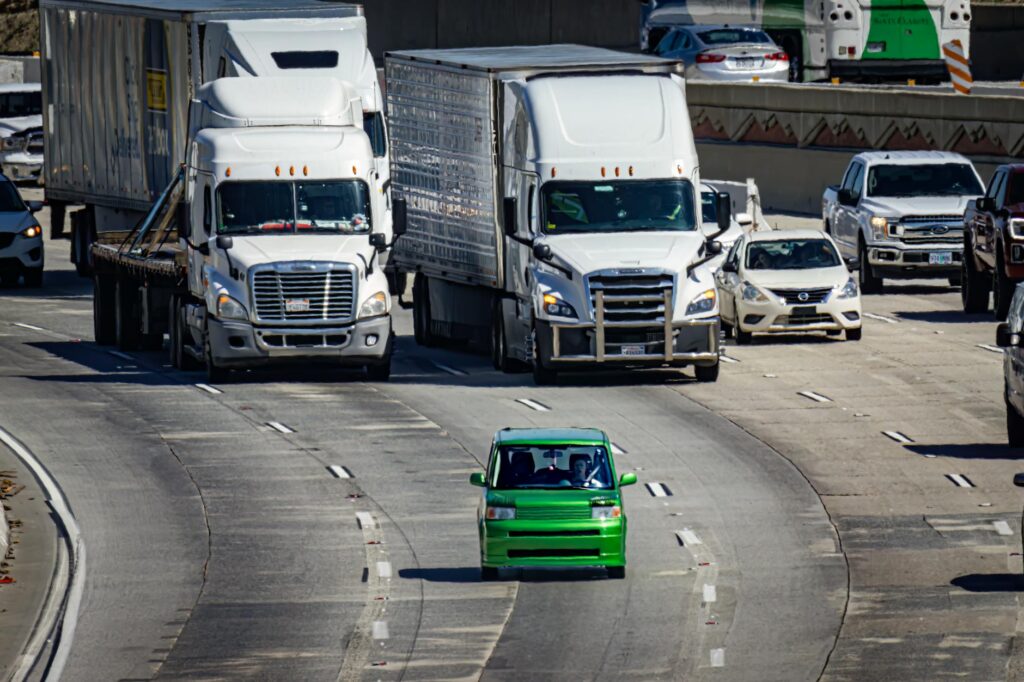
Two of the largest metropolitan areas on the Pacific coast, eleven hundred miles apart, joined by the only continuous north-south interstate in the western United States. On paper it is one of the simplest journeys we handle. In practice the road is the easy part and the two addresses are where the work is.
What follows is what the route costs, where that money actually goes, and the one decision at each end that determines whether this takes four days or six.
- How the Auto Transport Industry Actually Works
- The Seattle to Los Angeles Corridor
- Pricing: What Drives the Math
- Driving vs. Shipping: The Real Comparison
- Seasonal Demand Patterns
- Open vs. Enclosed: A Technical Comparison
- How Carrier Assignment Works
- Federal Regulations That Protect You
- Preparing Your Vehicle: The Engineering Perspective
- Common Misconceptions About Auto Transport
- Frequently Asked Questions
How the Auto Transport Industry Actually Works
Nobody drives your car to Los Angeles. A nine-vehicle trailer collects it along with eight others, and every one of those nine has a different address at each end.
That single fact governs this route more than the road does. Seattle and Los Angeles are both metropolitan areas where a seventy-five-foot rig cannot simply pull up wherever it likes — one is squeezed onto an isthmus between a sound and a lake, the other sprawls across nearly five thousand square miles of basin and hillside. The interstate between them is the straightforward part.
Brokers and carriers
The company you book with and the company that turns up are usually not the same. Brokers hold the customer relationship and post loads; carriers own trucks and accept them. Both are federally licensed, both are traceable through the FMCSA, and the arrangement exists because a single carrier could never cover every city pair in the country.
What this means in practice is that your quote is an offer being made to drivers on your behalf. It becomes real when one accepts.
Why the addresses matter more than the miles
A driver working this corridor plans a day around where they can physically stop. A collection in Kent or Renton, with industrial frontage and room to work, is a twenty-minute job. The same car in a Queen Anne side street may take two hours and a phone call.
Multiply that by nine vehicles at each end and you have the real explanation for why 1,140 miles takes three to five days rather than the eighteen hours a car would need.
The Seattle to Los Angeles Corridor
Interstate 5 runs from the Canadian border to the Mexican one and is the only continuous north-south interstate on the West Coast. For a vehicle carrier there is no serious alternative: US-101 is unworkable over long stretches and the highways east of the Cascades are not a realistic option.
The drive is Seattle, Portland, the Willamette Valley, over the Siskiyou Summit at the California line, down through Redding and Sacramento, then the Central Valley to the basin. One road, three states, one mountain.
The Seattle end is narrower than it looks
The city sits on a strip of land between Puget Sound and Lake Washington, and the north-south routes through it are few and heavily used. A carrier that gets caught inside that corridor at the wrong hour loses time it cannot recover, which is why drivers overwhelmingly prefer to work the southern suburbs — Tukwila, Kent, Renton, Federal Way — where the interstate is close and there is somewhere to park.
If your car is in the city proper, offering to meet south of it is worth real money and usually a day.
“Los Angeles” is not a place
This is the part people underestimate. The basin runs from Santa Monica to San Bernardino and from the Valley down to Long Beach, and the difference between delivering into Torrance and delivering into the Hollywood Hills is not a difference of miles — it is the difference between a routine unload and one that cannot be done at all.
Industrial south and east: easy. The Valley: generally fine. Westside, hillside streets, anywhere with narrow approaches or low branches: expect to be asked to meet somewhere else.
The one piece of terrain
The Siskiyou Summit, at roughly 4,310 feet, is the highest point on I-5 and every car on this route crosses it. From November to March it draws chain restrictions and closes occasionally. There is nowhere to divert to, so a closure means a driver waits — usually a day, never a surcharge.
Pricing: What Drives the Math
Seattle to Los Angeles: $750 – $1,000
Open Transport | ~1,140 Miles | 3-5 Days Transit
Enclosed runs $1,150-$1,250. Open transport comes to roughly $0.66-$0.88 per mile.
Where the money goes
Fuel and driver wages together account for somewhere between half and two-thirds of what you pay. A loaded nine-car trailer returns around six miles to the gallon, and the driver is bound by federal hours rules that cap the working day regardless of how far there is left to go.
Insurance takes ten to fifteen per cent, equipment another ten to fifteen, and the broker’s coordination fee a similar share. What is left is the carrier’s margin, and it runs at five to ten per cent. That is the number to hold in mind when a quote looks temptingly low: there is no reservoir of profit in this business to discount from.
By vehicle
A saloon or hatchback is the floor at $750-$825 open and $1,150-$1,250 enclosed. A crossover adds around $50. A pickup or three-row SUV adds $50 to $175 beyond that, because a trailer sells nine positions and a tall vehicle eats into the one above it.
Cars over $75,000 sit at $875-$1,050 open, reflecting what the hauler is carrying in risk rather than any difficulty in loading. Anything oversized — a dually, a raised roof, a lifted truck — runs $1,000-$1,150 open and up to $1,700 enclosed, because the top deck is often the only place it will go.
The levers you control
- Where the truck can actually stop, at both ends: nothing in money, up to a day in time
- How much notice you give: $75-$125 under five days
- The size of the car: around $250 across the standard range
- Open or enclosed: about $400
- The month: $75-$125, which is modest for a route this long
Driving vs. Shipping: The Real Comparison
Eighteen hours behind the wheel, so two days done honestly, or three if you would rather not arrive exhausted.
The arithmetic
Petrol for 1,140 miles in an ordinary car comes to roughly $150-$180 at West Coast prices. Add a night on the road, meals, and the wear you are putting on the vehicle, and a realistic figure is $400-$450. Shipping is $750-$825 for the same car, plus a flight back if you are not staying.
So driving is cheaper, and on this particular route it is cheaper by enough to be a real decision rather than a formality. We would rather say that plainly than pretend otherwise.
What shipping actually buys
Two days of your life, and the absence of 1,140 miles from the car’s odometer. If you are moving for work and those two days are annual leave, the calculation looks different. If you are shipping a second vehicle while driving the first, the question does not arise at all.
It also buys you out of the Siskiyou in February, which is not nothing. A professional driver crossing that pass in winter is doing something they do fifty times a year.
Where driving stops making sense
If the car is not something you want to put a thousand miles on — a classic, a low-mileage collector piece, anything with an odometer you are protecting — the comparison collapses immediately. The same applies if the car is not currently roadworthy enough for a two-day drive.
For an everyday car and a free week, drive it.
Route-specific planning
Planning to Ship a Vehicle?
Get a vehicle shipping quote based on your route, vehicle, and workable dates.
Get My Quote
Seasonal Demand Patterns
There is no snowbird cycle on the West Coast, and that makes this one of the flattest pricing calendars we publish. Two things vary across the year, and they are unrelated to each other.
Price
June through August is the peak and adds $75-$125, which is the national relocation season rather than anything regional. February to April is cheapest. September and October are nearly as good. The whole annual spread is smaller than the difference between shipping a saloon and shipping a pickup.
Late December thins as drivers stop for the holidays, which tightens availability without moving the rate.
Passability
November through March, the Siskiyou can hold a truck up. Because there is no alternative road, that is a wait rather than a detour — typically a day, occasionally two.
It does not affect the price. Carriers build weather into their scheduling instead of surcharging for it, which is why a winter quote looks the same as a summer one and a winter delivery window should not.
Where they meet
April is cheap and reliably clear, which makes it the best month on this route by both measures at once. September is close behind. February is inexpensive but occasionally slow, and it is the month to avoid if your dates are fixed rather than flexible.
The thing that varies more than the season
Your collection and delivery points. Across a year, the calendar will move your quote by about $100. Whether the truck can reach both addresses will decide whether the whole thing takes four days or six.
Open vs. Enclosed: A Technical Comparison
Around $400 divides them. An open deck carries nine cars in the weather; an enclosed trailer carries two or three out of it.
The most useful benchmark for open transport is who else relies on it: it is how new cars reach dealer forecourts. Damage occurs on well under one shipment in a hundred, and the ramps rather than the highway are nearly always where it happened.
The manoeuvring problem
On this route there is a consideration that has nothing to do with weather. An enclosed trailer is longer and less nimble than an open one, and you are already dealing with two metros where the loading point is a negotiation.
A hillside street in Los Angeles that an open carrier might just manage is out of the question for an enclosed one. If the car warrants enclosed carriage, settle the meeting points in the same conversation rather than a fortnight later.
The weather argument, at its actual size
A winter crossing of the Siskiyou puts the car on treated road for a few hours. Magnesium chloride reaches the underside of anything on an open deck, and for a car with original underbody finish that is a fair consideration. For an everyday vehicle a wash on arrival is the whole answer.
When enclosed is right regardless
- The car sits low enough at the front that an open ramp becomes a real problem
- The open carrier’s stated limit per vehicle would not buy you another one
- The paint has never been redone and could not convincingly be
- Your policy only holds if the car travels under cover
Between April and October there is no environmental case at all. Full comparison: open versus enclosed auto transport.
How Carrier Assignment Works
Your booking is posted to a national load board where carriers running this corridor can see it. One accepts, and at that point you have a truck, a driver and a phone number.
How long it takes here
Usually one to two days. Both ends of this route are major metropolitan areas on the only north-south interstate in the west, so there is a steady flow of trailers working it and no shortage of drivers who want a southbound load out of Seattle.
That is faster than most 1,100-mile routes, and it is worth knowing because it means short notice is less punishing here than elsewhere.
What makes a driver choose your load
Three things, in this order. The rate, obviously. Then whether the collection and delivery points are somewhere they can actually work — a booking with a car park already agreed at both ends is materially more attractive than one with two residential addresses and no discussion. Then the date window, because a three-day span fits into a route that a fixed Tuesday does not.
You control all three, and only the first costs money.
What an underpriced load does
Nothing. It sits on the board while trailers fill with better-paying work, and eventually somebody rings to explain that the figure needs to move — usually when your dates are close enough that starting again elsewhere is impractical.
A quote well below the cluster is not a bargain that others missed. It is a load that will not be taken.
Federal Regulations That Protect You
Interstate vehicle transport is federally regulated, and several of those rules exist specifically for the person whose car is on the trailer.
Licensing and traceability
Every carrier and every broker operating across state lines holds an MC number and a USDOT number, both of them searchable in the FMCSA’s public database along with their safety record and insurance status. When you are told which company is collecting your car, you can check them before the truck arrives. It takes two minutes and hardly anyone does it.
Cargo insurance
Carriers must hold it. Brokers must hold a surety bond of $75,000, which exists to protect customers and carriers when a broker fails to pay. Neither of these is optional and neither is something you should be asked to purchase separately.
Hours of service
A driver may spend no more than eleven hours driving within a fourteen-hour on-duty window, and must then take ten consecutive hours off. This is why a 1,140-mile route takes three to five days and why nobody can promise you a faster one for a fee.
It is also why a driver who stops rather than pushing through weather on the Siskiyou is doing their job rather than failing at it.
The Bill of Lading
A federally required document and the only one that matters if something goes wrong. It records the car’s condition at collection and again at delivery, and the carrier’s liability is the difference between the two.
Signing at delivery without noting an exception closes the matter permanently. That is not a company policy you can appeal.
Preparing Your Vehicle: The Engineering Perspective
Most of what follows is about evidence rather than mechanics, and it takes about half an hour.
Documentation
Wash the car, then photograph it, in that order. Grey Seattle light is unhelpful enough without a layer of road film on top, and you will be comparing these images against a car standing in a Los Angeles car park several days later. Cover each side, both ends, all four wheels, the roof and the glass, and take one shot from crouching height along each sill.
Weight and balance
A quarter of a tank is right. It is enough to drive up the ramp, drive down it and reach a filling station, and anything beyond that is fuel you are paying to move 1,140 miles. Empty the cabin entirely — the authorisation a car carrier holds does not extend to goods, so nothing left inside is covered by anything, and the weight counts towards a trailer limit the driver answers for at a weigh station.
Projections
Fold the mirrors, retract the aerial, and remove roof boxes, bike racks and ski carriers. Cars sit close together on a deck and anything that sticks out is something that can be caught by the vehicle beside it.
Mechanical honesty
Tell the driver about a reluctant starter, a slow leak or a handbrake with a knack. The car has to move under its own power onto the deck and off it again, and a vehicle that will not start on a ramp costs everybody the morning.
Take the Good To Go pass off the windscreen while you are there. Full checklist: preparing your vehicle for transport.
Common Misconceptions About Auto Transport
“Door to door means my door”
The most consequential misunderstanding on this route, and it applies at both ends. A hillside street in Los Angeles or a narrow block in central Seattle may simply have nowhere a seventy-five-foot rig can stop, turn or load. Door to door describes an intention. What actually happens is that you and the driver agree somewhere workable — and doing that at booking rather than on the morning is the single most useful thing on this page.
“1,140 miles should take a day”
Eighteen hours of driving, spread across a truck also collecting and delivering eight other cars, under federal rules that cap the working day. Three to five days is the honest figure and none of it is padding.
“The cheapest quote is the best deal”
A quote is an offer to drivers rather than a promise to you. Priced below what they will accept, it goes unclaimed until somebody rings to revise it, generally too late to start again. Carrier margins run five to ten per cent.
“Enclosed transport protects against winter”
Walls keep salt off an undercarriage. They do not decide whether a pass is open, and no carrier of any kind drives nine cars through a closure. Choose enclosed for what the vehicle is, not for the month.
“My car will be damaged”
Under one per cent of shipped vehicles sustain any damage at all, and open carriers are the same trucks manufacturers use to deliver new stock. Where damage does occur it is nearly always at loading or unloading, which is why the inspections matter more than the mileage.
“Shipping is obviously cheaper than driving”
Not on a route this length. Driving costs roughly $400-$450 all in; shipping starts at $750 plus a flight. Ship because the two days are worth something to you, or because you are moving a second car, or because the vehicle should not be doing that mileage. Not out of an assumption.
Frequently Asked Questions
What does it cost to ship a car from Seattle to Los Angeles?
$750-$1,000 on an open trailer and $1,150-$1,250 enclosed, across roughly 1,140 miles. That is about $0.66-$0.88 per mile.
How long does it take?
Three to five days on the road, plus one to two days for a carrier to accept the load. Four to seven days from booking to delivery.
Why so long, when the drive is eighteen hours?
Because the trailer carrying your car is collecting and delivering eight others, each with its own address and window, and the driver is capped at eleven hours of driving inside a fourteen-hour day. The driving is the small part.
Will the truck come to my address?
It depends entirely on which address. In Kent, Renton or Tukwila at the Seattle end, and in the industrial south or east of the LA basin, almost certainly. In central Seattle, on the Westside, or anywhere in the Hollywood or Santa Monica hills, often not. Agree an alternative when you book.
Which part of Los Angeles am I delivering to?
Worth answering precisely, because “Los Angeles” covers nearly five thousand square miles. Torrance, Long Beach, the eastern suburbs and most of the Valley are straightforward. Hillside streets, narrow Westside blocks and anywhere with low branches or tight turns are not, and a driver will ask to meet you elsewhere.
Is there really only one road?
For a full-size carrier, effectively yes. I-5 is the only continuous north-south interstate on the West Coast; US-101 is unworkable over long stretches and the routes east of the Cascades are not a realistic option. When something blocks I-5, drivers wait rather than divert.
Does the Siskiyou Summit cause problems?
Occasionally, between November and March. At roughly 4,310 feet it is the highest point on I-5 and every car on this route crosses it. Chain restrictions are routine and closures happen. It costs a day at most and it never costs money.
When is the best month?
April — cheap, and the pass is reliably clear by then. September is close behind. February is inexpensive but occasionally slow.
How much does the season change the price?
$75-$125 across the year, with summer at the top. That is less than the difference between shipping a saloon and shipping a pickup, and far less than what a good collection point is worth in time.
How far ahead should I book?
A week is comfortable. Assignment on this corridor usually takes only a day or two, so short notice is less punishing here than on most routes — though it still costs $75-$125 inside five days.
Should I just drive it?
Quite possibly. Eighteen hours, so two days done honestly, at roughly $400-$450 including fuel, a night away, meals and wear — against $750-$825 to ship plus a fare home. Ship if the days are worth more than the money, if you are moving a second vehicle, or if the car should not be doing that mileage.
Is my car insured in transit?
Yes, under the cargo policy every carrier is federally obliged to hold, live from the moment it loads until it comes off. Ask what the certificate states per vehicle. No policy in this industry covers a late arrival, including one caused by a closed pass.
Can I leave belongings in the car?
No. A vehicle carrier’s authority does not extend to household goods, so anything inside travels uninsured, and the weight counts against a trailer limit the driver answers for.
Ready to ship your car from Seattle to Los Angeles?
Get your free instant quote. No phone call required.
More From Our Shipping Guides
- choosing between open and enclosed transport
- what happens between booking and delivery
- the full guide to car shipping
- where car shipping prices come from
Related reading
The state-level view of this journey: Washington to California covers the same road with the inland origins included, and Oregon to California picks it up halfway down.
Other departures from the Pacific Northwest: Seattle to Dallas turns inland instead, and Oregon to Arizona leaves I-5 partway and heads for the desert.
On the mechanics: why transit times exceed drive times, getting an accurate quote and what the carrier’s cover includes.