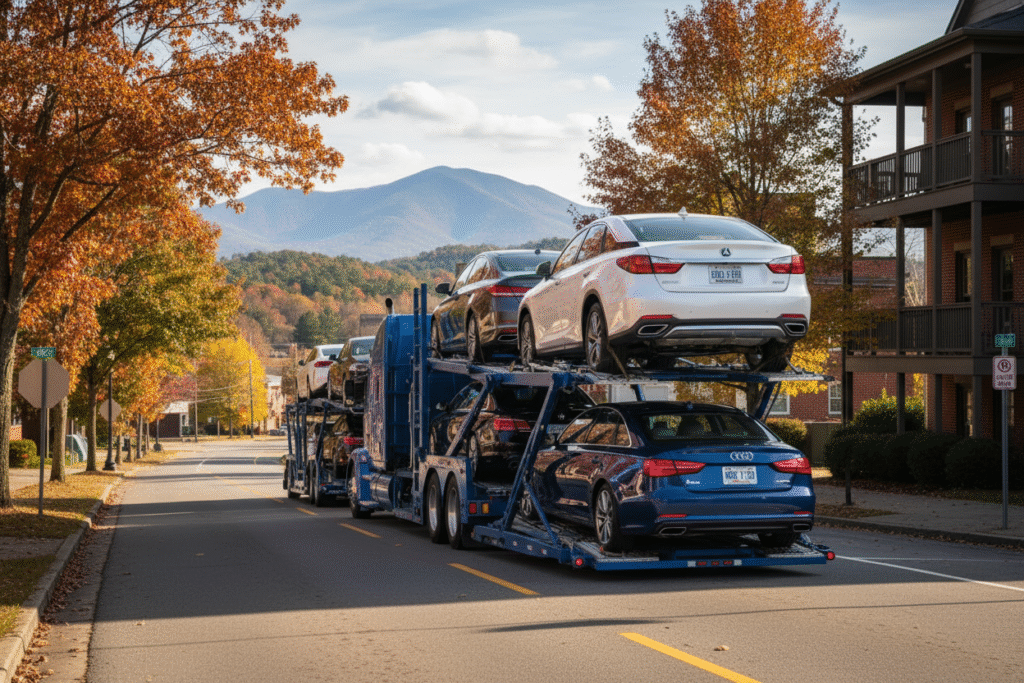
If you are moving to North Carolina with a vehicle, getting the car into the state and getting it legally registered are two separate jobs. An auto transport company can coordinate the interstate move, but the North Carolina Division of Motor Vehicles controls the insurance, title, registration and inspection requirements that apply after you become a resident.
The useful way to plan the move is to handle those two tracks together. Arrange the vehicle shipment around your relocation date, then make sure your North Carolina insurance and DMV documents are ready so the car does not arrive weeks before you can finish the registration process.
This guide summarizes current NCDMV guidance checked on September 24, 2026. Rules, forms and fees can change, so use the linked NCDMV resources for the final requirements that apply to your vehicle.
Shipping the Car and Registering It Are Different Processes
If you are shipping a car to North Carolina, the transport company is responsible for coordinating pickup, carrier assignment and delivery. That process does not automatically transfer your title, issue North Carolina plates or satisfy the state’s registration requirements.
Think of the move in two stages. The transport stage gets the vehicle from your old location to North Carolina. The DMV stage establishes the vehicle under North Carolina’s title, insurance and registration system.
This distinction also matters for insurance. The carrier’s transport coverage is not the same thing as the personal auto liability policy North Carolina requires for a registered vehicle. Our car shipping insurance guide explains the transport side; the state-required liability policy is a separate issue between you, your insurer and NCDMV.
When Does a New North Carolina Resident Need to Register a Vehicle?
NCDMV says that within 60 days of establishing permanent residence in North Carolina, a person who plans to operate a motor vehicle must obtain a North Carolina driver license and title and register their vehicles.
Its Moving to North Carolina guidance then gives a more specific registration trigger after you obtain the North Carolina license: register the vehicle when you accept gainful employment or when the period allowed by the reciprocity agreement with your prior state expires — usually 30 days — whichever occurs first.
In practical terms, do not treat either number as a universal grace period. Use the earlier deadline that applies to your situation. If you are beginning a new job shortly after arriving, the employment trigger can matter sooner than the broader 60-day relocation window.
If your relocation situation is unusual — for example military orders, temporary residency, a vehicle primarily garaged elsewhere, or a title held by another party — confirm the applicable procedure directly with NCDMV before relying on a general timeline.
North Carolina Insurance Requirements for a Newly Registered Car
North Carolina requires continuous liability insurance on vehicles titled and registered in the state. The coverage must come from an insurer licensed to do business in North Carolina.
Can You Use an Out-of-State Insurance Policy?
Not for the North Carolina registration process. NCDMV’s new-resident instructions specifically state that North Carolina vehicle insurance information is required and that out-of-state policies are not accepted.
That does not mean you should simply cancel your existing policy the moment your car is placed on a transport truck. Coordinate the effective dates with your insurers so you do not accidentally create a gap in coverage during the move.
What Are North Carolina’s Minimum Liability Limits in 2026?
For policies issued or renewed after July 1, 2025, NCDMV lists minimum liability limits of:
- $50,000 bodily injury coverage for one person.
- $100,000 bodily injury coverage for two or more people.
- $50,000 property damage coverage.
These are state automobile liability requirements. They should not be confused with a motor carrier’s cargo or liability coverage used during the transport itself.
You can review the state’s current figures on the official NCDMV Vehicle Insurance Requirements page.
What Documents Do You Need to Title and Register the Vehicle?
NCDMV’s current new-resident checklist identifies several items you should prepare before visiting a license plate agency:
- Your vehicle title. If a lender holds the title, NCDMV says a registration card can be used in the new-resident process.
- An MVR-1 Title Application.
- An MVR-180 Odometer Disclosure when required for a vehicle less than 10 years old.
- A North Carolina driver license, or a qualifying out-of-state license together with a North Carolina Temporary Driving Certificate where applicable.
- North Carolina vehicle insurance information.
Bring the documents that apply to your exact ownership situation. A financed, leased, jointly owned or recently purchased vehicle can require additional coordination, so it is better to identify a title issue before the vehicle arrives than while you are standing at a plate agency.
Route-specific planning
Planning to Ship a Vehicle?
Get a vehicle shipping quote based on your route, vehicle, and workable dates.
Get My Quote
Do New Residents Need a North Carolina Vehicle Inspection Immediately?
NCDMV’s new-resident guidance says a vehicle can initially be registered without a North Carolina inspection. The inspection requirement then becomes important before the vehicle’s registration is renewed.
Annual Safety Inspection
North Carolina generally requires a registered vehicle to pass an annual safety inspection before registration renewal. The inspection is normally completed within 90 days before the registration expires.
The state inspection covers items such as lights, brakes, steering, tires, mirrors, windshield wipers and exhaust-related components. NCDMV publishes the current details on its Vehicle Safety Inspection page.
Emissions Inspections Apply in 19 Counties
Vehicles registered in 19 North Carolina counties can also be subject to an emissions inspection, depending on the vehicle and available exemptions. The current county list includes Alamance, Buncombe, Cabarrus, Cumberland, Davidson, Durham, Forsyth, Franklin, Gaston, Guilford, Iredell, Johnston, Lincoln, Mecklenburg, New Hanover, Randolph, Rowan, Wake and Union.
That matters for many people moving into Raleigh, Durham, Charlotte and the surrounding Triangle communities. Check the official NCDMV emissions inspection page because vehicle-age, mileage, diesel, farm and other exemptions can affect whether an emissions test is required.
Two North Carolina Registration Changes Start October 1, 2026
This article is being published just before two changes that are useful for new residents to know about.
Vehicle Registration Becomes Electronic
Beginning October 1, 2026, North Carolina moves to an all-electronic vehicle registration system. NCDMV says drivers will no longer automatically receive a physical license plate sticker or printed registration card when registering or renewing a vehicle.
The registration itself remains valid as long as the required registration fees and vehicle property taxes have been paid. Drivers can access a digital registration and can still obtain a printable or paper copy if needed.
NCDMV explains the transition in its Digital Vehicle Registration guide.
Insurance Termination Notices Get a Longer Response Window
NCDMV currently sends a termination notice when it receives information that required liability coverage was canceled or lapsed. The registered owner has historically had 10 days from the date printed on that notice to respond.
Effective October 1, 2026, NCDMV says that response period becomes 30 days. This is not permission to drive uninsured; it changes the response period for the DMV notice after a reported termination or lapse.
What If the Vehicle Is Financed and the Lender Holds the Title?
A financed vehicle does not prevent you from moving it to North Carolina, but the title paperwork deserves attention before the move. NCDMV’s new-resident guidance states that if the title is held by a lender, a registration card can be presented as part of the registration process.
The exact process can vary with the lienholder and how the existing title is held. Before your move, confirm what the lender will provide and what the North Carolina license plate agency expects for that transaction.
That preparation is separate from shipping. A carrier generally needs the information required to release and move the vehicle; the DMV needs the documents required to establish the North Carolina title and registration record.
A Practical Checklist for Moving a Car to North Carolina
- Plan the vehicle move. Decide whether you are driving or using interstate auto transport. If shipping, understand how the car shipping process works before selecting dates.
- Coordinate insurance. Speak with your insurer about when North Carolina-compliant coverage should become effective, without accidentally leaving a coverage gap.
- Handle your North Carolina driver license. The state’s new-resident vehicle-registration instructions are tied to obtaining the North Carolina license.
- Gather title and registration documents. Resolve lender-held-title questions before your DMV visit.
- Visit a license plate agency. Bring the forms, identification and North Carolina insurance information required for your situation.
- Know the inspection schedule. A new resident can initially register without the state inspection, but inspection becomes part of the renewal process.
- Check your county for emissions requirements. Residents in one of the 19 emissions counties may have an additional inspection requirement.
- After October 1, expect digital registration. Do not wait for a new plate sticker or automatic printed registration card that the state no longer requires.
Where Car Shipping Fits Into the Relocation Timeline
If you are flying to North Carolina while your vehicle is being transported, try to avoid creating a long gap between vehicle delivery and the date you can complete the DMV steps.
A practical sequence is to arrange the transport window, prepare your insurance and documents while the vehicle is in transit, and schedule the DMV work around your arrival. That reduces the chance of having a delivered vehicle sitting unused because the insurance or title paperwork is not ready.
For people relocating into the Raleigh-Durham-Chapel Hill area, our Research Triangle auto transport guide covers the shipping side of the move. The DMV requirements in this article remain separate from carrier scheduling and pricing.
Moving a vehicle to North Carolina?
Get a route-specific transport quote based on your actual vehicle, origin, destination and requested dates.
Frequently Asked Questions
How long do new residents have to register a car in North Carolina?
NCDMV says a person establishing permanent residence in North Carolina who plans to operate a motor vehicle must obtain a North Carolina driver license and title and register their vehicles within 60 days. After you obtain the North Carolina license, NCDMV also says the vehicle must be registered when you accept gainful employment or when the reciprocity period from your previous state expires — usually 30 days — whichever occurs first. Use the earlier deadline that applies to your situation.
Can I register my car in North Carolina with insurance from another state?
NCDMV says out-of-state insurance policies are not accepted for the North Carolina vehicle-registration process. The required liability coverage must be issued by an insurer licensed to do business in North Carolina.
Do I need an inspection before my first North Carolina registration?
NCDMV’s guidance for new residents says you can initially register the vehicle without an inspection. A North Carolina inspection is required before the registration is renewed.
Does every county require an emissions inspection?
No. NCDMV currently lists 19 counties with emissions-inspection requirements, and exemptions also exist for certain vehicles. Check the state’s current emissions page for your county and vehicle.
Does the auto transport company register my vehicle for me?
No. Interstate transport and state registration are different processes. The carrier moves the vehicle; the owner completes the North Carolina title, insurance and registration requirements with NCDMV.
Is the carrier’s insurance enough for North Carolina registration?
No. Transport-related carrier coverage and the personal automobile liability policy required to register a vehicle in North Carolina serve different purposes. You need qualifying North Carolina vehicle insurance for the registration process.
What happens to North Carolina registration cards after October 1, 2026?
North Carolina moves to electronic vehicle registration on October 1, 2026. NCDMV says physical registration cards and plate stickers will no longer be issued automatically, although drivers can access or obtain a paper copy when needed.
Official North Carolina Resources
For the final requirements that apply to your move, use the state’s current guidance:
- NCDMV — Moving to North Carolina
- NCDMV — Vehicle Insurance Requirements
- NCDMV — Proving Liability Insurance
- NCDMV — Vehicle Inspections
- NCDMV — Digital Vehicle Registration
This article is a practical relocation guide based on public NCDMV information and is not legal or insurance advice. Verify current requirements with NCDMV and your insurer before completing a transaction.