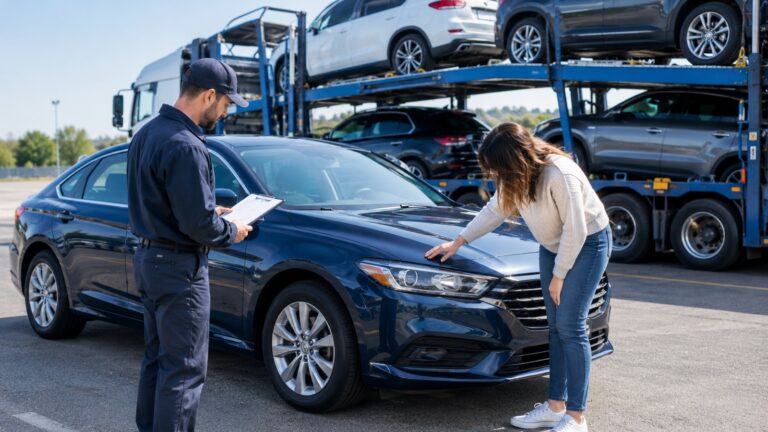

Final exams are nearly over, your flight is booked, and one decision remains: should your car come home too? A vehicle that is essential during the semester may be less useful during a short visit. For a longer break, a job, or a household without a spare car, bringing it home may solve a real transportation need.
This guide helps students and parents compare those options for December 2026 and the January 2027 return to campus. Start with the student’s calendar and actual travel needs, then request quotes for the routes that fit. Our student auto transport service explains how pickup and delivery contacts can be coordinated.
Should you ship your car home for winter break?
List the days you expect to need the car, not just the dates printed on the academic calendar. A student spending part of the break away with family may have fewer days at home than the full university recess suggests. A student working daily may place much more value on having their own vehicle available.
| Your situation | What to compare |
|---|---|
| A short stay at home | Two shipments versus local rides for a few days. |
| A job or regular commitments | Usable car days versus the cost of other transport. |
| Permitted parking at college | Leaving the car there versus bringing it home. |
| Parking permission ends during break | An approved parking alternative versus shipping. |
| A fixed flight or residence-hall closure | A workable pickup contact and location. |
Shipping is only one option. If driving is practical, compare the round-trip road journey as well: fuel, overnight stops, meals, tolls, time, and the conditions you are comfortable driving in. Use our ship a car versus drive it guide for that broader comparison.
Compare both shipping legs before deciding
A quote from college to home answers only half the cost question if the car must return for the spring semester. Request the reverse route separately with its own dates. Do not assume that doubling the first quote produces a reliable return-trip price, that the same carrier will handle both trips, or that a return booking includes a discount.
Use this worksheet with your actual quotes. A blank amount is a question to resolve, rather than a reason to assume the cost is zero.
| Option | Amounts to include |
|---|---|
| Ship the car home and back | Outbound quote + return quote + any needed local rides. |
| Leave the car at college | Any extra parking or storage + transport used at home. |
| Drive home and return | Round-trip fuel, tolls, meals, lodging, and travel time. |
Count only costs that differ between the options. If you will buy the same flight in either the shipping or leave-at-college plan, its price does not change that comparison. If a parking permit is already paid for and cannot be refunded, shipping the car does not automatically recover that money. Check any rental vehicle’s age, driver, and total-price terms before treating it as an available alternative.
A useful planning calculation: divide the additional cost of bringing the car home by the number of days you expect to use it there. That is a personal decision aid, not a transport rate. Recalculate if the expected arrival or return-pickup window changes.
Count usable days, not just vacation days
A three-week break does not necessarily provide three weeks with the car at home. The vehicle may arrive after you do, and it may need to leave before your own return flight. Ask for a pickup window and a separate estimate of time in transit for each direction.
For an illustrative calendar, not a shipping estimate, imagine being home December 15 through January 5. If the vehicle is delivered December 20 and collected for its return January 2, the full days between those handoffs are December 21 through January 1: twelve days. Decide whether those are the days when you actually need it.
Write down your earliest workable pickup, your last available handoff day, the first day you need the car at home, and the first day you need it back at college. An estimate should not be treated as a guaranteed appointment. If a date is essential, discuss that constraint and review the actual written commitment before booking.
Our Christmas and New Year car shipping guide covers holiday scheduling in more detail. Weather can also change the plan; see how winter conditions affect pickup and delivery when setting a backup arrangement.
Route-specific planning
Planning to Ship a Vehicle?
Get a vehicle shipping quote based on your route, vehicle, and workable dates.
Get My Quote
Can you leave your car on campus over winter break?
Ask the university or housing operator about your specific permit, lot, and absence dates. Having parked there throughout the semester does not by itself confirm that the vehicle can remain unattended for the entire break.
- Permit dates: Does the authorization cover both December and your January return?
- Approved location: Is that particular lot open for overnight or extended parking?
- Temporary restrictions: Could maintenance, snow removal, or an event require the vehicle to move?
- Access: Can your chosen contact reach the car and obtain the keys while housing is closed?
- Alternative arrangements: If parking is unavailable, what permitted option can you actually book?
For a current example, NC State’s student parking information lists December 31, 2026 as the expiration date for Fall 2026 permits. Its parking FAQ also says overnight parking is not permitted in park-and-ride lots. These are NC State rules, not a national campus policy; check your own school’s current instructions.
If you leave the car, follow the vehicle manufacturer’s storage guidance and arrange any permitted access that may be needed. If you ship it, settle the loading location before the campus closes rather than relying on a last-minute handoff at the dorm entrance.
Coordinate the student, parent, and carrier handoffs
Plan four handoffs: pickup at college, delivery at home, return pickup at home, and delivery back near campus. The same person does not have to manage all four, but each contact needs to be agreed with the transport provider and available during the relevant window.
- Name the contacts. Provide a reachable phone number for each location and confirm any authorization requirements.
- Arrange keys and access. The person handing over the vehicle must be able to reach it and follow any special starting instructions.
- Choose a permitted loading point. Discuss gates, low clearance, narrow roads, parking decks, and room for the trailer to turn.
- Document each trip. Take condition photos and review the pickup and delivery inspection records with the driver.
- Share the contingency. Decide whom to call if the estimated handoff changes after the student has flown home.
A nearby meeting place may be needed when a large carrier cannot reach the requested address. Confirm safe, legal access and any property permission; an empty parking lot is not automatically available for loading. The bill of lading guide explains the condition record your pickup and receiving contacts should review.
If the dorm closes before pickup, tell the coordinator immediately. Work out an authorized contact and an accessible location, or reconsider the timing. Leaving the keys at a desk or asking a roommate without confirming the arrangement can leave the vehicle unavailable when the truck arrives.
Choose transport and prepare the car for each trip
For an everyday student vehicle, compare an open transport quote with the requirements of the move. For a collector or other vehicle with particular protection needs, ask about enclosed transport. Enclosed equipment adds protection from direct weather and road exposure; it does not remove route or scheduling constraints.
Before either pickup, photograph the exterior, remove valuables and loose accessories, provide working keys, and disclose starting problems, modifications, or other loading concerns. Follow the assigned carrier’s instructions for fuel or battery charge. Use the vehicle preparation checklist for the remaining details.
Do not treat the vehicle as a replacement for shipping dorm belongings. Ask the assigned carrier about personal items before packing, including acceptance, placement, limits, and coverage. Our personal-items guide explains those questions.
When comparing providers, confirm who arranges the shipment and which motor carrier will move the car. The FMCSA’s automobile transport advisory explains that distinction and recommends checking registration. Ask for the assigned carrier’s applicable coverage and written shipment terms, and give the handoff contacts the inspection and reporting instructions.
Plan the January return before leaving college
Discuss the return route when you request the trip home, even if the final return dates still need confirmation. That gives you a fuller cost comparison and highlights any period when the student will be back on campus without the car.
Before the return shipment, reconfirm the spring housing opening date, parking authorization, receiving contact, and loading access. Avoid planning delivery for a time when nobody can receive the vehicle or before its permitted parking becomes available.
Review the return quote and terms on their own merits. Confirm how date changes or cancellation would be handled, and whether the return carrier has been assigned. Keep a practical local transport option available if the first day of class, a work shift, or an appointment falls before delivery.
For semester arrivals beyond this holiday trip, our guide to shipping a car to college covers the wider move-in process.
Winter break car shipping FAQs
Is it worth shipping my car home for winter break?
It depends on the total cost of both shipments, the days you will use the car at home, and your alternatives. Compare actual quotes with approved parking at college and the transport you would use at home. A short break with little need for a vehicle may favor leaving it at school.
Should I arrange both shipments at the same time?
Discuss both routes early so you can compare the full plan. Confirm each direction’s quote, dates, carrier arrangements, and change or cancellation terms separately. An outbound booking does not automatically reserve the return or establish its price.
Can my parents receive the car if I fly home first?
Ask the provider to confirm an authorized receiving contact in advance. Give that person the shipment details and make sure they can meet the driver, inspect the vehicle, review the delivery paperwork, and follow any agreed payment arrangements.
What if my dorm closes before the carrier arrives?
Tell the coordinator about the closure before booking. Agree on an accessible loading location and a contact who can release the car if needed. If the original plan stops being workable, confirm a revised arrangement rather than leaving the car and keys without an agreed handoff.
Can I leave my car on campus during winter break?
That depends on the university or housing operator. Check permit expiration, the approved lot, overnight restrictions, possible closures, and access while you are away. Ask about the January period as well as December; semester parking permission may have an end date during the break.
When should I plan the return shipment for January?
Start with spring housing access and the first day you need the vehicle. Ask for a workable pickup window and a separate transit estimate, arrange a receiving contact, and discuss any firm deadline. There is no single return-pickup date that fits every college and route.
Request a winter break car shipping quote
Share the pickup and delivery ZIP codes, vehicle year, make and model, operating condition, preferred transport type, and available pickup dates. Include the reverse route and January timing if the car will return to college, plus any flight, dorm-closure, or parking constraints.
Get a winter break car shipping quote from SpeedyWay, or review our student auto transport service to plan the contacts and access details for your move.