If you are wondering how car shipping works, the process is easier to understand when it is broken into clear stages. From the first quote request to the final delivery inspection, each step has a specific purpose and set of information you should review.
This page focuses specifically on the car shipping process. For a broader overview that also covers pricing, insurance, preparation, and transport options, see our complete car shipping guide.
Car Shipping Process at a Glance
- Provide the vehicle and route details.
- Choose open or enclosed transport.
- Review the quote and shipment requirements.
- Coordinate the shipment with an available carrier.
- Prepare the vehicle for pickup.
- Inspect and document the vehicle at pickup.
- The carrier transports the vehicle.
- Inspect the vehicle again at delivery.
Step 1: Provide Your Vehicle and Route Information
The process starts with accurate shipment details.
You will typically need to provide:
- Pickup location
- Delivery location
- Vehicle year, make, and model
- Whether the vehicle runs normally
- Open or enclosed transport preference
- Preferred pickup timing
- Any modifications that change the vehicle’s dimensions or ground clearance
Accurate information helps determine which equipment and carrier capacity may be appropriate for the shipment.
See how to get an accurate car shipping quote for a more detailed checklist.
Step 2: Choose Open or Enclosed Transport
The next decision is how the vehicle will be transported.
Open Auto Transport
Open transport moves vehicles on an open carrier. It is commonly used for standard sedans, SUVs, pickups, dealer vehicles, and daily drivers.
Enclosed Auto Transport
Enclosed transport places the vehicle inside a covered trailer and provides additional protection from direct weather and road exposure.
It is often considered for classic, luxury, exotic, restored, or other high-value vehicles.
For a detailed comparison, see open vs. enclosed auto transport.
Step 3: Review the Quote and Shipment Details
Before the shipment moves forward, review the information used for the quote.
Check that the pickup and delivery locations, vehicle information, operating condition, transport type, and requested timing are correct.
Pricing can depend on more than mileage alone. Vehicle size, route access, transport method, timing, and carrier availability can also affect the final quote.
For pricing details, see how much it costs to ship a car.
Step 4: Carrier Assignment and Scheduling
Once the shipment is ready to move forward, it can be matched with carrier capacity that fits the route, vehicle, equipment requirements, and timing.
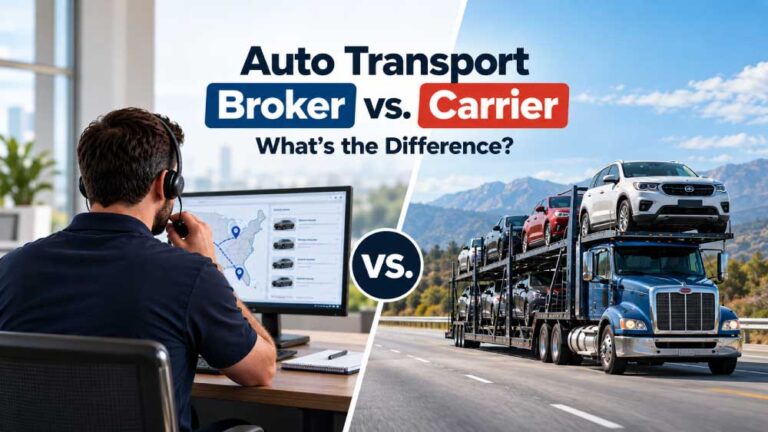
To understand who arranges the shipment and who physically transports your car, see our auto transport broker vs. carrier comparison.
Carrier availability can vary from one lane and date to another, so scheduling should be treated as a coordinated transportation process rather than a guaranteed minute-by-minute appointment unless specific arrangements say otherwise.
What Happens During Dispatch?
The transport team evaluates carriers that may be able to accommodate the shipment.
Factors can include:
- Route direction
- Available trailer space
- Vehicle size
- Open or enclosed equipment
- Pickup and delivery access
- Requested dates
Step 5: Prepare the Vehicle for Pickup
Before the carrier arrives, prepare the vehicle so the inspection and loading process can be completed efficiently.
Common preparation steps include:
- Remove valuables and unnecessary loose items.
- Photograph the exterior condition.
- Disclose mechanical or operating problems.
- Remove or secure removable accessories when necessary.
- Have a working key available.
Use our car shipping preparation checklist before pickup.
Route-specific planning
Planning to Ship a Vehicle?
Get a vehicle shipping quote based on your route, vehicle, and workable dates.
Get My Quote
Step 6: Pickup and Vehicle Inspection
At pickup, the driver and vehicle owner or authorized representative should review the vehicle’s condition before loading.
The Bill of Lading
The Bill of Lading, or BOL, is an important shipment document. It can record the vehicle’s condition at pickup along with other shipment information.
Existing scratches, dents, chips, or other visible condition details should be documented accurately.
Taking your own clear photos at pickup provides an additional condition record.
How Door-to-Door Pickup Works
Door-to-door transport generally means the carrier coordinates pickup and delivery as close to the requested addresses as it can safely and legally access.
A large auto transport carrier may not be able to enter every residential street. Narrow roads, low trees, steep grades, local restrictions, or limited turning space can require a nearby meeting point.
See door-to-door vs. terminal-to-terminal car shipping for more detail.
Step 7: The Vehicle Is Loaded for Transport
After the pickup inspection is complete, the vehicle is loaded onto the carrier.
The loading method depends on the trailer and vehicle. The carrier is responsible for positioning and securing the vehicle for transport using the equipment appropriate to the trailer.
If the vehicle does not start, steer, brake, or roll normally, different loading considerations may apply. See inoperable vehicle shipping for more information.
Step 8: The Vehicle Travels Toward the Destination
Once loaded, the vehicle travels along the carrier’s route toward the delivery location.
A multi-vehicle carrier can have additional pickups and deliveries along the route. Traffic, weather, road conditions, other scheduled stops, and driver operating requirements can also affect progress.
How Do You Get Updates During Transit?
Communication practices can vary between providers and carriers. Depending on the shipment, status updates may be coordinated through the transport company, carrier, or driver.
If you need an update, use the contact process provided for your shipment rather than assuming continuous real-time tracking is included.
How Long Does the Transit Stage Take?
The distance between pickup and delivery is one of the main factors, but transit planning can also depend on route conditions, weather, access, and other carrier stops.
It is also useful to distinguish between the pickup window and the actual transit period after pickup.
For distance-based planning information, see how long it takes to ship a car.
What Happens With Insurance During Transport?
Before pickup, confirm the assigned motor carrier’s applicable cargo coverage and review its terms, limits, and exclusions.
Do not assume that every shipment has identical coverage. The carrier and shipment documentation should be used to understand what applies to the specific transport.
The condition information documented on the Bill of Lading is also important if a damage issue needs to be reviewed.
See our car shipping insurance guide for more detail.
Step 9: Delivery Is Coordinated
As the carrier approaches the destination, delivery is coordinated with the recipient or authorized contact.
As with pickup, the carrier needs a location that is safe and practical for a large transport truck. If the requested address cannot be accessed, an appropriate nearby location may be used instead.
Step 10: Complete the Final Inspection
Before completing delivery, inspect the vehicle again.
Compare the vehicle with:
- The pickup inspection
- The Bill of Lading
- Your pickup photos
If you notice a new condition issue, document it on the delivery paperwork before completing the final inspection whenever possible.
What Happens After the Vehicle Is Delivered?
Once the delivery inspection and required shipment paperwork are complete, the vehicle is released to the recipient.
Any payment terms or remaining shipment requirements should follow the specific agreement for that transport rather than being assumed to work the same way for every shipment.
Can You Leave Personal Items in the Car?
Personal-item rules can vary between carriers and shipments.
Do not assume that household belongings can automatically travel inside the vehicle or that vehicle cargo coverage applies to personal property.
Check the applicable policy before pickup. Our guide to shipping personal items in a car explains this topic in more detail.
Car Shipping Process Checklist
Before pickup, make sure you have:
- Confirmed the correct vehicle
- Confirmed pickup and delivery information
- Selected open or enclosed transport
- Disclosed vehicle modifications or operating issues
- Reviewed the pickup arrangements
- Prepared the vehicle
- Taken condition photos
- Reviewed applicable carrier policies
- Planned for the pickup inspection
At delivery:
- Inspect the vehicle before completing the paperwork.
- Compare its condition with the pickup documentation.
- Document any condition issue you notice.
- Complete the delivery requirements for the specific shipment.
Frequently Asked Questions
How does car shipping actually work?
You provide the route and vehicle information, choose a transport method, coordinate the shipment with an available carrier, inspect the vehicle at pickup, have it transported on an auto carrier, and inspect it again at delivery.
How are cars shipped from one state to another?
Cars are commonly transported on open or enclosed auto carriers. The carrier picks up the vehicle, loads it onto the trailer, transports it along the assigned route, and coordinates delivery at the destination.
Does the carrier come directly to my house?
Door-to-door service generally aims to use the requested pickup and delivery locations, but the carrier must be able to access them safely and legally. A nearby meeting point may be necessary when access is limited.
Do I need to be present when the car is picked up?
The vehicle needs an authorized person available to complete the pickup inspection and shipment documentation. The exact arrangement should be confirmed for the specific shipment.
Can I track my car while it is being shipped?
Communication methods vary. Status updates may be available through the transport company, carrier, or driver, but continuous real-time tracking should not be assumed unless it is specifically provided.
What is the Bill of Lading in car shipping?
The Bill of Lading is an important shipment document that can record vehicle condition and shipment information at pickup and delivery.
What should I do when my car is delivered?
Inspect the vehicle, compare its condition with the pickup documentation and photos, and document any new condition issue before completing the final delivery paperwork whenever possible.