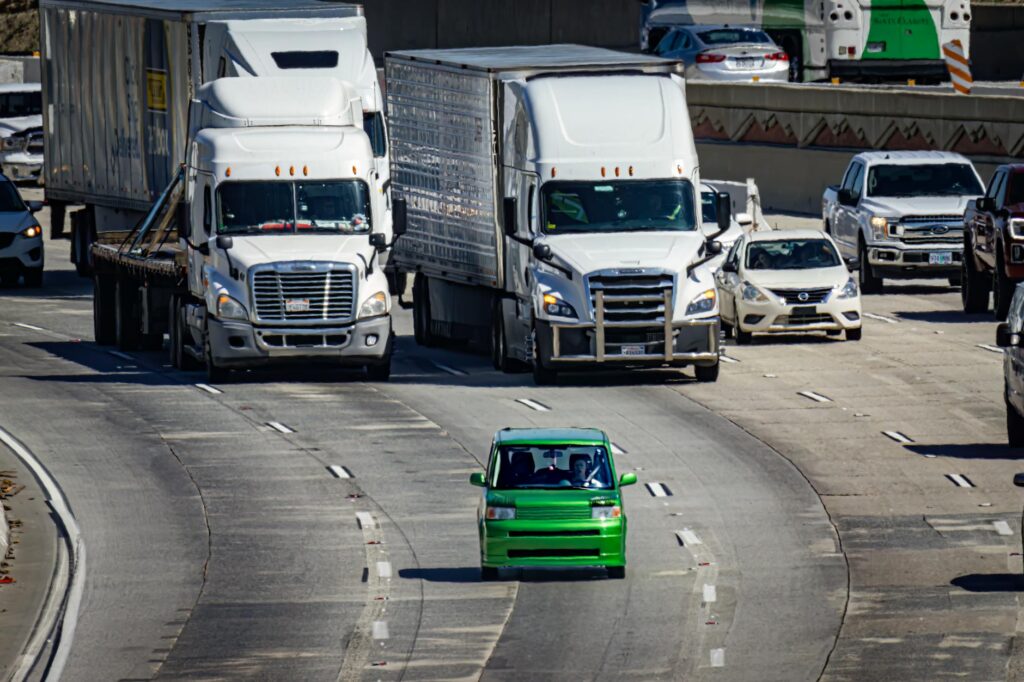
Interstate 10 is the southernmost transcontinental route in the United States, and the stretch between Houston and Miami is one of the most heavily trafficked segments of it. Cars move along that road constantly — corporate transfers, vehicles bought at distance, families moving between two of the largest metros in the South. What sets this corridor apart is not the volume. It is that the origin, the destination and every mile in between sit inside the same hurricane belt.
This page covers what the run costs, how long it takes, and how to plan around the one variable that matters more here than anywhere else we ship. Mechanics rather than marketing.
- How the Auto Transport Industry Actually Works
- The Houston to Miami Corridor
- Pricing: What Drives the Math
- Driving vs. Shipping: The Real Comparison
- Seasonal Demand Patterns
- Open vs. Enclosed: A Technical Comparison
- How Carrier Assignment Works
- Federal Regulations That Protect You
- Preparing Your Vehicle: The Engineering Perspective
- Common Misconceptions About Auto Transport
- Frequently Asked Questions
How the Auto Transport Industry Actually Works
The company you book with is, in almost every case, not the company that drives your car. Understanding that changes what you should be asking.
Three Parties
A broker prices the job, finds and vets a carrier, handles coordination and any claim, and owns no trucks. A carrier owns the trailer and employs the driver, usually running between one and five vehicles rather than a national fleet. You are the third.
The arrangement exists because a carrier running the Gulf coast has no practical way of finding the eight other cars that make the trip worth taking. A load board and a broker settle that in a few hours.
Where Your Money Goes
Diesel and driver wages together take half to three-fifths. A loaded carrier manages about six miles to the gallon, so 1,190 miles burns close to 200 gallons before anybody is paid.
Insurance is ten to fifteen per cent, the trailer another ten to fifteen, the broker’s fee ten to fifteen. Carrier profit is five to ten per cent — the figure to remember whenever a quote arrives several hundred dollars under the rest, because there is nowhere in that structure for the difference to have come from.
The Questions That Matter
Not whether they are a broker. Whether they will name the carrier once one is assigned, produce that carrier’s DOT number and insurance certificate, and answer honestly about what happens if the window moves — which on this particular corridor is a question with real weight behind it.
The Houston to Miami Corridor
Roughly 1,190 miles, three to five days, straight along I-10 and then down the Florida peninsula. Geographically it is one of the simplest routes we run. Seasonally it is the most exposed.
Everything Is in the Hurricane Belt
This is the distinguishing feature and it is worth being precise about. On most of our weather-affected routes the exposure is at one end — a Minnesota collection, an Ohio pickup — or across one stretch, like the Wyoming plains. The rest of the journey is unaffected and the truck simply drives out of the problem.
Houston to Miami has no such escape. The origin sits on the Gulf, the destination sits in South Florida, and the road between them runs along the coast the entire way. For the reverse direction, see our Miami to Houston car shipping guide. Between June and November a single storm system can affect where the car is collected, where it is delivered, and the interstate connecting them, simultaneously.
That does not make the route dangerous or expensive. Carriers on this lane deal with it every year and price it as ordinary. What it does mean is that a summer or autumn booking deserves genuine slack rather than a token day, and that a firm delivery date in September is a promise nobody should be making.
Who Is On It
Energy-sector movement between Houston and South Florida, corporate relocations, seasonal residents, and a steady flow of vehicles bought and sold at distance between two large metros. Demand is reasonably even across the year, which is unusual and useful — there is no single crush month to avoid.
The Road Itself
I-10 east across Louisiana, Mississippi, Alabama and the Florida panhandle, then south. Flat, maintained, high-volume freight corridor with no passes, no altitude and nothing seasonal except the weather already described. Outside storm season the transit estimate here is among the more reliable ones we publish.
Pricing: What Drives the Math
Houston to Miami: $750 – $850
Open Transport | ~1,190 Miles | 3-5 Days Transit
That is the standard-vehicle range, with enclosed at $1,150-$1,250. Across 1,190 miles the open rate works out at roughly $0.63-$0.71 a mile — right at the top of the normal band.
Middle Distance, Middling Rate
Just under twelve hundred miles is an awkward length for per-mile arithmetic. The fixed costs of a shipment — two appointments, two inspections, the loading, the paperwork — are identical on any journey. Spread across 2,800 miles they vanish into the rate; spread across 1,190 they are still a visible share.
Notice what is not in the price: the weather. Carriers absorb storm risk into their scheduling rather than surcharging for it, which is why this page keeps talking about your calendar rather than your budget.
By Vehicle
Deck space and weight are what a trailer prices, so size moves the number further than value does:
A sedan or compact sits at the bottom of the range at $750-$825 open, $1,150-$1,250 enclosed — light, low, and quick to strap. A mid-size SUV or crossover adds around $50, and a full-size SUV or pickup another $50 to $150 on top of that, because height costs a carrier deck space it cannot sell twice.
Above $75,000 in value the number moves again, to $875-$1,050 open, though that increment is insurance exposure rather than physics. The genuine outlier is anything oversized — a dually, a lifted truck, a van with a raised roof. Those often have to ride on the top deck, which restricts which trailers can take them at all, and the rate reflects the scarcity: $1,000-$1,150 open and $1,500-$1,700 enclosed.
The Levers
- Lead time: $100-$150 for booking inside five days, and on this route it also buys the carrier room to plan around a forecast
- Month: $100-$200 across the year, plus the storm-season consideration
- How big the car is: roughly $200 from smallest to largest
- Trailer type: around $400 to put walls round it
- Which Houston-area address: about $75
- Date flexibility: $50-$100 for a window over a fixed day
If the car does not run, add $150-$250 and a wait for a trailer with a winch — see inoperable vehicle shipping.
Driving vs. Shipping: The Real Comparison
Nearly twelve hundred miles is about eighteen hours at the wheel — two days done properly, or one very long one. Close enough to the crossover that it deserves real numbers rather than assertion.
Driving. Fuel at 25 MPG and $4.00 a gallon is roughly $190. A night on the road, around $120, with meals on top. Then the line that gets left out: 1,190 miles of depreciation and servicing at the conventional $0.21 a mile, or about $250. Call it $600-$650 all in.
Shipping. $750-$850, plus getting yourself to Florida.
Driving comes out ahead on cash, and not by an amount that settles the question. What settles it is usually one of four things: a second vehicle with only one driver, a car that does not run, nobody travelling with it at all, or a reluctance to spend two days on I-10.
The Seasonal Wrinkle
One factor the arithmetic misses. Driving the Gulf coast yourself in September means making your own judgement calls about weather, in your own car, on your own schedule, with nowhere obvious to divert to.
A carrier runs that road for a living and will simply stop and wait if conditions turn. In February this route is an easy drive and a genuine choice. In hurricane season the calculation quietly shifts.
Route-specific planning
Planning to Ship a Vehicle?
Get a vehicle shipping quote based on your route, vehicle, and workable dates.
Get My Quote
Seasonal Demand Patterns
Demand on this corridor is unusually even, so the pricing calendar is gentle. The weather calendar is not, and the two do not line up.
March and April are the cheapest months, roughly $690-$950, with carrier availability at its best. January, February, May, September and October sit in a steady $750-$1,050 band. June through August is the national relocation peak — $840 to around $1,200 in July, and harder to book at short notice. November and December drift back down, though the fortnight around the holidays thins out as drivers stop.
That is a spread of $100-$200 across the whole year. Real, but smaller than what a fortnight of lead time saves you.
Reading It for Price
March and April are cheapest, June through August carries the usual national relocation premium, and the second half of December thins out as drivers stop. The full-year spread is $100-$200 — modest, and comparable to what booking a fortnight ahead saves.
There is no snowbird crush on this lane in either direction, which makes it easier to book than most of our Florida routes.
Reading It for Certainty
Here the picture changes. Atlantic hurricane season runs from June to the end of November, with the genuine peak between mid-August and early October. For most of that stretch nothing happens and the route behaves normally. When something does happen, it can affect the collection, the delivery and the road simultaneously.
So the cheapest months, March and April, are also among the most predictable — which is a rare alignment. Late spring is simply the best time to move a car on this corridor, on both counts.
If You Are Moving in Storm Season
Most people do it without incident. Build three or four days of slack into the delivery window, do not book a tight connecting flight against the early end of it, and treat a carrier who pauses for a system as someone exercising judgement rather than letting you down.
Open vs. Enclosed: A Technical Comparison
About nine cars in ten ride open on this lane, and it is worth addressing the obvious question head-on: does a covered trailer help in hurricane season?
Not in the Way People Hope
An enclosed trailer keeps rain off a car. It does not change whether a driver crosses a flooded interstate, and no carrier of either type is going to move a nine-vehicle load through a storm system.
The protection you actually get in storm season comes from the driver’s judgement and from your own scheduling slack, not from the walls of the trailer. Paying $400 for weather cover on this route is paying for the wrong thing.
The Two Trailers
Open carriers take seven to ten vehicles across two decks, loaded up hydraulic ramps and exposed to road spray and debris. They are the overwhelming majority of the fleet, which is why pickup usually falls inside one to five days.
Enclosed carriers hold two to six behind solid walls, generally loading on a lift gate, sometimes on air suspension, with climate control available and higher cargo limits as standard. Being roughly a tenth of the fleet, assignment runs three to ten days.
Genuinely Worth It When
- The value is high enough that the carrier’s per-vehicle payout figure is worth confirming first
- The car gets shown, judged or auctioned
- There is fabric over your head rather than metal
- Repainting a panel would mean approximating the colour instead of matching it
- Ground clearance is tight enough at the front that ramps become a gamble
All about the vehicle, none about the road. Open transport, enclosed transport and the comparison.
How Carrier Assignment Works
The stretch between booking and a truck appearing is the least visible part of the process, and on this corridor it is usually short.
What Happens
Your vehicle goes onto a load board with both locations, the type of car and an offered rate. Carriers already planning an eastbound run along the Gulf look for loads that suit their route, their remaining space and their price. One takes it, dispatch confirms their DOT number and insurance with you, and a four-hour collection window is agreed.
Why It Is Quick Here
Two large metros at either end and a major freight artery in between. Houston generates enormous outbound volume and South Florida absorbs a great deal, so there is a steady flow of trucks running this lane rather than a trickle. One or two days is common.
The exception is the days immediately after a storm system passes through, when a backlog clears and everything competes at once. That is temporary and it resolves within a week, but it is worth knowing if your booking lands in it.
What Stalls a Load
- A rate below what carriers accept. It does not get declined, it simply sits — which is exactly how an underpriced quote fails
- An address a rig cannot work. Miami Beach and the barrier islands are the usual culprits at the delivery end
- A storm backlog. Brief, but real
What Fixes It
Notice, mainly. Two to three weeks means the assignment window happens quietly in the background rather than becoming your problem — and in storm season it gives the carrier room to plan around a forecast instead of reacting to one.
Federal Regulations That Protect You
A useful amount of this industry is public record, and checking it takes about ninety seconds.
The Requirements
Carriers must hold a valid DOT and MC number and at least $750,000 in liability cover. Brokers must maintain a $75,000 surety bond, which exists precisely so there is something to claim against if the broker fails. Safety records are public and carriers are audited.
Drivers are limited to eleven hours of driving inside a fourteen-hour window, with ten hours off afterwards. That is why three to five days is honest on this run, and why anyone promising materially faster is describing something that cannot lawfully happen.
The Check
Take the assigned carrier’s DOT number to safer.fmcsa.dot.gov. You will see whether the operating authority is active, whether an insurance filing sits on the record, and how recently anyone inspected them. With good capacity on this corridor you generally have a choice of carrier, and a choice is only useful if you exercise it.
The Figure on the Certificate
Cargo cover names a limit per vehicle. Nobody arrived at that number by looking at your car — it is the level regulation demanded, and operators sit at different points above it. Ask, and make the comparison yourself. How a claim proceeds covers the process.
What No Regulation Gives You
A delivery date. Hours-of-service rules and weather are both lawful reasons for a truck to be late, and cargo policies pay for damage rather than delay. On a corridor where a storm can hold everything at once, that distinction is worth understanding before you book rather than after.
Preparing Your Vehicle: The Engineering Perspective
Each item on the standard list has a physical justification behind it. The justifications are more useful than the list.
A Quarter of a Tank
Petrol weighs about 6.3 lbs a gallon, so a full tank adds 60-100 lbs. Multiplied across nine cars that is most of a tenth vehicle in weight the trailer must carry inside a legal limit. Trailers reach their weight ceiling before they run out of space, which is also why a heavy car quotes above a large one.
Nothing Loose Inside
Legally, a vehicle carrier holds no authority to move household goods, so cabin contents travel uninsured. Physically, unsecured objects have three to five days to find the trim, the pedals or the rear glass.
Wash It Before Photographing It
Gulf coast road film is uniform and effective at hiding shallow scratches, and you cannot demonstrate that damage predates a journey if it was invisible when the journey began. Then work round the car with a camera and the date recorded — panels, roof, sills, wheels individually, cabin.
Deal With the Alarm
A sensitive alarm triggering repeatedly on a moving trailer flattens a battery over several days. The car is not damaged, but it will not move at a Miami kerb with a driver waiting.
Bring the Profile In
Mirrors, aerials, roof boxes and bike racks are the commonest source of minor transport damage, simply because they are the parts that stick out on a tightly packed deck.
Two for This Particular Route
Humidity at both ends. Houston and Miami are among the most humid cities in the country, and a sealed car standing in that for several days is a good environment for anything organic left inside. Empty it properly rather than approximately.
Sun on the glass. Suction mounts and adhesive fittings release readily in Gulf coast heat. Take them off rather than finding them in the footwell.
Fuller checklist: preparing a vehicle for transport.
Common Misconceptions About Auto Transport
“An enclosed trailer protects against hurricane season”
The one worth correcting first on this route. Walls keep rain off a car; they do not determine whether a driver crosses a flooded interstate, and no carrier of either kind moves nine vehicles through a storm system. What protects you in storm season is the driver’s judgement and your own scheduling slack.
“A delay means somebody failed”
Not on this corridor. A driver who parks up and waits out a system is making the correct decision with nine cars behind the cab. What you should expect is to be told promptly — not for the weather to be argued with.
“The cheapest quote is the best deal”
A quote is an offer to carriers rather than a promise to you. Priced below what carriers will accept, it sits unclaimed until somebody rings to say the rate must rise, generally once your dates are too close to start again. Carrier margins run five to ten per cent; there is no room in that for a bargain.
“My car will be damaged”
Under one per cent of shipped vehicles sustain any damage at all, and open carriers are the same trucks manufacturers use to deliver new cars to dealerships. Where damage does happen it is nearly always at loading or unloading, which is why the inspection matters more than the miles.
“Three to five days means my car arrives in three to five days”
That is transit. Assignment takes one to five days beforehand, so four to ten from booking is the honest figure — wider in storm season. This is the commonest source of disappointment on any route and it is entirely avoidable.
“Terminal-to-terminal will save real money”
Usually $50-$100, at the cost of two extra journeys and a car sitting in a yard — in Gulf coast humidity, at that. On a corridor where door-to-door collection is straightforward, the trade rarely survives contact with reality.
Frequently Asked Questions
What does it cost to ship a car from Houston to Miami?
$750-$850 on open transport and $1,150-$1,250 enclosed, across roughly 1,190 miles. That is about $0.63-$0.71 a mile.
Does hurricane season affect this route?
More than any other route we run, and for a specific reason: the origin, the destination and the road between them are all on the Gulf. Elsewhere weather affects one end and the truck drives out of it. Here a single system can touch the collection, the delivery and the interstate at once. It rarely changes the price; it can change the date.
Should I avoid shipping between June and November?
Not necessarily — most shipments in that window are entirely uneventful. Build three or four days of slack into the delivery, do not book a tight flight against the early end, and accept that a driver who waits out a system is doing the right thing. If your dates are genuinely free, late spring is both the cheapest and the most predictable time.
Will an enclosed trailer protect against storms?
No, and it is worth being clear about that. Walls keep rain off; they do not decide whether the road is passable. Choose enclosed for what the car is, not for the season.
How long does it take?
3-5 days on the road, plus one to five days for a carrier to accept the load. Four to ten days from booking to delivery, and wider in storm season.
Is assignment quick on this corridor?
Usually one or two days. Two large metros at either end and a major freight artery between them means a steady flow of trucks rather than a trickle. The exception is the few days after a storm passes, when a backlog clears and everything competes at once.
When is the cheapest month?
March and April, and unusually they are also among the most predictable — outside hurricane season and before the summer relocation premium. On this route the cheapest window and the safest window are the same window.
Does the Houston-area address matter?
About $75 across the grid. Houston proper prices lowest since eastbound loads are assembled there; Katy, Sugar Land and The Woodlands add a little.
Can a truck reach my address in Miami Beach?
Often not. The barrier islands and much of the older Miami grid are genuinely difficult for a seventy-five-foot rig. Agree a large car park on the mainland when you book — it costs nothing and avoids the one failure that reliably wastes days.
Should I drive it instead?
Eighteen hours, so two days. Fuel, a night on the road, meals and 1,190 miles of wear come to $600-$650, against $750-$850 to ship plus getting yourself there. Driving is cheaper, though not decisively. In hurricane season the fact that a carrier makes those weather calls for a living counts for something.
Is my car insured in transit?
Yes, under the carrier’s federally required cargo policy, from loading through to unloading. Ask what the certificate states per vehicle rather than assuming it matches your car. Delay is never covered by any policy.
Can I leave belongings in the car?
No — a vehicle carrier holds no authority to move household goods, so anything inside travels uninsured, and the weight counts against the trailer’s legal allowance. On this route there is a second reason: several days sealed in Gulf humidity is unkind to almost anything you might leave.
Ready to ship your car from Houston to Miami?
Get your free instant quote. No phone call required.
Background Reading
- the process from quote to delivery
- how vehicle transport works, start to finish
- how auto transport is priced
- what enclosed transport actually buys you
Related reading
Other departures from Texas: Texas to Florida gives the state-level view of this same flow, and Texas to Washington heads the other way into genuine mountain country.
Other routes where weather shapes the schedule rather than the price: Minneapolis to Las Vegas crosses the most closure-prone interstate in the country, and Denver to San Antonio deals with a single mountain pass.
On the mechanics: transit times, why quotes differ, what the carrier’s cover includes and open versus enclosed.