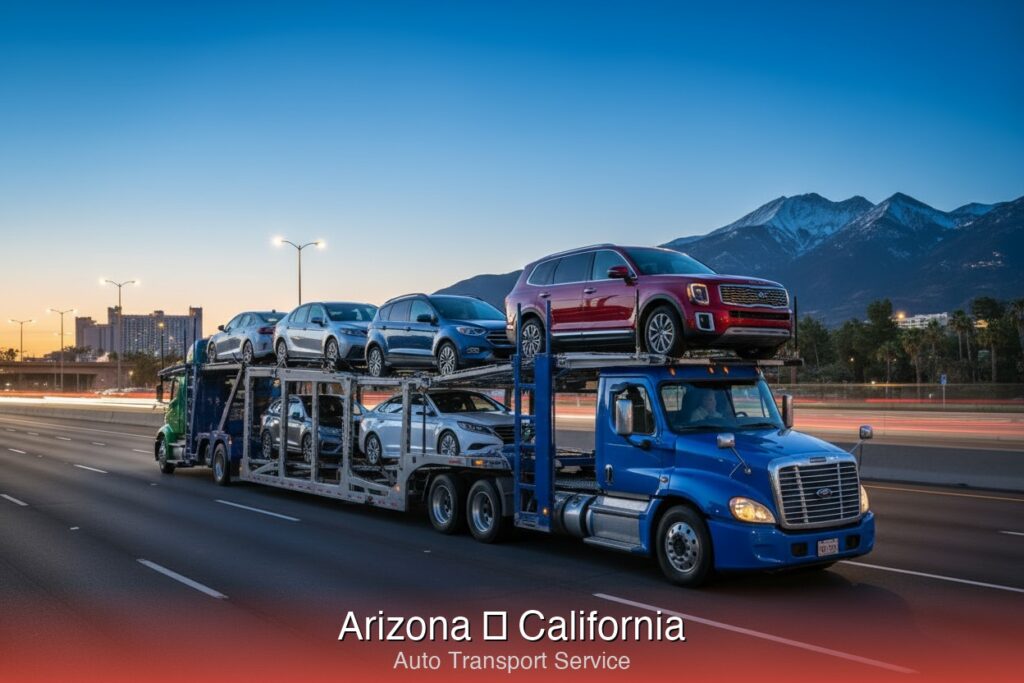
Arizona to California Car Transport: What 400 Miles Really Costs
Getting the car to California is the easy part. Getting it registered there is where people come unstuck.
California operates its own emissions programme, and a vehicle that has spent its life in Arizona may or may not satisfy it. Cars originally built to federal specification rather than California specification — and there are plenty on Arizona forecourts — can face additional requirements before the DMV will register them, and in some cases cannot be registered at all. Vehicles under a certain mileage threshold are treated differently from older ones. None of this has anything to do with the truck.
We move cars; we are not the DMV and this is not advice about your particular vehicle. But it is by a wide margin the most expensive thing that goes wrong on this route, and it is worth checking the emissions label under the bonnet and speaking to the California DMV or the Bureau of Automotive Repair before the car is on a trailer rather than after.
With that dealt with, four hundred miles of flat desert interstate is about as straightforward as shipping gets.
Table of Contents
- What It Actually Costs: Arizona to California Pricing
- City-to-City Price Breakdown
- How Long the Journey Takes
- Seasonal Pricing: When to Book
- Open vs. Enclosed Transport
- What an Arizona to California Booking Looks Like
- The Complete Shipping Process
- 7 Mistakes That Cost You Money
- Vehicle Preparation Checklist
- Frequently Asked Questions
What It Actually Costs
Arizona to California: $400 – $575
Open Transport | 350-550 Miles | 2-4 Days Transit
Enclosed is $700-$800. At roughly $1.00-$1.15 per mile this looks expensive and in absolute terms it is one of the cheapest shipments we handle.
Put That Number in Proportion
If you are moving a car you have just bought, the transport is a small fraction of the transaction and a smaller fraction still of whatever registration turns out to involve. Choosing a carrier over a $40 difference on this route is optimising the least consequential number in front of you.
The reason short routes price this way is that arranging a shipment costs the same regardless of distance — two appointments, two inspections, loading, paperwork, dispatch. Over 400 miles those costs are most of the invoice.
By Vehicle
A saloon or hatchback is $400-$500 open and $700-$800 enclosed. A crossover adds around $50 and a pickup or seven-seater $50 more — proportionally a large step, because the base is small.
Cars over $75,000 are $525-$650 open. Oversized vehicles run $600-$750 open and up to $1,150 enclosed.
What Moves the Number
- Vehicle size: around $200, which is half the base price
- Trailer type: about $300
- Which Arizona city: about $75
- Whether the California address is reachable: nothing in money, up to a day in time
- Lead time: $50-$75, less punishing than on long routes
- The month: $50, which is almost nothing
City-to-City Price Breakdown
Easy at one end and variable at the other, which is the reverse of what the mileage suggests.
The Arizona End
Phoenix to Los Angeles is the floor at $400-$500 open, two to three days. Tucson adds about $25, Scottsdale and Mesa about $50 — and those last two are the interesting ones, since they are suburbs of Phoenix rather than separate cities. The premium is the drive across the valley rather than any distance toward California.
Collections here are as easy as they get. Phoenix is a young, sprawling metropolis on a grid with wide roads and generous parking, and a full-size carrier can reach almost any residential address without a conversation.
The California End
San Diego is quoted below Los Angeles for a shorter run, which is straightforward enough. What the table does not show is that “Los Angeles” covers nearly five thousand square miles of basin and hillside, and which part of it you are delivering to matters more than anything else on this booking.
The industrial south and east, and most of the Valley, are routine. Hillside streets, narrow Westside blocks and anywhere with low branches or tight turns are not, and the driver will ask to meet you elsewhere.
Agree It When You Book
A large car park within a few miles costs you nothing and removes the only practical problem this route has. On a two-day journey, losing an afternoon to a street the truck cannot enter is a disproportionate waste.
The realistic combined band is $400-$575 open and $700-$925 enclosed, at two to four days.
How Long the Journey Takes
Two to three days from Phoenix or Tucson, three to four from the outer suburbs. Assignment is often same-day or next-day.
Why Assignment Is So Fast
Because this is one of the densest vehicle-movement corridors in the country. Rental fleets reposition along it, auction cars move in both directions, dealers transfer stock constantly, and there is a steady flow of trailers running the gap. Your car is joining traffic rather than creating it.
Short notice costs less here than almost anywhere on this site.
The Road
West on I-10 across the desert through Blythe and Indio, then into the basin. Around six hours of driving, flat, low, and open essentially every day of the year. There is nothing on this road worth planning around.
The Border Stop
California operates agricultural inspection stations on its entry roads and commercial vehicles are required to stop. For a car carrier this is a routine few minutes rather than an obstacle, but it is a real part of the journey and occasionally a slow one at busy times.
Why Two Days for a Six-Hour Drive
The other eight cars. Each has an address and a window at both ends, and a driver who could cover 400 miles before lunch still cannot collect nine vehicles across the Phoenix valley and deliver nine across the LA basin in a day.
Three to five days from booking to delivery is the honest figure, and this is one of the more predictable routes we run.
Seasonal Pricing: When to Book
Close to no seasonality at all, which is unusual enough to be worth stating plainly.
Across the Year
Summer adds perhaps $50 as part of the national moving season and that is essentially the whole story. The corridor carries so much constant commercial vehicle movement — fleet repositioning, auction traffic, dealer transfers — that ordinary seasonal swings get absorbed rather than passed on to you.
In practice you can book this in any month with a few days’ notice and expect much the same figure. Very little else we publish behaves that way.
The One Seasonal Pattern That Exists
March and April see a genuine uptick, as people who have wintered in Arizona head home. It affects availability more than price and it affects the northbound and westbound lanes out of Phoenix together. If you are shipping in that window, a week’s notice rather than three days is sensible.
Heat
Not a factor for the vehicle. Cars sit outdoors in Phoenix through every July and a few hours on an open deck adds nothing to that. It is a scheduling consideration for the driver and nothing more, and it is not a reason to pay for a covered trailer.
The Practical Advice
Book when it suits you. On most routes we would tell you which month to aim for; here the calendar is the least significant thing on the page, and your attention is better spent on the registration question and on where the truck will stop in California.
Route-specific planning
Planning to Ship a Vehicle?
Get a vehicle shipping quote based on your route, vehicle, and workable dates.
Get My Quote
Open vs. Enclosed Transport
About $300 divides them — a small absolute gap, and against a $400 base, one of the largest proportionally on this site.
The open deck is the standard method by which manufacturers deliver new stock to dealers. Damage occurs on well under one shipment in a hundred, and where it does it is during loading rather than out on the highway.
This Journey Argues For Nothing
Six hours of flat, dry desert interstate at low elevation. No salt, no altitude, no rain to speak of. A car on an open deck between Phoenix and Los Angeles encounters rather less than it would sitting in a driveway at either end.
If someone recommends enclosed transport on this corridor for reasons of weather or road conditions, they are describing a route that does not exist.
Where It Is Genuinely Right
- A splitter or air dam close enough to the ground that ramps become a hazard
- Worth more than the open carrier would actually hand over if it were destroyed
- Untouched factory finish that no bodyshop could convincingly reproduce
- An existing policy that only holds while the car is under cover
One Practical Advantage
Because this corridor is so busy, enclosed trailers are easier to come by here than on a thin lane. If the car does warrant a box, you will not wait a fortnight for one. Full comparison: open versus enclosed auto transport.
What an Arizona to California Booking Looks Like
Composite cases rather than named customers, costed against the bands above. Each makes one point.
A same-week booking
Saloon, Phoenix to Los Angeles, arranged four days out. Around $450, claimed the following morning, delivered two days later. Short notice cost almost nothing, which is not true anywhere else on this site.
A car bought in Arizona
Crossover purchased from a Phoenix dealer for a buyer in San Diego. Open, around $475, and entirely uneventful — but the buyer had checked the emissions label and confirmed the registration position before committing, which is the part of this transaction that actually carries risk.
A car that could not be registered
Worth including because it happens. A vehicle built to federal rather than California specification, bought at a good price in Arizona, moved successfully, and then met requirements the buyer had not anticipated at the DMV. The $450 of transport was the smallest number involved in that afternoon.
A delivery that had to move
Saloon, Tucson to a hillside address above Los Angeles. The street was unreachable for a seventy-five-foot rig and the handover shifted to a supermarket car park two miles down. Around $500, and it cost twenty minutes rather than an afternoon because the possibility had been raised at booking.
Somebody who drove
Phoenix to Los Angeles is six hours and about $70 of fuel. A customer with a free day and one car to move worked that out and cancelled. On a route this short that is frequently the right answer, and we would rather say so.
The Complete Shipping Process
One trailer, kerb to kerb. On this corridor the carrier may be a full nine-car rig or a smaller operator running the gap, and either is entirely normal.
Arranging it
Two addresses, the vehicle, and the dates you can work with. Out of Phoenix the load is frequently taken the same day, because the volume of traffic between these two regions is enormous and somebody is always heading west.
Raise the California delivery point now if it is anywhere hilly or narrow. You will then have the operator’s name, a number for the cab, and a span of hours rather than an appointment.
Loading
The driver walks the bodywork with you and the existing damage goes onto the Bill of Lading. Photograph the car yourself first, outdoors — Arizona light is generous and there is no excuse for a poor set of pictures here. Those frames and the completed sheet together are the agreed record, and signing is what makes it agreed.
On the road
Two to four days for about six hours of driving. Federal rules cap a driver at eleven hours at the wheel inside a fourteen-hour window, and on a route this short essentially all the elapsed time is the other eight cars. Ring the cab rather than watching a map.
Delivery
The second inspection is the one with legal weight. Do it in daylight against your Phoenix photographs, look along the sills and behind the bumpers, and get every difference onto the sheet before your name goes on it. An unqualified signature closes the matter for good.
If the handover has moved to a car park, do the inspection there rather than driving home and looking later — once the driver has gone, nobody can establish where a mark came from. Step by step: how car shipping works, start to finish.
Vehicle Preparation Checklist
Twenty minutes on a route this short, plus one document check that matters more than the rest of the list combined.
- Look at the emissions label under the bonnet before anything else. Whether the car is built to California or federal specification determines what registering it will involve, and that is a question to settle before it is on a trailer.
- Wash it, then photograph it outdoors. Desert dust is unusually effective at hiding a light scuff.
- Cover the car with the camera: both flanks, front and rear, all four wheels, the roof, the glass, and one from kneeling height along each sill.
- Fuel down to about a quarter. Enough for both ramps and a run to a pump.
- Empty the cabin. Hauling cars and hauling possessions are different authorisations and the driver has only the first.
- Remove anything that projects: mirrors folded, aerial down, roof bars and bike racks off.
- Mention the quirks — a reluctant starter, a slow leak, an awkward handbrake.
- Check the tyres. Arizona summer heat moves pressures more than people expect, and the car has to drive on and off twice.
Full checklist: preparing your vehicle for transport.
What Actually Costs You Money on This Lane
Shipping the car before checking whether California will register it
By a very wide margin the most expensive mistake associated with this route, and it has nothing to do with transport. California runs its own emissions programme and a federal-specification vehicle can face additional requirements — or in some cases prove impossible to register. Check the label and speak to the DMV or the Bureau of Automotive Repair before you buy, not after the truck has arrived.
Not saying where the truck can stop in California
Much of the LA basin is fine and a good deal of it is not. Agreed at booking, an alternative costs nothing. Discovered on the day, it costs an afternoon — which on a two-day journey is a disproportionate share of it.
Choosing a carrier over $40
On a $450 shipment attached to a car worth many times that, and a registration process that may cost more than either, the transport quote is the least consequential figure in front of you.
Judging the quote per mile
At about $1.10 a mile this looks like one of the worst rates on the site. In absolute terms it is one of the cheapest jobs we do. The fixed cost of arranging a shipment does not shrink with distance and short routes always read badly by that measure.
Paying $300 for a covered trailer because of the desert
Six hours of dry road at low elevation. Cars sit in that heat in Phoenix car parks all summer. Choose enclosed for the vehicle, never for the climate.
Shipping when driving would do
Six hours and about $70 of fuel. If you have the day and one car to move, drive it. Ship because you are moving two vehicles, flying in, buying remotely, or protecting the mileage.
Signing the delivery sheet without looking
Short journey, same rule. Once your name is on it with nothing noted there is no claim left to make.
The general list is in why car shipping prices vary.
Frequently Asked Questions
What does it cost to ship a car from Arizona to California?
$400-$575 open and $700-$800 enclosed over 350 to 550 miles. In absolute terms one of the cheapest shipments we handle.
Will California register a car I bought in Arizona?
Usually, but not always without extra steps. California runs its own emissions programme, and a vehicle built to federal rather than California specification can face additional requirements — in some cases enough to prevent registration. Check the emissions label under the bonnet and speak to the DMV or the Bureau of Automotive Repair before buying. We move cars; we cannot advise on your particular vehicle.
Is that really the biggest risk on this route?
Comfortably. Four hundred miles of flat desert interstate is about as low-risk as transport gets. What costs people money on this corridor happens at a DMV counter, not on the road.
How long does it take?
Two to three days from Phoenix or Tucson, three to four from the outer suburbs. Assignment is often same-day or next-day, so three to five days from booking to delivery.
Why is assignment so quick?
Because this is one of the densest vehicle-movement corridors in the country — rental repositioning, auction cars, dealer transfers and a constant flow of trailers running the gap. Your car is joining traffic rather than creating it, and short notice costs less here than almost anywhere.
Why does a six-hour drive take two days?
The other eight cars. A driver could cover 400 miles before lunch, but cannot collect nine vehicles across the Phoenix valley and deliver nine across the LA basin inside a day.
Does the month matter?
Hardly — about $50 in summer. The corridor carries enough constant commercial movement that seasonal swings get absorbed. March and April see more demand as people leave Arizona for the year, and that affects availability rather than price.
Will desert heat harm the car?
No. It sits in that heat in a Phoenix car park every day of the summer, and a few hours on an open deck adds nothing. It is not a reason to pay for a covered trailer.
Why do Scottsdale and Mesa cost more than Phoenix?
About $50, and it is the drive across the valley rather than any distance toward California. They are suburbs of the same metropolis; the premium is a driver’s time, not mileage.
Will the truck reach my address in California?
In the industrial south and east of the basin and most of the Valley, almost certainly. On hillside streets, narrow Westside blocks or anywhere with low branches, often not. Agree a large car park nearby when you book.
Is there anything at the state line?
California operates agricultural inspection stations on its entry roads and commercial vehicles must stop. For a car carrier it is a routine few minutes, occasionally slower at busy times.
Should I just drive it?
Very possibly. Phoenix to Los Angeles is six hours and about $70 of fuel, against $450 to ship. Ship if you are moving two cars, flying in, buying the vehicle remotely, or protecting its mileage — not out of habit.
Is my car insured in transit?
Yes, under the carrier’s federally required cargo cover, from loading until it comes off. Ask specifically for the per-vehicle figure on this corridor — smaller operators serve it and the number varies more than on a long-haul lane. Nothing insures a late arrival, and nothing insures a registration problem.
Can I leave things in the car?
No. Hauling vehicles and hauling household goods are separate authorisations and the driver holds only the first, so anything inside travels uninsured and adds weight the driver answers for.
Ready to ship your car from Arizona to California?
Get your free quote and see exactly what your route costs in 2026.
Related Guides
- open or enclosed, and how to choose
- how booking and pickup work
- everything that happens when you ship a car
- average car shipping costs explained
Related reading
Other short western runs: Nevada to California is shorter still and priced by a different part of the industry, and Oregon to California arrives from the north with its own paperwork question attached.
Arriving in Arizona rather than leaving it: Oregon to Arizona and Michigan to Arizona both carry the winter migration this route sees returning each spring.
On the mechanics: why per-mile pricing misleads on short routes, getting an accurate quote and what the carrier’s cover includes.