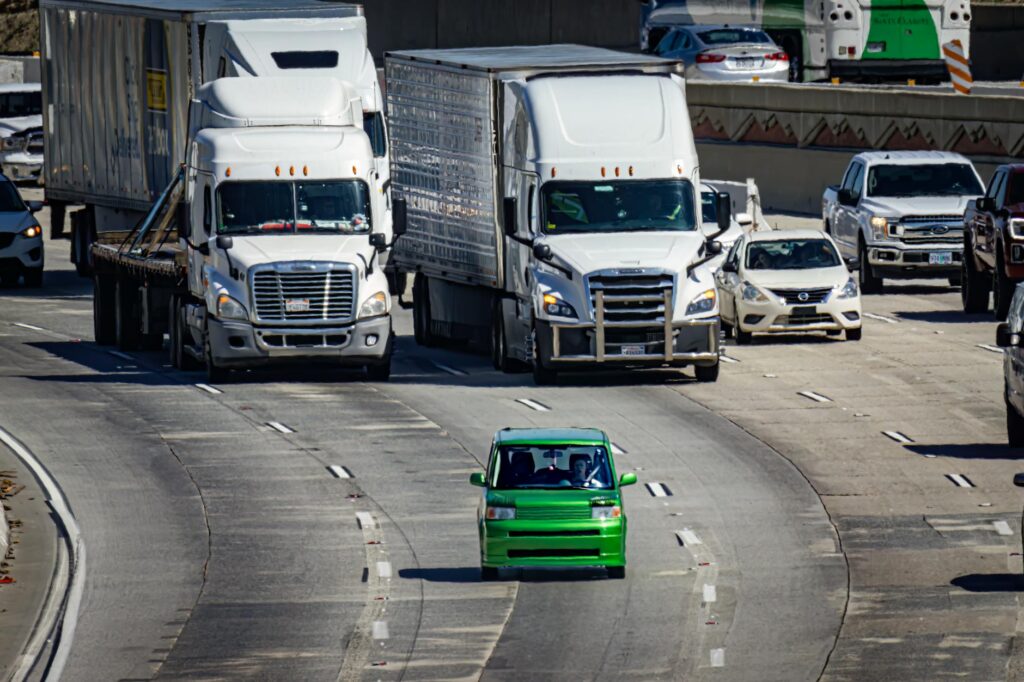
Texas to Minnesota is 1,200 miles straight up I-35, and it is one of the easiest corridors in the country to book. Carrier availability is excellent, transit is a reliable 4-5 days, and the price sits at $800-$1,050 on open transport.
The interesting problem on this route is not the shipping. It is what happens when the car arrives.
A vehicle that has spent its life in Texas is not equipped for a Minnesota winter. Its washer fluid will freeze. Its battery is rated for heat rather than cold, and cold is where batteries actually fail. Its tyres may be a compound that hardens below freezing. None of that is the carrier’s concern — the car will arrive perfectly intact — but it becomes your concern within hours of delivery, in January, in a place where that matters.
Below is what the route costs and how the process works, plus the part most guides skip: what to do about a car that has just moved to a climate it has never experienced.
- How the Auto Transport Industry Actually Works
- The Texas to Minnesota Corridor
- Pricing: What Drives the Math
- Driving vs. Shipping: The Real Comparison
- Seasonal Demand Patterns
- Open vs. Enclosed: A Technical Comparison
- How Carrier Assignment Works
- Federal Regulations That Protect You
- Preparing Your Vehicle: The Engineering Perspective
- Common Misconceptions About Auto Transport
- Frequently Asked Questions
How the Auto Transport Industry Actually Works
Almost every misunderstanding about car shipping traces back to one thing people are never told: the company you pay is usually not the company that drives.
Two Businesses
A carrier owns the trailer. Most are small — one to five trucks, often owner-operated — running eight to ten cars along routes they know. On I-35 that means drivers who cover this corridor constantly, week in and week out.
A broker owns nothing that moves. It takes your booking and posts it to a national load board that carriers monitor. That is the entire transaction: matching a car that needs to go somewhere with a truck already going there.
The arrangement exists because neither side can do the other’s work. A carrier running Dallas to Minneapolis has no way to reach customers nationwide, and you have no way to identify the specific truck passing your neighbourhood next week.
Why This Route Is Easy
The wait between booking and pickup exists because a carrier will not run 1,200 miles half empty. Your vehicle is one piece of a load being assembled, and that assembly takes 1-5 days.
On I-35 it is usually the shorter end of that. This is one of the most heavily trafficked freight corridors on the continent, so the pool of trucks going your way is unusually deep. It is a genuinely easier corridor to book than most, and that is worth knowing when a broker suggests otherwise.
What It Means for You
- You are buying a place on a truck that already exists. Flexibility helps but matters less here than on a thin route.
- A rate below what drivers accept means the job sits unclaimed — and on a busy corridor, sitting unclaimed is a clear signal the price is wrong rather than that trucks are scarce.
- You deal with the broker before pickup and the driver afterwards. Get the driver’s direct number when the carrier is assigned.
- Nothing should be charged in full before assignment, because until a carrier exists nothing has been arranged.
The Texas to Minnesota Corridor
Distance: 1,200 miles, effectively all on I-35. Transit: 4-5 days. Cities served: Houston, Dallas, Austin and San Antonio north to Minneapolis, St. Paul, Rochester and Duluth.
One of the Busiest Trucking Routes on the Continent
I-35 runs from the Mexican border to the Canadian one, and the stretch between Texas and Minnesota carries an enormous volume of commercial freight. For someone shipping a car that is straightforwardly good news: there are more trucks on this corridor than on almost any comparable route, carrier assignment is fast, and the 4-5 day estimate holds.
The route is also geographically simple. No mountain passes, no coastal weather systems, no urban chokepoint comparable to the Northeast. It crosses Oklahoma, Kansas and Iowa on open ground. In winter that ground gets weather, but it is the kind carriers plan around rather than the kind that closes roads for days.
Who Ships It
Corporate relocations in both directions, energy sector transfers, and a steady seasonal flow of people who own property at both ends. Minnesota sends a great many vehicles south for the winter and retrieves them in spring, which is the mirror image of the traffic on this page.
Northbound specifically, the largest single group is people moving for work — and moving from a warm climate to a cold one, frequently for the first time.
The Climate Line
Somewhere around Kansas the country changes. A car collected in Houston in January leaves in shirtsleeve weather and arrives in Minneapolis somewhere that regularly sits below zero Fahrenheit. That is a swing of sixty or seventy degrees inside five days.
It does the vehicle no harm in transit — it is stationary on a trailer, and cold is easier on a parked car than heat is. The issue is entirely on arrival, and it is covered properly in the preparation section below.
Pricing: What Drives the Math
Open Transport | 4-5 Days | 1,200 Miles
Enclosed runs $1,250-$1,550. On a 1,200-mile route the per-mile figure reads higher than a coast-to-coast quote, which is simply arithmetic — the fixed costs at each end are identical whatever the distance, so they weigh more heavily when there are fewer miles to spread them over.
What You Are Actually Paying For
Roughly a quarter to a third of the quote is diesel — 1,200 miles at around six miles per gallon for a loaded carrier. Another quarter to a third is the driver, whose hours are federally capped and who is on the road for the better part of a week.
Insurance and equipment take ten to fifteen per cent each: cargo liability on ten vehicles at once, plus truck depreciation, maintenance and tyres. The broker’s share is the remaining ten to fifteen per cent, covering the work of finding you a carrier and handling anything that goes wrong.
Two things follow from that breakdown. Over half the cost is fuel and wages, neither of which compresses — which is why quotes on this lane cluster within a narrow band. And the broker’s margin is smaller than most people assume, so a quote hundreds below the rest is not a leaner operation. It is a rate no driver will accept.
What Moves Your Number
- Which Texas city. Dallas is closest to the I-35 run north and cheapest; Houston and San Antonio each add a leg to reach it.
- Which Minnesota city. The Twin Cities are straightforward. Duluth adds distance and a day; Rochester sits just off the main line.
- Season. Summer is the peak. Deep winter affects the schedule more than the price on this route.
- Vehicle size. Deck space rather than weight — a three-row SUV or full-size pickup sits meaningfully above a sedan.
- Lead time. Under five days out typically adds $100-$150, though on a corridor this well served the penalty is easier to avoid than most.
- Flexibility. Worth less here than on a difficult route, simply because there are so many trucks — but a 2-3 day window still books faster.
Driving vs. Shipping: The Real Comparison
1,200 miles up I-35 is about eighteen hours — two days at a reasonable pace, and an honest option. Here is how the numbers actually fall.
The Case for Driving
On fuel alone it wins, and it is not close. Two days of diesel or petrol against $800-$1,050 of shipping is a straightforward comparison and driving takes it. The road is easy, the route is one interstate, and you arrive with your car.
The Case Against
Add a night in a hotel around Oklahoma or Kansas, two days of meals, and two days of your own time — which for anyone taking leave to move house is the largest line in the calculation and the one most often left out. Then add 1,200 miles of wear, which the IRS values at roughly $250 and which shows up when you sell.
Priced honestly, the two options are much closer than the fuel comparison suggests, and shipping frequently wins outright.
What Actually Decides It
Two vehicles and one driver settles it immediately — the second car has to ship. A start date in Minnesota that cannot absorb two days settles it too.
And in January there is a third consideration. Driving this route in deep winter means crossing the plains in whatever weather is there, in a vehicle set up for Texas, on a schedule. The preparation section above explains why that car is not ready for those conditions. A driver making the run weekly in a rig built for it is a different proposition entirely.
How costs scale with distance shows where the crossover sits on longer routes.
Route-specific planning
Planning to Ship a Vehicle?
Get a vehicle shipping quote based on your route, vehicle, and workable dates.
Get My Quote
Seasonal Demand Patterns
The price pattern on this corridor is ordinary. The interesting seasonality is directional — you are travelling against the flow for part of the year, which works in your favour.
March and April — Cheapest Northbound
Below standard rates with excellent availability and short notice acceptable. Winter relocations are finished and the summer season has not begun. It is also the point at which a Minnesota arrival stops being a cold-weather problem, which makes it the easiest month in both senses.
June Through August — The Peak
Summer relocations and the academic calendar at both ends. Expect the upper half of the range and book two weeks ahead rather than five days. The route itself is at its most reliable, and nothing about a summer arrival requires any preparation at all.
September Through November — The Reverse Rush
This is where the directional advantage appears. Autumn is when Minnesota sends cars south for the winter, so southbound capacity tightens — and carriers running loaded down to Texas want northbound cargo to fill the return. Going north in October or November you are the load they are looking for.
Rates are reasonable and assignment is quick. If you have a choice of timing and you are heading north, this is an underrated window.
December Through February
Standard pricing, good availability, with the familiar 15-31 December collapse when drivers take the holidays — ship before the 15th or wait for January.
Winter on this corridor is a plains-weather question rather than a mountain one. Storms across Oklahoma, Kansas and Iowa can slow a load by a day; they rarely stop it, and there is no single chokepoint that closes. Leave the delivery date approximate and it is a perfectly ordinary time to ship.
What deep winter does require is the arrival preparation described above. A January delivery into the Twin Cities is straightforward for the carrier and a genuine adjustment for the vehicle.
Open vs. Enclosed: A Technical Comparison
Around nine in ten vehicles on this corridor travel open, and across four or five days on a single flat interstate that is not a close call for an ordinary car.
The Numbers
Open carries seven to ten vehicles per trailer at $800-$1,050, with assignment typically inside 1-5 days — and on I-35 usually nearer one than five. Enclosed carries two to six at $1,250-$1,550 and takes 3-10 days to assign, because it is roughly a tenth of the national fleet.
The premium is $450-$500, which on a $900 base is over half again. On a short corridor that proportion is hard to justify unless the vehicle itself is the reason.
What Open Transport Exposes a Car To
Road film, insect residue and the occasional stone chip. Four days of it, on a route with no coastal salt, no desert heat and no mountain passes. This is about as benign as open transport gets.
The one seasonal caveat is the arrival end. Between December and March the northern stretch runs through winter road treatment, and a car that has never encountered de-icing chemicals will meet them on the final leg. For a daily driver that is a wash on arrival — and it is what the car will experience every day thereafter anyway, which rather makes the point.
When Enclosed Is Right
- The vehicle is worth $75,000 or more, or is a classic, exotic or show car
- The paint or brightwork is difficult or expensive to match
- Ground clearance makes open hydraulic ramps a genuine risk — enclosed trailers often use a lift gate instead
- The car is going into storage rather than daily use, and you would rather it arrived clean
For everything else open transport is both cheaper and faster to book on this lane. The full comparison covers the remaining trade-offs.
How Carrier Assignment Works
This is the stage where nothing visible happens, and on most corridors that is where the worrying starts. On this one it is usually brief.
The Match
Your booking goes onto a national load board. A driver already running I-35 north sees it, checks it fits the trailer and the schedule, and takes it. Typically 1-5 days, and on this corridor frequently the shorter end — the volume of freight moving between Texas and the upper Midwest means the pool of matching trucks is deep.
That is worth knowing because it inverts the usual diagnosis. On a thin route, a slow assignment might mean scarcity. Here it almost always means the rate is wrong.
What Speeds It Up
A realistic price. The main variable on a busy lane. Underpriced jobs sit while properly priced ones around them get claimed.
A date range. Two or three days of latitude widens the pool, though it matters less here than on difficult corridors.
An address a 75-foot vehicle can reach. Straightforward at both ends of this route compared with coastal or older cities, but worth checking for cul-de-sacs and gated communities.
An accurate description. A lift kit or roof rack discovered at loading can cost the slot.
What You Receive
The carrier’s company name, its DOT number, the driver’s direct number and a confirmed pickup window. Verify the DOT number — a minute’s work and the only real check available to you. After that the driver, not the broker, is your point of contact.
Between December and February it is worth asking the driver what the plains weather looks like for the week. They are watching it and you are not.
Federal Regulations That Protect You
Four rules govern this, and each one gives you something you can act on.
The Carrier Must Be Registered and Insured
Federal operating authority and cargo insurance are both mandatory for interstate transport. The DOT number verifies the first; the certificate of insurance shows the second, including the per-vehicle limit. That limit is a floor set by regulation rather than a figure matched to your car, so read the number rather than assuming it is adequate.
The Bill of Lading Governs Everything Afterwards
It is contract and condition record in one. What is recorded at pickup in Texas decides what can be claimed at delivery in Minnesota, and anything not written down beforehand cannot be established later. This is why the five minutes with a camera outrank every other precaution on this list.
Driving Hours Are Capped
Drivers face federal limits on daily driving and mandatory rest periods. That is why 1,200 miles takes four to five days rather than eighteen hours, and why any operator promising a two-day delivery is either wrong or intending to break the rules. On a winter crossing of the plains those same rules mean a driver stops for weather rather than pushing through it, which is worth understanding as protection rather than delay.
No Household Goods
Auto carriers are licensed for vehicles only. Anything inside travels uninsured, and across a full trailer it can push the truck over regulated weight. Some drivers tolerate a small amount in the trunk; it remains entirely at your risk and is not a service you are paying for.
Our breakdown of carrier insurance covers what the policy does and does not include in more detail.
Preparing Your Vehicle: The Engineering Perspective
There are two preparation jobs on this route and only one of them is about the shipment. The other is about the car’s first week in Minnesota, and it is the one people are unprepared for.
Part One: For the Truck
Standard and quick. Wash the car and photograph all four sides, the roof, the lower panels and each wheel in daylight with the date on the file, capturing every existing chip and scratch. Confirm they appear on the Bill of Lading before the driver leaves — that document is the only thing that establishes what condition the car was in.
Empty the cabin and trunk entirely; contents are uninsured and carriers are not licensed to move them. Take out toll transponders, garage remotes, the spare key and the title. Fuel down to a quarter tank or less, since weight is federally regulated across ten vehicles. Fold the mirrors, retract the antenna, remove roof boxes and bike racks, and disable the alarm or leave the driver instructions.
If the car will not start, book it as an inoperable vehicle so a winch arrives with the truck.
Part Two: For Minnesota
This is the part worth reading twice if you are shipping between November and March. Nothing here affects the transport — the car arrives exactly as it left — but a vehicle that has lived in Texas is not set up for where it is going.
Washer fluid. Summer-blend fluid freezes solid. If it freezes in the reservoir or the lines it can crack them, and either way you have no way to clear road spray on your first drive. This is the single most common surprise, and it costs almost nothing to fix beforehand.
The battery. Heat degrades batteries and cold exposes them. One that has been quietly weakening in Texas will fail at the first genuinely cold morning in Minneapolis. Test it before shipping rather than discovering it in a driveway at minus fifteen.
Tyres. All-season compounds stiffen well below freezing and grip accordingly. Whether you need proper winter tyres is a judgement about where you will drive, but it is worth making that decision before the car arrives rather than after the first snowfall.
Coolant and oil. Check the coolant concentration is rated for genuine cold rather than mild winters, and consider whether the oil weight suits sub-zero starts.
None of this is urgent for a summer move. All of it matters in January, and all of it is easier to sort out in Texas at your leisure than in Minnesota in a hurry.
Common Misconceptions About Auto Transport
“The cold will damage my car in transit”
It will not. The vehicle is stationary on a trailer and cold is considerably easier on a parked car than sustained heat is. The climate change on this route is a problem for the week after delivery, not for the journey — which is the opposite of what people assume and the reason the preparation section above is worth reading.
“Four to five days is how long I will be without the car”
That is transit. Assignment adds 1-5 days first, so realistic booking-to-delivery is 5-10 days. On this corridor assignment is usually fast, but plan for the range rather than the best case.
“A slow assignment means no trucks are going”
Not on I-35. This is one of the busiest freight corridors on the continent and there is no shortage of carriers. If your job has been sitting for days, the rate is almost certainly the reason rather than availability.
“Enclosed is the responsible choice for a valuable car”
Sometimes, but not because open transport is unsafe. Most genuine claims arise during loading and unloading, which is identical on both. Enclosed protects against weather and debris — a fair argument for a collector car, a weak one for a modern daily driver on a four-day interstate run.
“I can track the truck”
You get the driver’s number and periodic updates. Hours-of-service rules mean the truck is legitimately parked for part of every day, so a quiet stretch is normal rather than concerning.
“Winter is a bad time to ship this route”
Winter is ordinary on price and availability. Plains storms can cost a day; there is no pass or chokepoint that closes for longer. What winter genuinely requires is that the car be ready for Minnesota when it arrives — which is a preparation question, not a shipping one.
Frequently Asked Questions
How much does it cost to ship a car from Texas to Minnesota?
$800-$1,050 on open transport for most vehicles in 2026, or $1,250-$1,550 enclosed, across 1,200 miles. Dallas is the cheapest Texas departure; the Twin Cities are the most straightforward Minnesota arrival.
How long does Texas to Minnesota car shipping take?
4-5 days in transit. Add 1-5 days for carrier assignment — usually the shorter end on this corridor — so realistic booking-to-delivery is 5-10 days.
Will the cold damage my car during transport?
No. The vehicle is stationary on a trailer, and cold is easier on a parked car than heat is. The climate difference becomes relevant after delivery rather than during the journey.
What do I need to do before driving the car in a Minnesota winter?
Four things, and they are cheaper to sort out in Texas than after arrival. Replace summer washer fluid, which freezes solid and can crack the reservoir. Test the battery, since heat degrades them and cold exposes the damage. Consider proper winter tyres, as all-season compounds stiffen below freezing. And check the coolant is rated for genuine cold rather than a mild winter.
When is the cheapest time to ship north?
March and April. Autumn is the underrated option though — Minnesota is sending cars south for the winter then, so carriers running loaded into Texas want northbound cargo for the return, and you are exactly that.
Why is assignment so quick on this route?
I-35 runs border to border and carries an enormous volume of freight between Texas and the upper Midwest. The pool of trucks going your way is deeper than on most corridors. If your booking has been sitting for days, the rate is the likely reason rather than availability.
Which Texas cities do you collect from?
Dallas, Fort Worth, Houston, Austin, San Antonio and across the state. Dallas sits closest to the I-35 run north and is generally the cheapest and quickest departure.
Which Minnesota destinations do you deliver to?
Minneapolis, St. Paul, Rochester, Duluth, Bloomington and across the state. The Twin Cities are the most straightforward; Duluth adds distance and typically a day.
Will winter weather delay delivery?
It can cost a day. Storms across Oklahoma, Kansas and Iowa slow loads but rarely stop them, and unlike mountain routes there is no single point that closes for extended periods. Leave the delivery date approximate rather than fixed.
Should I ship it or drive I-35 myself?
On fuel alone driving wins — it is eighteen hours on one interstate. Once a hotel, meals, two days of your time and 1,200 miles of wear are counted, the two are close. Shipping wins outright with two vehicles and one driver, or a fixed start date, or a January move in a car set up for Texas.
Do I have to be there for pickup and delivery?
You need someone at each end — the inspection and the signature cannot happen without one. Name a trusted adult when you book if it will not be you, and make sure they understand the inspection is the protection rather than a formality.
Is my car insured during transport?
Yes, by the carrier’s federally required cargo policy covering loading, transit and unloading. Ask for the certificate and read the per-vehicle limit. Personal items are never covered, and pre-existing damage not recorded on the Bill of Lading cannot be claimed.
Ready to ship your car from Texas to Minnesota?
Request a route-specific quote. Pricing depends on your vehicle, exact cities, and timing.
Related Car Shipping Guides
- the basics of shipping a vehicle
- what drives the price of a shipment
- which trailer type suits your vehicle
- how booking and pickup work
Related reading
The southbound leg is covered on our Minnesota to Texas page, which prices in the same band. For the other routes out of Minnesota, Minnesota to Florida and Minnesota to Arizona are the two big winter-escape corridors.
Leaving Texas in other directions, Texas to Washington crosses the Rockies, Texas to New York heads northeast, and Texas to Illinois is the closest comparison to this run.
On the mechanics: how per-mile pricing works, cost by distance, carrier insurance and open versus enclosed.