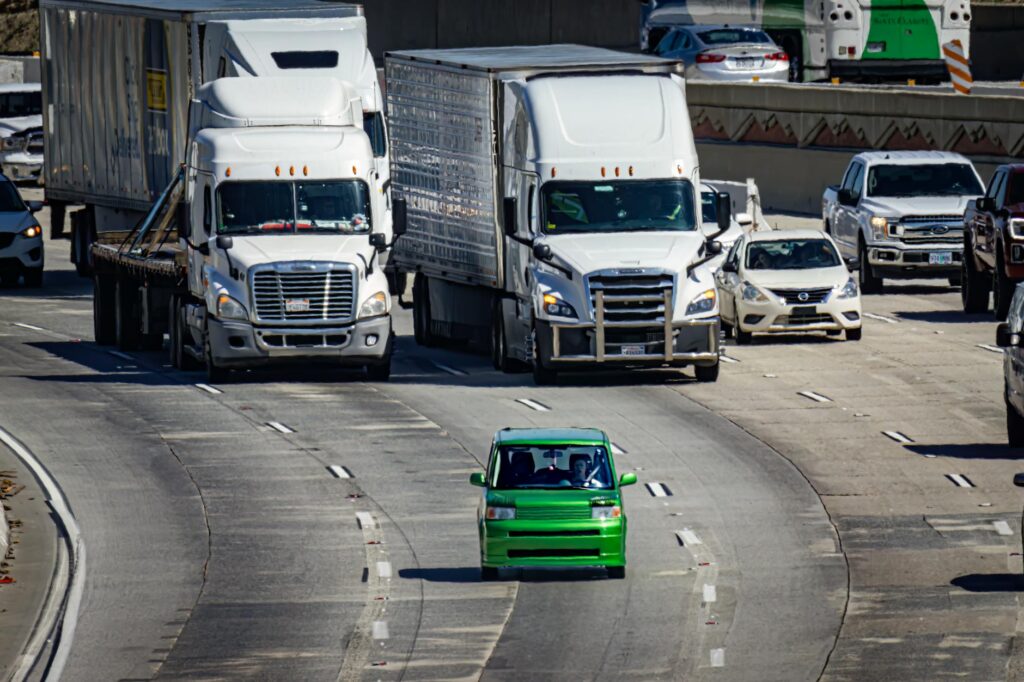
Minnesota to Arizona planning estimate: $1,050 – $1,250
Open Transport | 1,700 Miles | 5-7 Days Transit
Your car leaves a place that can be twenty below and arrives somewhere that can be a hundred and ten. Nothing else we ship crosses that much climate in five days.
That is not a hazard — the road itself is unremarkable, running south on I-35 through Iowa, Missouri and Oklahoma before turning west on I-40 through New Mexico. The route does not require a Rocky Mountain crossing, but weather can still affect pickup or transit conditions along the corridor. But a hundred and thirty degrees of swing does things to a vehicle that nobody warns you about, and most of them are trivially preventable if you know they are coming. Tyre pressures, battery, coolant, and whatever is stuck to the inside of your windscreen.
The other thing worth saying at the top concerns the price. For planning, this guide uses $1,050 as the lower end of its current open-transport examples. If you receive a materially lower quote, compare the included services, pickup window, transport type, payment terms and carrier assignment assumptions before treating it as directly comparable.
- What It Actually Costs
- City-to-City Price Breakdown
- How Long the Journey Takes
- Seasonal Pricing: When to Book
- Open vs. Enclosed Transport
- Who Ships Minnesota to Arizona
- The Complete Shipping Process
- Vehicle Preparation Checklist
- 7 Mistakes That Cost You Money
- Insurance and Liability Explained
- Frequently Asked Questions
What It Actually Costs
$1,050-$1,250 on open transport for the common city pairs, rising to $1,350 in peak months, and $1,575-$2,200 enclosed depending on the vehicle. Over 1,700 miles that is roughly $0.62-$0.74 a mile — an ordinary rate for the distance.
How to Evaluate a Much Lower Quote
A substantially lower quote can be based on different assumptions about pickup timing, transport type, vehicle details, carrier assignment or payment structure. Compare the total written price and the services included rather than judging the headline number alone.
If one estimate is materially below the others, ask whether a carrier has already accepted the shipment, what happens if the initial offer does not attract a carrier, whether the total price can change, and what cancellation or deposit terms apply.
Pricing by Vehicle
Physical size is what a trailer sells, so it moves the number more than value does:
| Vehicle Type | Open Transport | Enclosed Transport |
|---|---|---|
| Sedan/Compact | $1050 – $1125 | $1575 – $1675 |
| Mid-size SUV | $1100 – $1175 | $1650 – $1750 |
| Full-size SUV/Truck | $1150 – $1350 | $1700 – $1950 |
| Luxury ($75K+) | $1175 – $1400 | $1725 – $2000 |
| Oversized (dually, extended) | $1350 – $1500 | $2000 – $2200 |
What Moves Your Quote
- Month: up to $270 between March and July — the largest lever here
- Vehicle size: around $250 across the range
- Where in Minnesota: $100 between Minneapolis and Duluth
- Lead time: $100-$150 for booking inside five days
- Open or enclosed: $525-$575
- Date flexibility: $50-$100 for taking a window over a named day
A non-running vehicle adds $150-$250 — and after a Minnesota winter, “non-running” is a category some cars enter without being asked. Inoperable vehicle shipping covers what changes.
City-to-City Price Breakdown
This is the grid the summary figure should always have been drawn from. Note where it starts.
| Origin City | Destination | Open Price | Enclosed | Transit |
|---|---|---|---|---|
| Minneapolis | Phoenix | $1050-$1150 | $1575-$1725 | 5-6 days |
| Minneapolis | Scottsdale | $1075-$1175 | $1600-$1750 | 5-6 days |
| St. Paul | Phoenix | $1075-$1175 | $1600-$1750 | 5-6 days |
| St. Paul | Scottsdale | $1100-$1200 | $1625-$1775 | 5-6 days |
| Rochester | Phoenix | $1100-$1200 | $1625-$1775 | 6-7 days |
| Rochester | Scottsdale | $1125-$1225 | $1650-$1800 | 6-7 days |
| Duluth | Phoenix | $1125-$1225 | $1650-$1800 | 6-7 days |
| Duluth | Scottsdale | $1150-$1250 | $1675-$1825 | 6-7 days |
Minneapolis Is the Cheapest Origin
By $100 against Duluth, and it saves a transit day as well. Minneapolis and St. Paul sit at the junction of I-35 and I-94 with the freight density that goes with a major metro, so a southbound truck can pick your car up without leaving its route. Duluth is two and a half hours north of that, on a road that goes nowhere a car carrier was already heading.
If you are anywhere in northern Minnesota and can get the car to the Twin Cities, that drive is worth about $100 and a day. It is the clearest geographical decision on this route.
Phoenix Beats Scottsdale by $25
Consistently, on every origin, despite Scottsdale being marginally closer. Phoenix is the volume destination for the entire Valley — dealer networks, rental fleets, constant inbound movement — so a car delivered there joins traffic that already exists. Scottsdale, Mesa and the outer suburbs each require a stop the truck would not otherwise make.
The spread across the whole grid is $200, from $1,050 at the cheapest corner to $1,250 at the dearest. That is under twenty per cent, so it is worth knowing but not worth reorganising a move around — unlike the seasonal swing, which is larger.
How Long the Journey Takes
5-7 days from Minneapolis or St. Paul, 6-8 from Rochester or Duluth. Carrier assignment adds 1-5 days before any of that, so plan against 6-13 days from booking to delivery.
The Road Is the Easy Part
I-35 runs south through Iowa, Missouri and Oklahoma; I-40 turns west through Texas and New Mexico into Arizona. The route primarily follows major interstate corridors and avoids a direct Rocky Mountain crossing. Weather, traffic and road conditions can still affect transit time.
The exception is at the very start. A February collection in Minnesota can be postponed by a snow event, and a driver who cannot reach an unploughed address has to rearrange. Once the truck is farther south, Minnesota winter conditions are less likely to affect the trip, although weather can still influence transit.
Why Not Two Days?
1,700 miles is about twenty-five hours of driving. The truck takes five to seven days because it carries eight to ten cars with separate collections across the upper Midwest and separate deliveries across the Valley, each with a person who has to be present. Federal rules also cap the driver at eleven hours of driving inside a fourteen-hour window, which makes a two-day run impossible regardless of who is behind the wheel.
What Shortens the Wait
- A Twin Cities collection: far more southbound loads pass within reach than in Duluth or Rochester
- Two to three weeks’ notice: makes the assignment window fit inside your plan rather than becoming it
- “First available” dates: quicker than naming a day, and worth $50-$100 as well
- Avoiding October to December: the southbound snowbird rush, when a normal wait becomes a long one
Be wary of a guaranteed arrival date. Nine cars and a federal limit on driving hours do not produce a date anyone can commit to; a window and a straight answer about what happens if it slips is what you actually want. Transit times by distance gives the comparison.
Route-specific planning
Planning to Ship a Vehicle?
Get a vehicle shipping quote based on your route, vehicle, and workable dates.
Get My Quote
Seasonal Pricing: When to Book
Up to $270 between the cheapest month and the dearest — the biggest lever on this route, and bigger than every geographical choice on this page combined.
The Calendar
- January-February: standard $1,050-$1,350, good availability. Snowbird season is winding down and southbound pressure eases
- March-April: five to ten per cent below standard, around $966-$1,282. The cheapest window, and three to five days’ notice is usually enough
- May: transitional, back to standard, with a Memorial Day bump and students shipping home
- June-August: ten to twenty per cent above, $1,176-$1,620, and lead time stops being optional
- September-October: standard rates return with good availability
- November-December: the southbound peak, worst after the 15th of December when drivers stop for the holidays
Why March Is Cheap
Not because demand for Arizona disappears. Because the snowbirds who went down in the autumn are coming back, so carriers running north out of the Valley with full trailers need southbound freight for the return. You are buying a back leg, and it is priced like one.
That is also why the discount is reliable rather than a promotion. It is a structural feature of a lane where the traffic reverses twice a year.
The Trade-off Nobody Mentions
March and April are cheapest, and in Minnesota they are also still months when a driveway can be under snow and a driver can struggle to reach you. September is the opposite: standard pricing rather than cheap, but good availability, no southbound rush yet, and a collection that is simply a collection.
If the price matters most, take March. If a firm date matters most, take September. If you are a seasonal traveller with real flexibility, going south in late September and coming back in early May puts you either side of both peaks.
Open vs. Enclosed Transport
About nine in ten cars on this lane travel open. I-35 and I-40 are flat, high-volume interstate with no passes and nothing that closes, and once the truck is south of Iowa the weather is behind it for good.
The Heat Argument, Which Is Real but Small
The last leg of this route crosses New Mexico and Arizona, and in July that means sustained heat on an open trailer for two days. It is worth knowing about, but it affects interiors rather than paint — dashboards, adhesive mounts, anything left on the parcel shelf. An enclosed trailer is not a fridge, and unless it is a climate-controlled unit it is arguably hotter inside than out.
So heat is a reason to empty the dashboard, not a reason to spend $525-$575.
The Salt Argument, Which Is Not Real at All
Minnesota salts heavily and this comes up constantly. The trailer arrives after the damage is done — whatever is on the car in January is on it already. Enclosing it carries the salt south in still air for five days at rising temperatures instead. Ten minutes at a car wash with an undercarriage jet does the actual job, for fifteen dollars.
The Premium and the Wait
$1,575-$2,200 against $1,050-$1,500, so an extra $525-$575 or about half again. Enclosed trailers are roughly a tenth of the fleet, so assignment runs 3-10 days rather than 1-5 — and in the October-to-December southbound rush that gap widens considerably.
When It Is Genuinely Right
- Six figures, or close enough that you would want to read the carrier’s per-vehicle limit before agreeing to anything
- A classic, exotic or collector car — and Minnesota is full of cars that live under covers from November
- A fabric roof
- Paint in a colour a body shop would charge you to guess at
- Low enough at the front that an open trailer’s ramps are a gamble; enclosed rigs generally load on a lift gate
Open transport, enclosed transport and the full comparison cover the equipment differences.
Who Ships Minnesota to Arizona
Four booking types dominate this lane, and each one has a different exposure to the temperature swing that defines it.
The seasonal resident
A home in Minnesota and several months in the Valley, with the car going down in the autumn and back in the spring. Complete flexibility on dates and rarely any use made of it — late September southbound and early May northbound sits either side of both peaks. This group also has the most to gain from checking tyre pressures at both ends, because they make the crossing twice a year.
The retirement relocation
Leaving Minnesota permanently, often with two vehicles and frequently to Sun City, Surprise or the outer Valley rather than Phoenix proper. Two things to plan: outer-suburb delivery adds $25-$75, and a two-car move is worth pricing as one booking rather than two.
The stored car heading south
A convertible or a collector vehicle that has been off the road since October. This is the most common legitimate enclosed booking on the corridor — and the one most likely to fail at collection, because a car that has not turned over in four months frequently will not start for the driver either. Charge the battery and run it a week before, not on the morning.
The work relocation
A fixed start date, one car, no flexibility. Lead time is the only lever, so use all of it — and if the pickup falls between December and February, nominate an accessible collection point when you book rather than assuming the driver can reach the house.
The Complete Shipping Process
A single carrier takes the car from Minnesota to Arizona. Nothing transfers between trucks and there is no terminal in the middle.
Step 1: Get a real number
Both cities, the vehicle and roughly when. And a specific instruction for this lane: if a quote comes back under $1,000, ask what the carrier rate is rather than treating it as a win. Price it here.
Step 2: Compare three, on more than price
Look at the deposit and the pickup window next to the number. On a lane with underpricing problems, the quote that is $300 below the others is the one to distrust, not the one to take.
Step 3: Book two to three weeks out
$100-$150 better than booking inside five days, and in the autumn southbound rush it is the difference between a truck and a queue.
Step 4: Assignment
Your load goes to the board and a southbound carrier takes it, typically within one to five days. Expect the DOT number, the insurance certificate and the driver’s contact details. A load that sits unassigned for a week is usually telling you it was posted at a rate no carrier will accept.
Step 5: Collection
A four-hour window, about an hour on site. The driver inspects with you and records existing marks on the Bill of Lading, and you photograph everything at the same time. In a Minnesota winter, ask for a daylight window and make sure the access is ploughed.
Step 6: South, then west
Five to seven days down I-35 and across I-40, with the other collections and drops built around yours. The driver is the person to call for an update; dispatch is working from older information.
Step 7: Delivery in the Valley
You or a nominated adult checks the car against the Bill of Lading and the Minnesota photographs, in daylight, then signs and settles the balance with the driver. The signature closes the matter, so raise anything beforehand — and check the tyre pressures before you drive it away.
What is the same on every route is covered in how car shipping works.
Vehicle Preparation Checklist
This route asks a car to go from a Minnesota February to an Arizona afternoon in five days. Four items on this list exist because of that, and they are the ones people skip.
The Four That Are About the Temperature
Tyre pressures, at both ends. Air contracts when it is cold. Tyres set correctly at −10°F in Minneapolis will read significantly over-inflated at 105°F in Phoenix — roughly a pound for every ten degrees, so this is not a rounding error. Set them properly before pickup and check them again before you drive the car away.
The battery. A battery that has been coping with a Minnesota winter is a battery near the end of its useful life, and it will not thank you for a hot Arizona start after five days of no charging. If it has been sitting since autumn, run the car for a while a week before pickup. A vehicle that will not start for the driver becomes a non-running booking at $150-$250 extra.
The coolant. A mixture set for northern winters is not what you want arriving in the Valley. Worth a check before the move rather than a discovery in traffic on the far side.
Anything stuck to the glass. Suction mounts, toll tags, dash cams and windscreen shades all let go in desert heat. Take them down before the car goes on the truck.
The Standard Items
- ✓ Fuel to about a quarter tank — weight is what limits the trailer
- ✓ Wash it, underside included. Salt does nothing good over five days, and a dirty car makes the pickup inspection worthless
- ✓ Cabin and boot emptied; nothing inside is insured by anyone
- ✓ Toll transponder off the glass before it bills you for the carrier’s axles
- ✓ Anything that sticks out folds in or comes off: mirrors, aerial, roof box, ski rack
- ✓ Kill the alarm, or hand the driver written instructions
- ✓ Write the mileage down while you are standing there
- ✓ You keep both keys, the title and the garage remote
The Photographs
Daylight, every panel, roof, sills, four wheels, dated. In December ask for a daylight pickup window — Minnesota offers around nine hours of it, and an inspection carried out by torchlight produces a document worth very little. Get every visible mark written onto the Bill of Lading while the driver is still there.
The full preparation guide has the rest.
7 Mistakes That Cost You Money
Mistake #1: Taking the cheapest quote
If one quote is materially below the other written estimates, compare the pickup window, transport type, included services, payment terms and carrier assignment status before assuming it represents the same shipment.
Fix: when one quote is $300 under the others, that is the one to question. Ask what rate the carrier is being offered.
Mistake #2: Shipping in July
Ten to twenty per cent above standard, up to $270 on this route, and tight availability on top. The car does not have to travel the same week you do.
Fix: March or April if price matters, September if the date matters.
Mistake #3: Ignoring the tyres on arrival
A hundred and fifteen degrees of temperature change is roughly ten pounds of pressure. Nobody checks, and the car gets driven away significantly over-inflated on hot Arizona tarmac.
Fix: check them before you pull off the delivery kerb. Two minutes.
Mistake #4: Assuming a stored car will start
A vehicle that has not turned over since October frequently will not turn over in February. It becomes a non-running booking at $150-$250 more, if a winch-equipped truck is even available.
Fix: start and run it a week before pickup. Free.
Mistake #5: Paying for enclosed because of road salt
The salt is on the car before the driver arrives. Enclosing it carries it south in still air at rising temperatures rather than removing it, for $525-$575 and a longer wait.
Fix: fifteen dollars at a car wash with an undercarriage jet.
Mistake #6: Shipping from Duluth without pricing Minneapolis
$100 and a transit day for two and a half hours of driving. Duluth is not on any route a southbound car carrier was already taking.
Fix: if you can get the car to the Twin Cities, do.
Mistake #7: Planning around the 5-7 day transit
Assignment adds one to five days first, and a winter collection can add more. Realistic booking-to-delivery is 6-13 days, and flights get booked against the wrong end of it.
Fix: plan against 6-13 days, and put the slack at the Minnesota end where the weather actually is.
Insurance and Liability Explained
Cover is written per shipment rather than per mile. What is worth understanding on this route is which parts of the journey the policy is actually being asked about — and it is not the 1,700 miles of interstate.
Find Out What the Limit Is
Insurance terms vary by the motor carrier assigned to the shipment. Before pickup, ask for the carrier's insurance certificate and verify the coverage limit, deductible, exclusions and claim procedure for the vehicle being transported.
What a policy covers depends on its specific terms and the circumstances of the loss. The full breakdown explains what to verify before pickup and how documentation affects a potential claim.
The Risk Is at the Ends
Most transport damage happens during loading and unloading, not in transit. On this route that means a February morning in Minnesota — ice underfoot, a cold ramp, light going by mid-afternoon — and a July afternoon in the Valley, where the tarmac is hot enough to matter and everyone wants to be finished.
Neither is alarming. Both are reasons to spend your attention on the twenty minutes in the driveway rather than the five days in between. Clean paint, usable light and dated photographs make the most exposed part of this job the part you have the most evidence about.
What Is Excluded
The contents of the car, because hauling household goods needs a licence a car carrier does not hold. Marks that were already there and went unrecorded. Faults that would have developed anyway — which matters here, because a battery that dies on arrival after a Minnesota winter is not a transport claim. Ordinary road grime. And lateness: a policy pays for damage, so a collection pushed back by snow is a nuisance rather than a claim.
Changing States
A permanent move means a new Arizona policy and registration. The carrier covers the car in transit and you cover it either side, so make sure the arrival date falls inside one policy or the other rather than in the gap between them.
Frequently Asked Questions
How much does it cost to ship a car from Minnesota to Arizona?
$1,050-$1,250 on open transport for standard vehicles and common city pairs, up to $1,350 in peak months, and $1,575-$2,200 enclosed. Over 1,700 miles that is about $0.62-$0.74 a mile.
I have been quoted $650. Is that possible?
A $650 quote is substantially below the planning ranges used elsewhere on this page. Ask what the quote includes, whether a carrier has accepted it, whether the total price can change, and what pickup window and payment terms apply before comparing it with other estimates.
How long does it take?
5-7 days in transit from Minneapolis or St. Paul, 6-8 from Rochester or Duluth, plus 1-5 days for carrier assignment. Plan against 6-13 days from booking to delivery.
Will winter weather delay it?
Winter weather can delay pickup in Minnesota and may also affect road conditions elsewhere along the route. Allow extra flexibility around winter collection dates rather than assuming the transit window is fixed.
What should I do about the temperature change?
Four things, and they take about twenty minutes in total. Check the tyre pressures before pickup and again on arrival — a hundred and fifteen degrees is roughly ten pounds of pressure. Make sure the battery is healthy. Check the coolant mixture. And take anything suction-mounted off the windscreen before it lets go in the heat.
When is the cheapest time to ship?
March and April, five to ten per cent under standard, because snowbirds returning north leave carriers looking for southbound return loads. September is nearly as good on availability, costs standard rates, and has the advantage that a Minnesota collection in September is simply a collection.
Which Minnesota city is cheapest to ship from?
Minneapolis or St. Paul, by about $100 against Duluth, and a transit day quicker. The Twin Cities sit where I-35 meets I-94 with the freight density of a major metro; Duluth is not on any route a southbound carrier was already taking.
Phoenix or Scottsdale?
Phoenix, by $25 on every origin, despite Scottsdale being marginally closer. Phoenix takes far more inbound volume, so a delivery there joins traffic that already exists. Mesa and the outer Valley add a little more.
My car has been stored since October. Anything to do?
Start it and run it a week before pickup. A car that will not start for the driver becomes a non-running booking at $150-$250 more, and that assumes a winch-equipped truck is available.
Should I pay for enclosed because of road salt?
No — the trailer arrives after the damage is done. Enclosing a salted car carries it south in still air at rising temperatures instead of removing anything, for $525-$575 and a longer wait. Ten minutes at a car wash with an undercarriage jet is the real fix.
Is my car insured in transit?
Coverage depends on the assigned carrier and the terms of its policy. Ask for the insurance certificate and verify the per-vehicle limit, deductible, exclusions and claim procedure before pickup. Confirm separately whether personal items are permitted or covered.
Can I get a guaranteed delivery date?
No, and treat an offer of one as a warning. Nine cars and a federal cap on driving hours do not produce a date anyone can commit to. Ask for a window and a straight answer about what happens if it moves.
Ready to ship your car from Minnesota to Arizona?
Request current route-specific pricing based on your Minnesota pickup, Arizona destination, vehicle, transport type and preferred dates.
Useful Background Reading
- how car shipping actually works
- what drives the price of a shipment
- comparing the two carrier types
- the step-by-step shipping process
Related reading
Minnesota is one of four Midwest states feeding the same Valley metros in the same weeks. Illinois to Arizona, Michigan to Arizona and Ohio to Arizona price on the same competition, and comparing them shows how much of a quote is distance and how much is queue.
The return leg that makes March cheap is Arizona to Illinois. If Florida rather than Arizona is the destination, Minnesota to Florida and Wisconsin to Florida cover the eastern snowbird lane out of the upper Midwest.
On the mechanics: how snowbird season sets prices, why two quotes for the same route differ, preparing a vehicle and open versus enclosed.