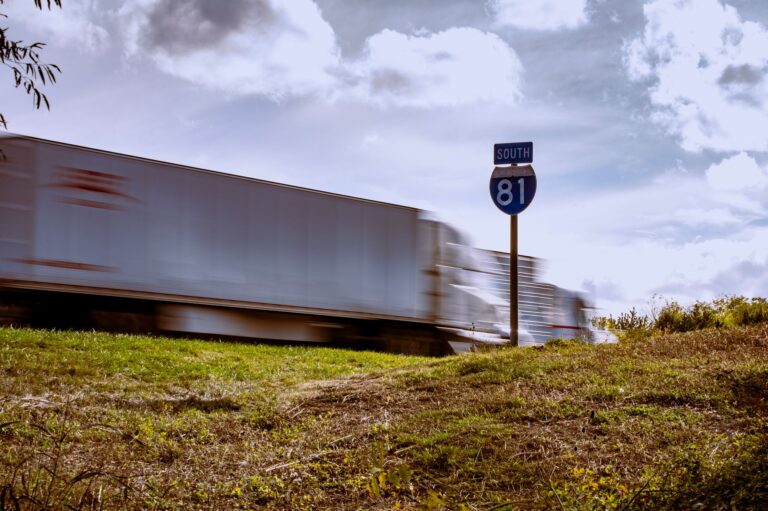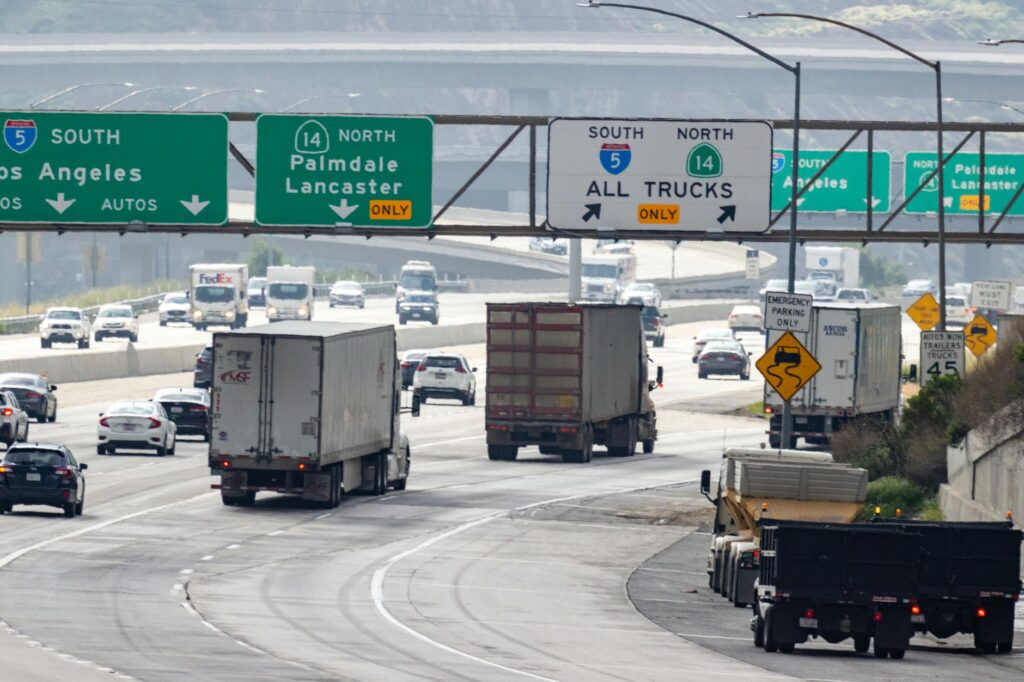
Washington State to Georgia is 2,800 miles from the top-left corner of the country to the bottom-right, and the first thing worth knowing about it is that no single road goes there. There is no I-5 equivalent for a diagonal. Carriers stitch this route together out of segments — east across the northern plains, then south through the middle of the country, or south first and east along the bottom, depending on the season and what else is on the trailer.
That is why the transit window on this corridor is 8-10 days rather than a tighter figure, and why carrier assignment can take longer than on routes that follow one obvious lane. It is not a problem with the route; it is the nature of a diagonal.
The price is $1,450-$1,850 on open transport, or roughly $0.52-$0.66 per mile — low per mile, as always on very long hauls, because the fixed costs at each end spread across so much distance. Enclosed runs $2,175-$2,400.
What works in your favour is the destination. Atlanta is one of the busiest freight centres in the country, so a carrier heading into Georgia has good odds of a load back out — which keeps this corridor priced more reasonably than its awkward geometry would suggest.
- What It Actually Costs
- City-to-City Price Breakdown
- How Long the Journey Takes
- Seasonal Pricing: When to Book
- Open vs. Enclosed Transport
- Who Ships Washington to Georgia
- The Complete Shipping Process
- Vehicle Preparation Checklist
- 7 Mistakes That Cost You Money
- Insurance and Liability Explained
- Frequently Asked Questions
What It Actually Costs
Open Transport | 8-10 Days | 2,800 Miles
Enclosed runs $2,175-$2,400. On open transport that is $0.52-$0.66 per mile, near the bottom of the national range — which is what always happens on a very long haul, since loading, paperwork and driver time at each end cost the same whether the truck runs 800 miles or 2,800.
Why a Diagonal Costs What It Does
Two forces pull in opposite directions on this corridor, and the price is where they meet.
Against you: there is no single lane. A carrier running Seattle to Atlanta is assembling a route rather than following one, which means fewer trucks are making exactly your journey and assignment takes longer than on a north-south or east-west run of similar length.
For you: Atlanta. It is among the heaviest freight hubs in the United States, and a driver ending a long run there is confident of finding the next load quickly. That confidence gets priced in, and it is the main reason this corridor is not more expensive than it is.
What Moves Your Number
- Where in Georgia it lands. The largest variable. Atlanta is the cheapest and quickest arrival by a clear margin; Savannah, Augusta and Columbus each add distance from the main approach and can add a day.
- Where in Washington it starts. Seattle and Tacoma are close together in price. Spokane pickups start east of the Cascades, which occasionally helps in deep winter.
- Season. March and April run 5-10% below standard, roughly $1,334-$1,757. Summer is the peak.
- Vehicle size. Deck space rather than weight — a three-row SUV or full-size pickup sits meaningfully above a sedan.
- Lead time. Under five days out typically adds $100-$150, and on a route with no natural lane that penalty bites harder than usual.
- Flexibility. Worth more here than on almost any other corridor. A 2-3 day window materially widens the pool of trucks that can build your journey into theirs.
City-to-City Price Breakdown
The Georgia end does most of the work here. Atlanta sits where the freight goes; everywhere else in the state is a detour from it, and detours at the end of a 2,800-mile run cost both money and a day.
| Origin | Destination | Open | Enclosed | Transit |
|---|---|---|---|---|
| Seattle | Atlanta | $1450-$1550 | $2175-$2325 | 8-9 days |
| Seattle | Savannah | $1475-$1575 | $2200-$2350 | 8-9 days |
| Seattle | Augusta | $1500-$1600 | $2225-$2375 | 9-10 days |
| Seattle | Columbus | $1525-$1625 | $2250-$2400 | 9-10 days |
| Tacoma | Atlanta | $1475-$1575 | $2200-$2350 | 8-9 days |
| Tacoma | Savannah | $1500-$1600 | $2225-$2375 | 8-9 days |
| Tacoma | Augusta | $1525-$1625 | $2250-$2400 | 9-10 days |
| Spokane | Atlanta | $1450-$1550 | $2175-$2325 | 8-9 days |
Atlanta is the cheapest and fastest arrival from every Washington origin. Savannah adds a little, Augusta and Columbus add more and pick up an extra day — not because they are far from Atlanta, but because a driver finishing there is further from the next load.
Spokane is worth noting as an origin: it sits east of the Cascades, so it is marginally closer in road miles and avoids the mountain crossing at the very start of the journey. In deep winter that occasionally matters. Macon, Athens and the smaller Georgia destinations are served and sit inside these bands.
How Long the Journey Takes
8-10 days in transit, and the width of that window is the honest answer rather than a hedge. On a corridor with no fixed lane, the route your car takes depends on the load it is part of.
Transit by City Pair
- Seattle or Tacoma to Atlanta — 8-9 days
- Seattle or Tacoma to Savannah — 8-9 days
- Seattle or Tacoma to Augusta — 9-10 days
- Seattle or Tacoma to Columbus — 9-10 days
Why There Is No Single Route
The interstate system is built on north-south and east-west lines. A corner-to-corner diagonal has to be assembled from both.
Some loads run east on I-90 across the northern states and then drop south through the middle of the country. Others go south first and pick up the southern east-west route. Which one your car takes depends on where the other vehicles on that trailer are going and what the weather is doing — in January the southern option is often the sensible one, in July it makes no difference.
This is normal and it is not something to worry about. It is simply why the estimate is a window rather than a date.
Booking to Delivery
Carrier assignment takes 1-5 days, and on this corridor it is regularly the full five — the broker is looking for a truck whose planned route already resembles yours, which is a narrower search than on a straightforward lane. Realistic booking-to-delivery is 9-15 days. Plan for a fortnight. See typical transit times by distance for how that compares.
What Actually Causes Delays
- Waiting for the right load. The commonest cause on this route, and it happens before the truck moves. A flexible pickup window is the direct fix.
- Winter across the northern plains, if the load takes the northern option. Carriers usually route around it rather than through it, which costs distance instead of risk.
- The Cascades at the very start, for Seattle and Tacoma pickups between December and March. Spokane origins avoid this.
- A delivery well outside Atlanta, which adds a day at the end of an already long run.
Plan for it: give a 2-3 day pickup window, book three weeks out, and treat the delivery date as approximate. Do not schedule anything irreversible against it.
Seasonal Pricing: When to Book
The price swing across the year on this corridor is modest — there is no snowbird pattern pulling in either direction. What the season really changes is which way your car gets there, and how long the wait for a carrier is.
March and April — The Best Window
Rates run 5-10% below standard at $1,334-$1,757, with excellent availability and three to five days’ notice often enough. Winter relocations are finished, summer has not begun, and both the northern and southern routings are comfortably open — which means more trucks can take your load.
May Through August — The Peak
Summer relocations and the academic calendar at both ends. Expect the upper half of the range and book three weeks ahead rather than two.
The upside is reliability: with no weather constraining the routing, carriers have the widest choice of paths and the 8-10 day estimate holds well.
September Through November — The Sensible Fallback
Standard rates, availability recovering after summer, and the routes still open. If March and April do not suit, this is the next best stretch and there is nothing complicated about it.
December Through February — Routing Season
Standard prices with the familiar 15-31 December collapse in availability when drivers take the holidays. Ship before the 15th or wait for January.
Winter is where the diagonal shows itself. The northern option runs across the plains in genuine weather, so more loads take the southern path instead — longer in miles but reliably open. That is a carrier’s decision rather than yours, and it can add a day. Seattle and Tacoma pickups also have the Cascades to clear in the first few hours; a Spokane origin starts east of them.
Route-specific planning
Planning to Ship a Vehicle?
Get a vehicle shipping quote based on your route, vehicle, and workable dates.
Get My Quote
Open vs. Enclosed Transport
Around nine in ten vehicles on this corridor travel open, and for most cars that remains right even at this distance. What changes the calculation on a 2,800-mile diagonal is not the risk per mile but the sheer number of them, and the fact that you do not know in advance which climates the car will pass through.
Exposure You Cannot Fully Predict
On a fixed lane you know roughly what the journey looks like. Here the routing depends on the load: a January shipment might cross the northern plains in snow, or it might run south and see nothing worse than rain. Both are eight to ten days of exposure, but they are different eight to ten days.
In practice the realistic outcome is the same either way — road film, insect residue and the occasional stone chip, on a car that wants washing when it reaches Georgia. But if you want certainty about what the vehicle passes through, open transport cannot give it to you on this route and enclosed can.
Choose Open Transport ($1,450-$1,850) When
- The vehicle is worth under $50,000 and is a daily driver
- You want the faster assignment — and on a diagonal that matters more than usual, because open carriers are the pool deep enough to find a matching route
- You can accept road film after 2,800 miles
- You are shipping outside deep winter, or you are relaxed about which way the load goes
Choose Enclosed Transport ($2,175-$2,400) When
- The vehicle is worth $75,000 or more, or belongs in the collector category rather than the daily-driver one
- The paint is difficult or expensive to match — eight to ten days of unpredictable exposure is the argument, not any single hazard
- Ground clearance is low enough that open loading ramps are a genuine concern
- You are shipping in winter and would rather not find out afterwards which route the load took
The Cost of the Premium
Roughly $725-$775 on this corridor. That buys a covered trailer, fewer vehicles per load and a driver used to valuable cars — but it costs you time twice over. Enclosed is about a tenth of the fleet, and on a diagonal the pool of enclosed carriers whose route matches yours is smaller again. Expect assignment to take considerably longer, and start the conversation weeks earlier than feels necessary. The full comparison covers the rest.
Who Ships Washington to Georgia
Four patterns cover most of this corridor. The figures are the open-transport ranges above, set against the circumstances they usually turn up in.
The Cross-Country Relocation
A full move from the Pacific Northwest to the Southeast — work, family, or cost of living. Almost always more than one vehicle, and usually a household on the same timeline.
What it costs: $1,450-$1,850 per vehicle open. What to watch: booking-to-delivery is realistically 9-15 days on this route. Arrange transport at the Georgia end for the first fortnight rather than assuming the cars arrive with you.
The Military Move
Washington has a substantial military presence and Georgia has several major installations. Orders come with a report date that does not negotiate, and the vehicle has to arrive without the service member driving it 2,800 miles first.
What it costs: $1,450-$1,850 open. What to watch: book against the orders rather than the report date, and give three weeks. On a diagonal the wait for a matching carrier is the part that will catch you out, not the drive.
The Second Vehicle
A household driving one car across and shipping the other, because 2,800 miles is not a trip anyone wants to make twice in convoy.
What it costs: $1,450-$1,850 open. What to watch: book the shipped car before you set off. You will arrive in Georgia well before it does, and being a one-car household in a new city for a week is easier to plan for than to discover.
The Remote Purchase
Vehicles bought at distance in either direction — Atlanta’s auction market is large, and the Pacific Northwest supplies a steady flow of low-rust cars to buyers who are not flying out to collect them.
What it costs: $1,450-$1,850 open, or $2,175-$2,400 enclosed if the car warrants it. What to watch: Collection happens without you, which means the seller controls the inspection and the paperwork. Agree that in advance and insist on dated photographs before the truck leaves.
The Complete Shipping Process
Step 1: Quote With Both Cities Named
Enter the Washington pickup and the specific Georgia destination. Atlanta versus Columbus is worth around $75 and a day at the far end of a long run. Quotes are instant and free, and the step-by-step overview covers what is the same on any route.
Step 2: Give Yourself Three Weeks
This is the step that differs on a diagonal. On a busy north-south lane two weeks is comfortable; here the broker is looking for a carrier whose planned route already resembles yours, and that search takes longer. Three weeks is the sensible figure, and a 2-3 day pickup window widens the pool considerably.
Step 3: Carrier Assignment
Within 1-5 days — frequently the full five on this corridor — you receive the carrier’s company name and DOT number, the driver’s direct number and a confirmed pickup window. Nothing is charged before this point, because until a carrier exists nothing has been arranged.
Step 4: Confirm the Truck Can Reach You
A car carrier is roughly 75 feet long, and parts of Seattle and Tacoma are steep or narrow enough to make that a genuine problem. If there is any doubt, agree a nearby commercial lot when the carrier is assigned rather than on the morning of pickup.
Step 5: Pickup and Inspection
The driver inspects the vehicle with you and records existing damage on the Bill of Lading. Photograph all four sides, the roof, the lower panels and each wheel in daylight first, with the date on the file. Do not sign until every visible mark is written down, and keep your copy — on a nine-day journey it is the only reference point that exists.
Step 6: Eight to Ten Days, Route Depending
Either east across the northern states then south, or south first and east along the bottom — the load decides, and in winter the southern path is more common. The driver is your contact throughout. Expect periodic updates rather than live tracking, and expect quiet days: hours-of-service rules mean the truck is legitimately parked for part of every one.
Step 7: Delivery
You or a nominated adult inspects the vehicle against the Bill of Lading and your photographs before signing and paying the balance. Check in daylight, and wash the road film off before making a final judgement — but note anything visible on the delivery paperwork before you sign. That is the moment a claim exists or does not.
Vehicle Preparation Checklist
Think of this as preparing the car for nine days of standing still in unknown weather, because that is closer to the truth than preparing it for a drive. It will not be driven; it will sit on a trailer, and the two things that go wrong are both consequences of that.
The Battery Is the One That Catches People
A battery that starts the car reliably every morning can be flat after nine days on a trailer, and the vehicle has to start under its own power to come off the truck in Georgia. Test it before pickup. If it is at all marginal, replace it — a dead battery at delivery is your problem, not the carrier’s, and sorting it out in a city you have just arrived in is worse than sorting it out at home.
If the car does not run at all, that is entirely workable, but book it as an inoperable vehicle so the winch arrives with the truck.
Photographs Are the Other One
On this corridor you will not know afterwards whether the load ran through snow across the northern plains or rain along the southern route. Your photographs are the only fixed reference point either you or the driver will have.
Get it washed the day before — road film hides exactly the marks you are trying to record. Then work round it in daylight with the date switched on: every side, the roof, along the bottom edges, each wheel. Photograph each existing chip and scratch close enough that it cannot be argued about, and confirm they appear on the Bill of Lading before the driver pulls away.
Everything Else, Briefly
Empty it. Cabin, trunk, door pockets, under the seats. Contents are uninsured and carriers may not legally haul them. Toll transponders off the windshield — a diagonal crosses several tolling systems and a live tag bills the truck’s journey to you. Garage remotes and parking decals out. Spare key and title stay with you.
Fuel to a quarter or less. Weight is federally regulated across ten vehicles and a brimmed tank genuinely holds up loads.
No leaks. A car dripping onto the vehicle below it is refused at loading rather than dealt with later.
Fold what protrudes. Mirrors, antenna, roof boxes, bike racks. Loading damage is the most avoidable claim there is and it is nearly always something that stuck out. Disable the alarm or leave the driver instructions.
Arriving in a Different Climate
The car leaves somewhere cool and damp and arrives somewhere warm and humid, possibly having crossed somewhere cold in between. Tyre pressures will read differently on arrival — that is temperature, not a fault. If it shipped out of western Washington in winter it may have picked up road salt in the first hours; wash the underside once it lands rather than leaving salt to sit in Georgia humidity.
7 Mistakes That Cost You Money
Mistake #1: Booking Two Weeks Out Like a Normal Route
On a north-south lane a fortnight is generous. Here the broker is searching for a carrier whose planned route already resembles Seattle to Atlanta, and that is a narrower search. Two weeks frequently means paying a premium for urgency you created yourself.
Fix: book three weeks ahead. On this corridor lead time buys more than any other decision.
Mistake #2: Naming a Single Pickup Date
A fixed date is the hardest constraint on any route and the hardest of all on a diagonal, where the pool of matching carriers is already small. Loads that cannot be matched go back on the board and your date passes.
Fix: give 2-3 days. It costs nothing and it materially widens the number of trucks that can take you.
Mistake #3: Planning Around the 8-10 Day Transit
That is the drive. Assignment adds one to five days before it, and on this route it is regularly the full five. Realistic booking-to-delivery is 9-15 days.
Fix: Give it a fortnight and plan to be without the car in Georgia for the first two weeks.
Mistake #4: Delivering Somewhere Other Than Atlanta Without Checking
Atlanta is where the freight goes. Columbus or Augusta is roughly $75 and an extra day, because a driver finishing there is further from the next load rather than because the miles are longer.
Fix: if anyone can take delivery in the Atlanta area, compare the two before booking.
Mistake #5: Expecting a Fixed Route
People ask which way the car will go and are unsettled when the answer is “it depends”. On a diagonal it genuinely does — the load decides, and in winter the longer southern path is often chosen precisely because it is more reliable.
Fix: treat the routing as the carrier’s professional judgement. What matters is the delivery window, not the map.
Mistake #6: Skipping the Inspection Photographs
Nine days and 2,800 miles produce enough road film to hide small marks completely, and you will not know in advance what weather the car passed through. Without dated photographs from before loading, a delivery-day disagreement is unwinnable.
Fix: wash it, photograph everything in daylight, and get each mark onto the Bill of Lading before the truck leaves.
Mistake #7: Taking the Quote Far Below the Others
Across 2,800 miles, fuel and driver wages set a floor no operator can go under. A number well below the market is a job that sits unclaimed on the board — and on a diagonal, where fewer carriers are looking at it anyway, it can sit for a very long time.
Fix: compare three or four established companies and ask the outlier to explain the difference in writing before you commit.
Insurance and Liability Explained
Here is the question that actually matters on a diagonal, and it is not one that comes up on ordinary routes: your car will cross 2,800 miles of country and you will not know until afterwards which 2,800 miles. What does that mean for who pays if something goes wrong?
The Short Answer
Less than you might fear, because the things cargo insurance covers do not depend on geography. Physical damage during loading, transit and unloading is covered wherever it happens. So is damage from road debris or equipment failure, theft while the carrier holds the vehicle, and anything caused by driver error. A federally licensed carrier must hold that policy before it is allowed to move your car across a state line at all.
The routing does not change any of that. A stone chip in Nebraska and a stone chip in Tennessee are treated identically.
Where the Routing Does Matter
Weather. Damage from weather on an open carrier is generally handled as an act of nature rather than carrier negligence, and whether anything is payable depends on the individual policy rather than on any federal floor. On a fixed lane you can at least anticipate the exposure. Here you cannot — a January load might cross the northern plains or might run the southern path instead.
If that uncertainty is unacceptable for your vehicle, open transport cannot resolve it on this corridor. Ask the carrier directly how they handle weather damage before booking, and if the answer is not satisfactory, enclosed at $2,175-$2,400 removes the question rather than answering it.
The Three Things Never Covered
Contents of the vehicle, always and everywhere — carriers are not licensed to move household goods and nothing in the trunk is insured. Mechanical faults unrelated to transport, including a battery that dies while the car stands for nine days. And normal wear: road film, insect residue and minor stone chips across 2,800 miles are expected rather than claimable.
The Document That Decides Everything
Pre-existing damage not written on the Bill of Lading cannot be established afterwards. That is true on every route and it bites hardest here, because nine days and a continent of road film will bury a small mark completely, and neither you nor the driver will be able to say when it appeared.
Photograph the car before it loads. It is five minutes and it is worth more than the entire rest of this section.
Check the Figure, Not the Certificate
Regulation sets a floor and stops there; matching it to what you are actually shipping is your job. Ask for the certificate of insurance and read the actual number, particularly if your vehicle is worth more than the average one on that trailer. Our full breakdown of carrier coverage goes through what those limits mean in a real claim. Your own comprehensive policy may extend to transit; most do not, and a call to your insurer is the only way to know.
Frequently Asked Questions
How much does it cost to ship a car from Washington to Georgia?
$1,450-$1,850 on open transport for most vehicles in 2026, or $2,175-$2,400 enclosed — roughly $0.52-$0.66 per mile across 2,800 miles. Which Georgia city you deliver to moves it more than which Washington city you leave from.
Which route will my car actually take?
It depends on the load. There is no single interstate connecting the Pacific Northwest to the Southeast, so carriers assemble the journey — east across the northern states then south, or south first and east along the bottom. In winter the southern path is more common because it is more reliably open. This is normal, and it is why the estimate is a window rather than a date.
How long does Washington to Georgia car shipping take?
8-9 days to Atlanta or Savannah, 9-10 to Augusta or Columbus. Add 1-5 days for carrier assignment — regularly the full five on this corridor — so realistic booking-to-delivery is 9-15 days. Plan for a fortnight.
Why does assignment take longer than on other routes?
Because the broker is looking for a carrier whose planned route already resembles yours, and a corner-to-corner diagonal matches fewer trucks than a straightforward north-south or east-west run. There is no shortage of carriers; there is a smaller pool going your particular way. Three weeks’ notice and a flexible pickup window are the direct fixes.
Which Georgia city is cheapest to ship to?
Atlanta, by a clear margin, because it is one of the busiest freight hubs in the country and a driver finishing there finds the next load quickly. Savannah adds a little; Augusta and Columbus add around $75 and a day.
When is the cheapest time to ship?
March and April at $1,334-$1,757, which is also when carriers have the widest choice of routings. Autumn is the sensible fallback. Summer costs more but is dependable, and 15-31 December is worth avoiding entirely.
Which Washington cities do you collect from?
Seattle, Tacoma, Spokane, Bellevue, Everett, Vancouver and across the state. Spokane is worth considering if you have the choice — it starts east of the Cascades, which removes a mountain crossing from the first hours of a winter journey.
Which Georgia destinations do you deliver to?
Atlanta, Savannah, Augusta, Columbus, Macon, Athens and across the state. Everywhere outside Atlanta sits inside the bands in the table above.
Is winter a bad time to ship this corridor?
Not for price, and not for safety — carriers route around weather rather than through it, which is exactly why the southern path gets used more in January. What winter costs you is predictability: a longer routing can add a day. Leave the delivery date loose and it is a perfectly ordinary time to ship.
Does it have to be me who meets the truck?
Both ends need a human being who can inspect the car and put their name to the Bill of Lading. It does not have to be you — name a trusted adult when you book. On a cross-country move it is common for one person to hand the car over in Washington and another to receive it in Georgia.
Is my car insured during transport?
It is, under the cargo policy every licensed carrier has to hold. That covers the car from the moment it goes up the ramp until it comes off in Georgia. The number worth asking for is the per-vehicle limit on the certificate — regulation sets it as a floor rather than matching it to your car. Personal items are never covered, and pre-existing damage not recorded on the Bill of Lading cannot be claimed — which matters more here, since you will not know afterwards what conditions the car passed through.
How far ahead should I book?
Three weeks on this corridor rather than the two that suffices on a straightforward lane, and longer again for enclosed. Lead time is the single most valuable thing you can give a broker on a diagonal.
Ready to ship your car from Washington to Georgia?
Request a route-specific quote based on your vehicle, exact cities, and timing.
Background Reading
- typical rates for auto transport
- picking the right trailer for your car
- the mechanics of a car shipment
- car shipping explained end to end
Related reading
The northbound leg is covered on our Georgia to Washington page, which prices in the same band and faces the same routing question. For other long hauls out of the Pacific Northwest, Washington to Florida is the other corner-to-corner run and Washington to Texas crosses the Rockies instead.
Arriving in Georgia from elsewhere, Georgia to Texas and Georgia to Florida cover the shorter southeastern corridors, and California to Florida is the southern equivalent of this diagonal.
On the mechanics: how per-mile pricing works explains what happens to the rate when the journey lengthens, transit times by distance sets expectations for a run this long, carrier insurance goes further than the summary above, and open versus enclosed covers the trailer decision.